Why the Riviera Maya Is a Great Place to Learn Scuba Diving
One of the activities on my ultimate bucket list is to scuba dive with dolphins. So far, the closest I’ve come is swiming close to a couple at a beach in Pipa, Brazil. However, I’ve taken the first step toward this goal by obtaining my PADI Open Water Diver certification. Some of you reading this might like to do the same thing. The main question usually is where to take the course.
I chose to get certified in Playa del Carmen, a popular diving hub in Quintana Roo, Mexico.
Located along the Caribbean coast of Mexico’s Yucatán Peninsula, the Riviera Maya stretches south from the Puerto Morelos area toward Tulum and beyond. This tropical coastline is known for its turquoise waters, white-sand beaches, and proximity to the Mesoamerican Barrier Reef System, one of the largest coral reef systems in the world.
Just offshore lies the renowned island of Cozumel, famous for its spectacular reef diving. Inland, beneath the limestone landscape and tropical jungle, you’ll find a fascinating network of freshwater sinkholes and underground waterways in caves known as cenotes.
This combination of Caribbean reef diving and freshwater cenotes makes the region particularly special.
Since there’s so much to see and discover, the diving community is well established. It’s a great location for beginner and advanced divers alike.
WHEN TO VISIT FOR SPECIAL MARINE LIFE ENCOUNTERS
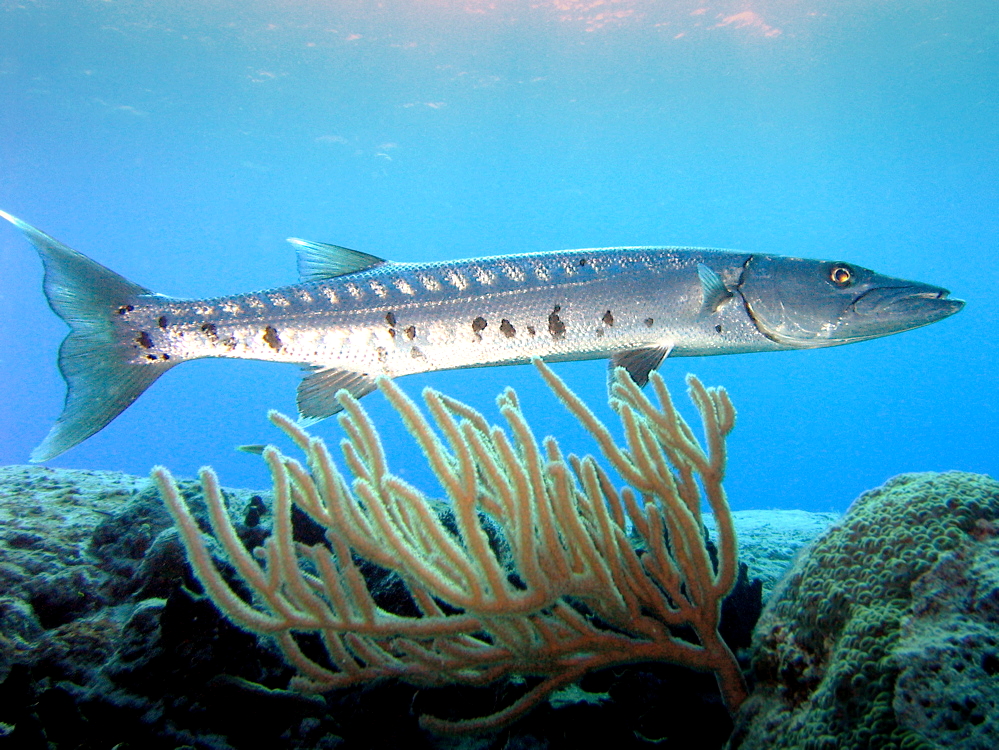
Although diving conditions are excellent throughout the year, certain months offer opportunities to encounter some particularly impressive marine animals.
- Bull sharks (November–March): Large bull sharks seasonally gather in the waters off Playa del Carmen. These are specialized dives generally suited to experienced divers, with operators applying their own certification and experience requirements.
- Whale sharks (June–September): These enormous, gentle filter-feeding sharks gather in waters near Isla Mujeres and Holbox, north of the Riviera Maya. Tours are primarily snorkeling experiences rather than scuba dives, and sightings are never guaranteed.
- Sea turtle nesting season (May–September): Green and loggerhead turtles come ashore along parts of the Riviera Maya to lay their eggs. This is a seasonal coastal wildlife event rather than a guarantee of seeing turtles during a dive.
If you’re not particularly interested in seeing a specific animal or seasonal event, you can visit any time of year and have a wonderful diving experience.
WHAT CAN YOU SEE THROUGHOUT THE YEAR?
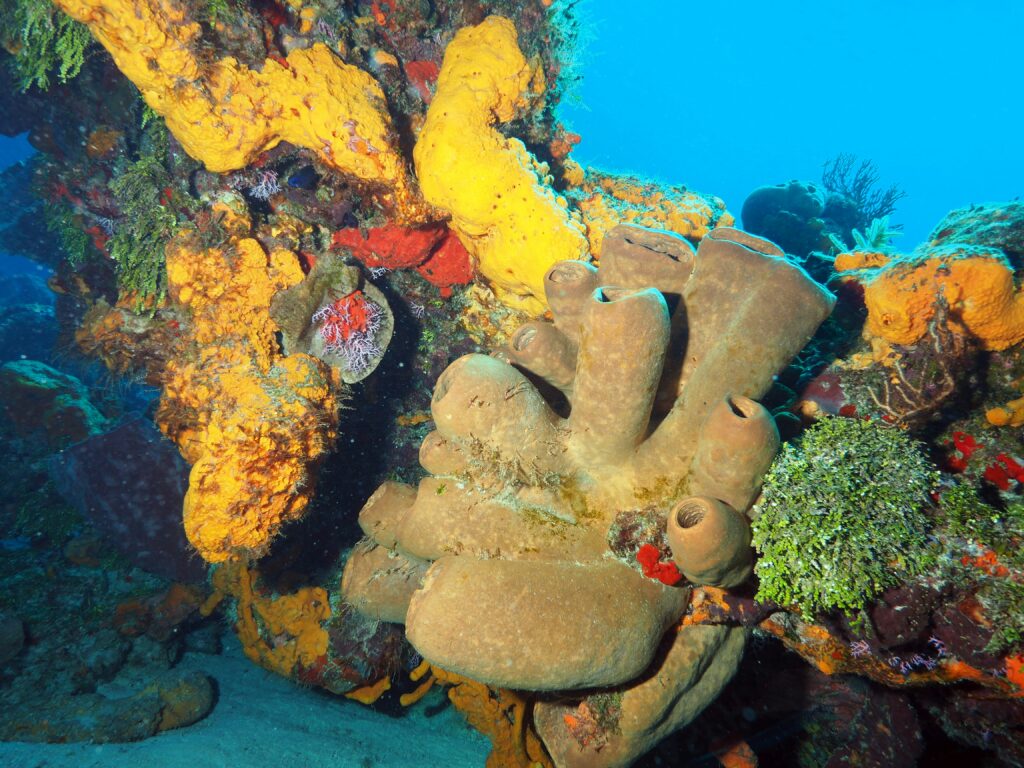
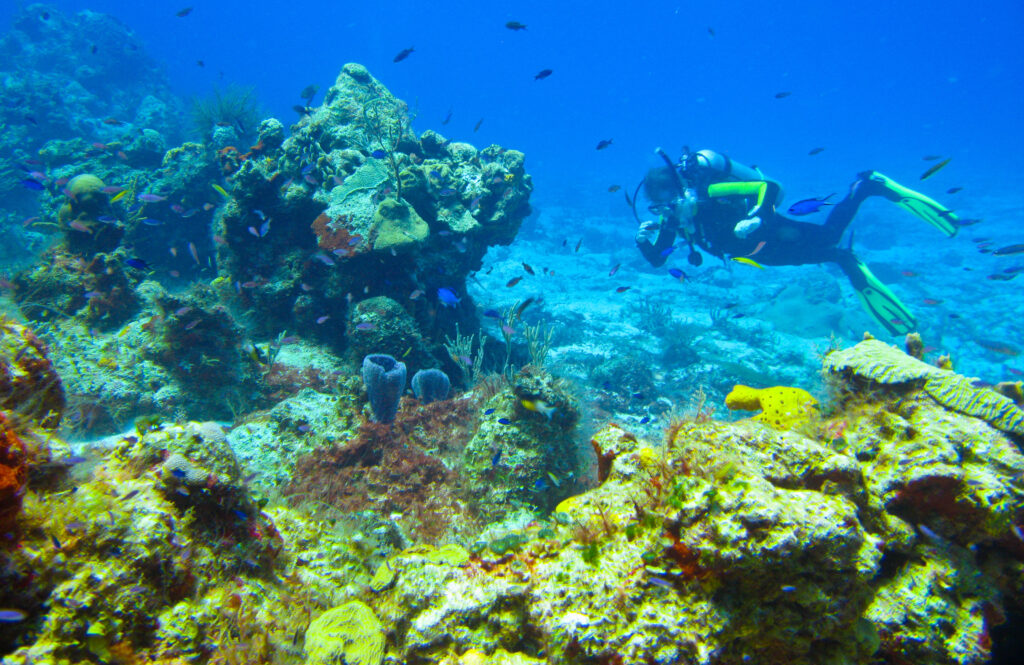
The Caribbean reefs around Playa del Carmen and Cozumel are home to an impressive variety of marine life.
Depending on the dive site and conditions, you may encounter colorful reef fish, angelfish, parrotfish, butterflyfish, moray eels, barracudas, stingrays, lobsters, and occasionally sea turtles or nurse sharks.
The reef formations themselves are also a major attraction, with coral structures, sponges, and an impressive variety of underwater scenery.
Water temperatures are generally comfortable throughout the year, although weather, currents, and visibility can vary. The region’s diving infrastructure also means there are plenty of opportunities to explore different environments according to your experience level.
Choosing a Dive Center
My initial piece of advice when picking where to take your course is to make sure you choose your dive company or instructor wisely.
The one I went with was recommended by a friend who had no relationship with the company and had simply heard from someone else that they were good.
I took the recommendation, and it was a mistake. I received my Open Water certification, but the course felt rushed. Along the way, I was put in tough positions and wasn’t instructed thoroughly enough, leaving me less than confident in my diving abilities. Controlling my buoyancy was a particular source of frustration.
During my course, I was taken into the ocean for training dives in very unfavorable weather conditions, which I didn’t think were appropriate for beginners. More reinforcement of some fundamental skills would have helped me greatly with my technique.
I was disappointed.
I decided to do an extra dive after my course finished, but with a different company, Good Vibes Diving, which just so happened to operate out of a hostel where I stayed for a couple of nights.
Here’s their website if you’re interested: Good Vibes Diving.
What a great team! I immediately noticed a stark contrast in education and professionalism compared to the other dive center. After a great first experience, I decided to return a year later to take a refresher course with them. Now I’m completely confident in my skills.
An important thing to consider when selecting your dive center is the vibes.
Feeling a sense of community goes a long way. I liked the fact that the dive center operated in a communal environment with access to an on-site pool for basic training, which is AWESOME.
The positive energy and easy access to the water made the whole process feel more relaxed and accommodating.
Swimming in the ocean or entering a dark cavern can be intimidating, so it’s helpful to learn in an encouraging environment where you feel comfortable asking questions.
The team at Good Vibes Diving was very patient and knowledgeable, and they genuinely wanted me to be fully prepared and confident in myself.
GIVE YOURSELF SOME EXTRA TIME
My next recommendation is to give yourself adequate time to complete your course.
There could be a stretch of several days when ocean currents are particularly strong or the waves are too choppy. Such conditions aren’t ideal for beginner training, and ocean dives may need to be postponed.
Having a flexible schedule allows you to wait for better conditions rather than feeling pressured to finish your certification as quickly as possible. Even after you finish your course, diving in optimal conditions should be a priority.
Another important thing…
If you plan on diving frequently, expect that you might want to take a day or two off at some point.
Going underwater repeatedly can be physically tiring if you’re not accustomed to it. Even the speedboat rides to certain dive sites can be rough.
Give yourself time to rest and enjoy the destination between dives.
Diving Tips for Quintana Roo
I don’t consider myself an expert by any means, but I have a couple of tips that I think are worth considering.
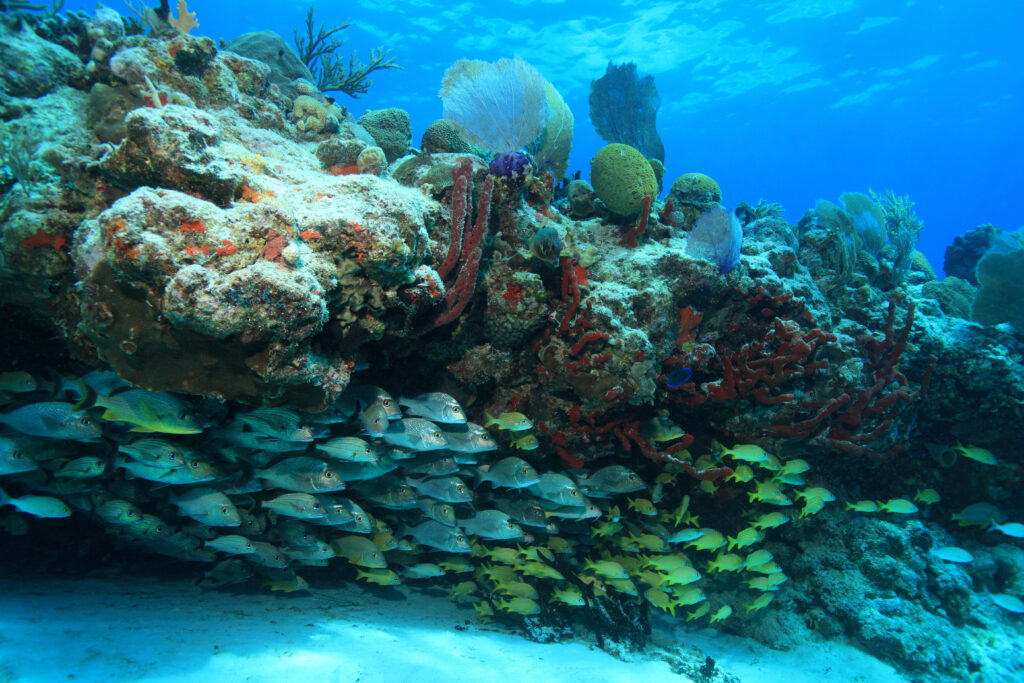
DIVING IN COZUMEL: CONSIDER STAYING ON THE ISLAND
Cozumel is a must-do, but there’s a better way to organize your diving experience.
My ONE recommendation is to consider visiting the dive sites around Cozumel from the island itself. That means staying in accommodation on Cozumel and heading directly to the dive sites from there.
When you’re staying on the island, you’ll generally have more flexibility in choosing operators and dive sites, with shorter boat transfers to many of the island’s famous reefs.
I’d advise against automatically booking a diving day trip based out of Playa del Carmen or one of the nearby mainland towns. Some mainland-based excursions focus on dive sites that are convenient to reach from Playa del Carmen rather than exploring the broader range available around Cozumel.
It’s not that those excursions are necessarily bad, but depending on the operator and sites visited, you could spend considerable time traveling by boat. If the sea is rough, that journey can become uncomfortable.
You certainly don’t have to stay there, but it’s worth looking into.
COZUMEL: A WORLD CLASS DIVING DESTINATION
Cozumel is a beautiful Caribbean island located just offshore from Playa del Carmen, approximately 35–45 minutes away by passenger ferry. It’s internationally renowned as one of Mexico’s premier scuba diving destinations, thanks to its crystal-clear visibility, coral formations, underwater walls, and abundant marine life. Much of the island’s southern and western reef system belongs to Arrecifes de Cozumel National Park, a federally protected marine area established in 1996 to conserve its extraordinary biodiversity. As part of the Mesoamerican Reef System, Cozumel offers an incredible variety of dive sites, from colorful shallow reefs to drop-offs and drift dives for more experienced divers.
CENOTE DIVING: AN EXPERIENCE UNLIKE THE OCEAN
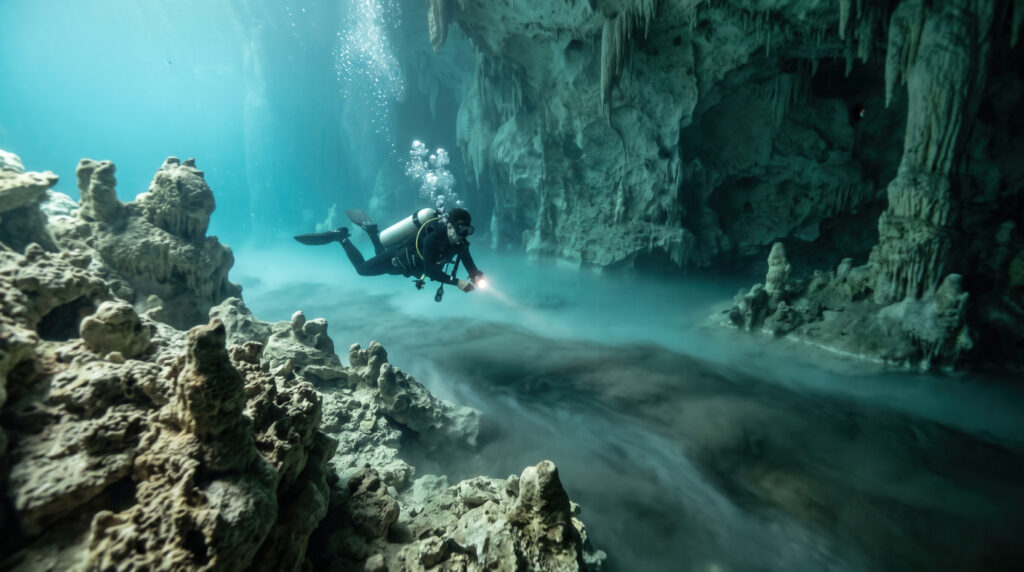
Diving in a cenote in the Riviera Maya is a very unique experience.
These freshwater environments are famous for their extraordinary visibility, limestone formations, and dramatic beams of sunlight entering through openings in the rock.
The main thing you need to consider is which cenote to visit based on your certification, experience, and comfort level. Some dive sites are suitable for newly certified Open Water divers, while others require more advanced qualifications, excellent buoyancy control, or specialized training.
If you have your heart set on a particular cenote, research its requirements before making plans. There is also an important difference between cavern diving and cave diving.
Cavern Diving
Some cenotes offer guided cavern tours that certified Open Water divers can participate in, provided the site is suitable and the diver meets the operator’s requirements.
These dives take place within a limited cavern zone where natural daylight remains visible and a qualified guide follows an established route with appropriate safety procedures.
However, being Open Water certified doesn’t automatically qualify you to enter every cavern. Overhead environments require special precautions, and excellent buoyancy control is particularly important.
Cenote Dos Ojos is widely regarded as one of the Riviera Maya’s most beautiful cenote diving locations, with remarkable underwater limestone formations and clear water. Some dive centers do guided tours of Cenote dos Ojos for Open Water divers, while some others require more advanced certification.
I personally did my cenote dive at Chac Mool before I knew much about Dos Ojos.
Chac Mool was awesome in its own right, but I’ve heard people say Dos Ojos is even better.
Do what you will with that information.
Cave Diving
Now for cave diving…
Cave diving takes things to an entirely different level.
Unlike a recreational guided cavern tour, technical cave diving can involve exploring underwater passages beyond the natural daylight zone, where there is no direct ascent to the surface.
This requires specialized cave-diving certification, equipment, navigation skills, and emergency procedures. It’s expert-level stuff and absolutely not something to attempt with an ordinary recreational scuba certification.
The cenotes are incredible, but choosing a dive appropriate for your training and experience should always come first.
Final Thoughts
The Riviera Maya is one of the best places I can recommend for anyone interested in scuba diving, whether you’re a complete beginner or an experienced diver looking for something different. With its established diving infrastructure, beautiful Caribbean reefs, and extraordinary freshwater cenotes, the region offers a combination of underwater experiences that’s hard to match.
If you’re thinking about getting certified or planning your next diving adventure, Playa del Carmen and the surrounding region are well worth considering! And if you’re interested in some other attractions in Mexico, I’ve got a few recommendations.