A New Adventure
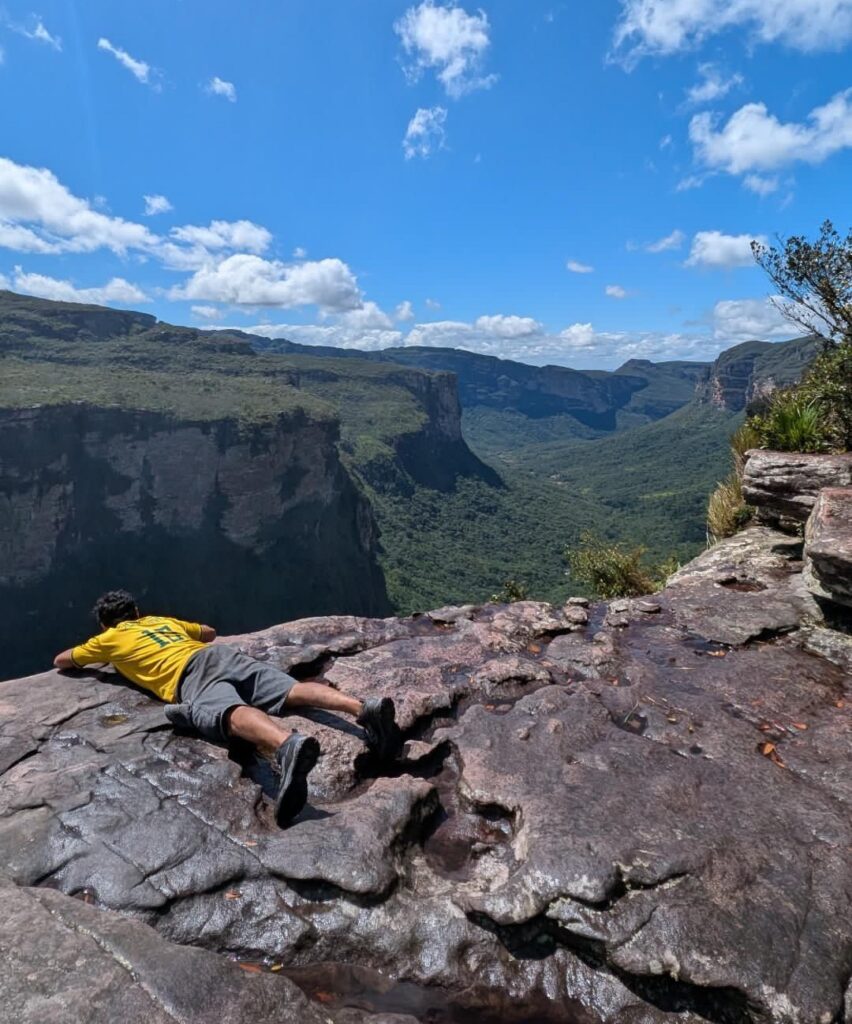
Vale do Pati is part of the world renowned Chapada Diamantina National Park, the top rated national park in Brazil, located in the state of Bahia. Sought after by nature lovers, it’s a famed trail known for its grand mesas, monoliths, and vividly green deep valleys. Coming here was on my bucket list for my trip, so I made sure to stop by after exploring Itacaré, and before my trips to Pipa and Lençóis Maranhenses. I had big plans for Northeast Brazil, which I had heard from many Brazilians was their favorite region of the country.
Vale do Pati is typically accessed through guided multi-day treks out of the nearby towns, most notably Lençois. The treks can be completed without a guide with the use of offline maps, but note the trail entrance is about a 2-hour drive from Lençois. Most travelers choose to pay for a guide because they don’t have proper means of transportation, among other reasons. After personally doing a 3-day trek there, which included 3 meals per day and accommodation, I’m more than happy having paid for a guide’s expertise and knowledge of the park.
If you choose to do the trek independently, I recommend not to do it alone, especially in and around the rainy season.
Staying in Lençois
Lençois is a good base for your adventures with well established infrastructure, while also being the most touristic town around Chapada Diamantina. It’s a modest vacation spot with a nice selection of restaurants and shops, which is all you’re really going to need. Further along in this guide I’ll give an overview of some less touristic options as a base for your potential vitit to the national park.
During my time in Lençois I stayed at Chapada Backpackers hostel and did my trek with its affiliated agency. It offers a variety of hiking options, including several day trips like the highly recommended Roteiro 4ps.
Getting to Lençois is easily done from cities Feira de Santana and Salvador, most commonly by bus or the transportation app, Blah Blah Car. Besides hanging out here and relaxing, there are 2 nearby attractions that I think you should visit, Piscinas Naturais do Serrano and Ribeirão do Meio.
PISCINAS NATURAIS DO SERRANO
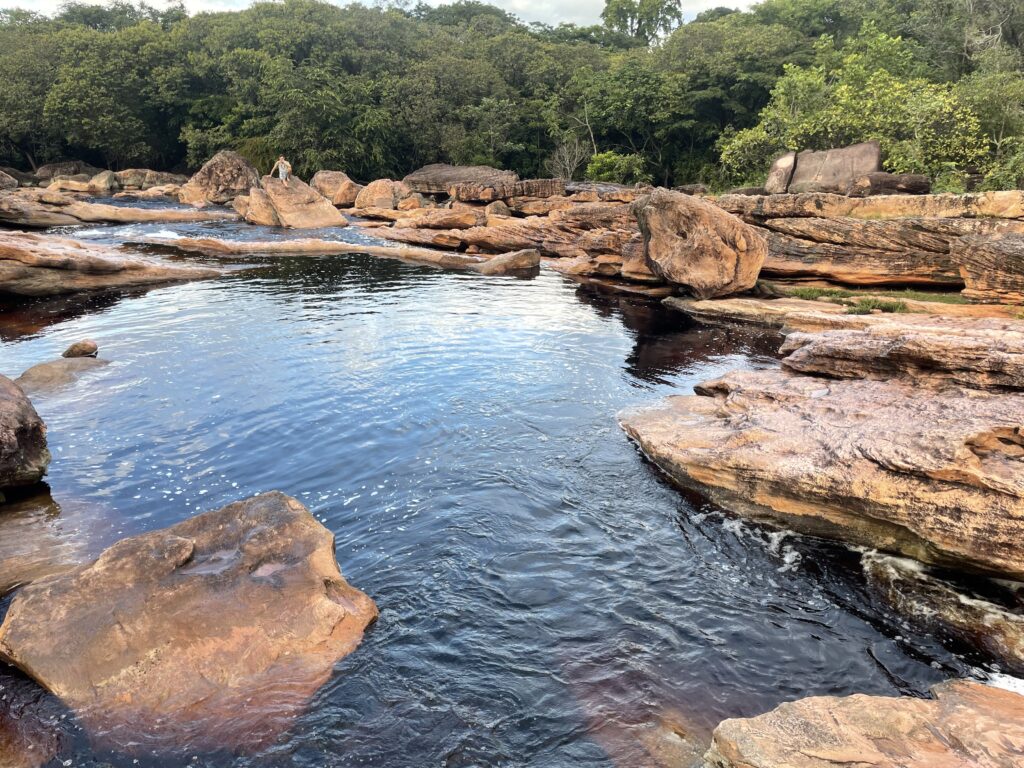
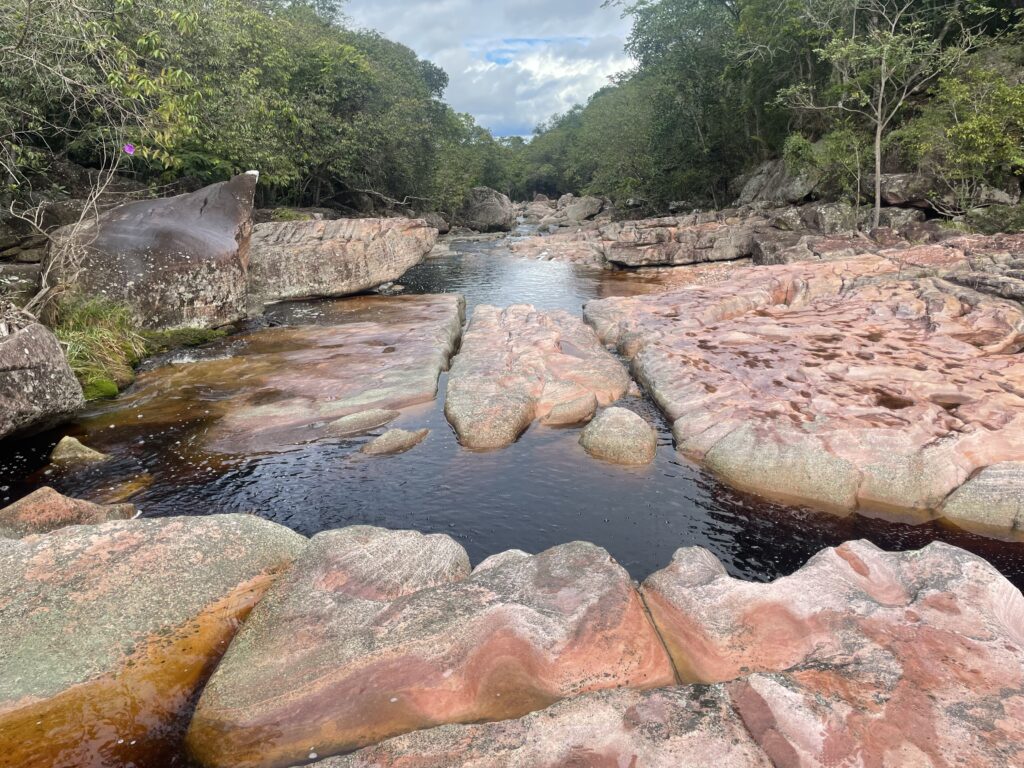
This ‘hidden’ gem is a curious collection of natural pools, dozens actually, that are fed directly by the tannin rich waters of the Lençois river. It’s about a 20 minute walk from the town and costs just 20 Brazilian Reals for 3 days of access. Personally I think that’s a really good deal.
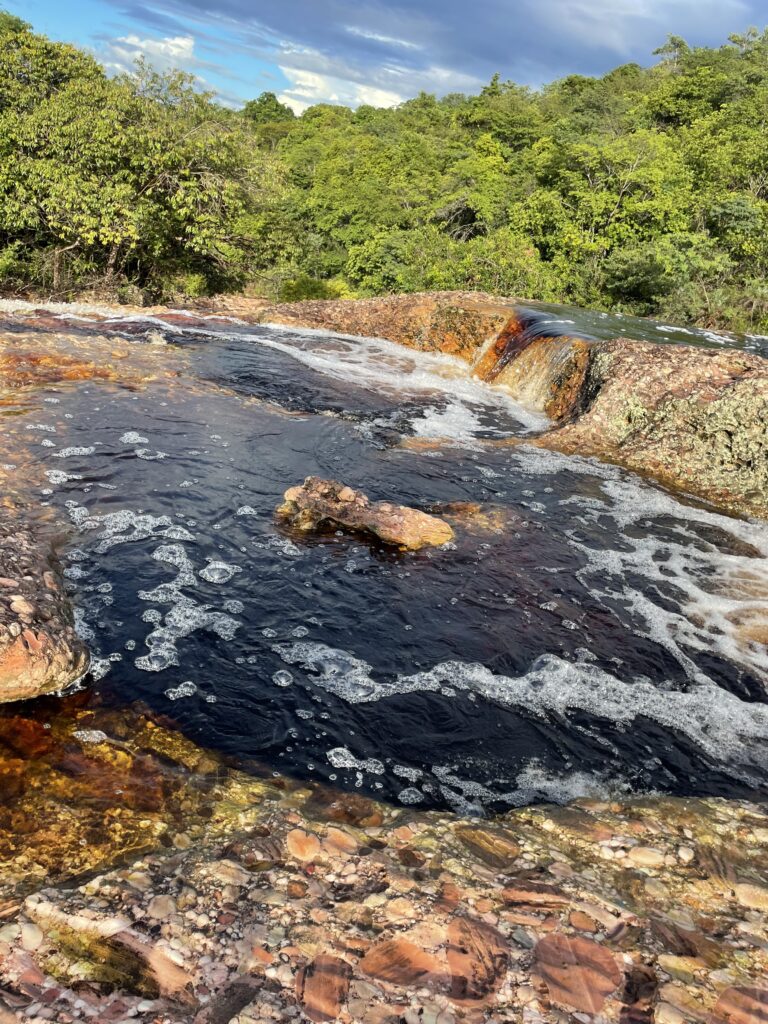
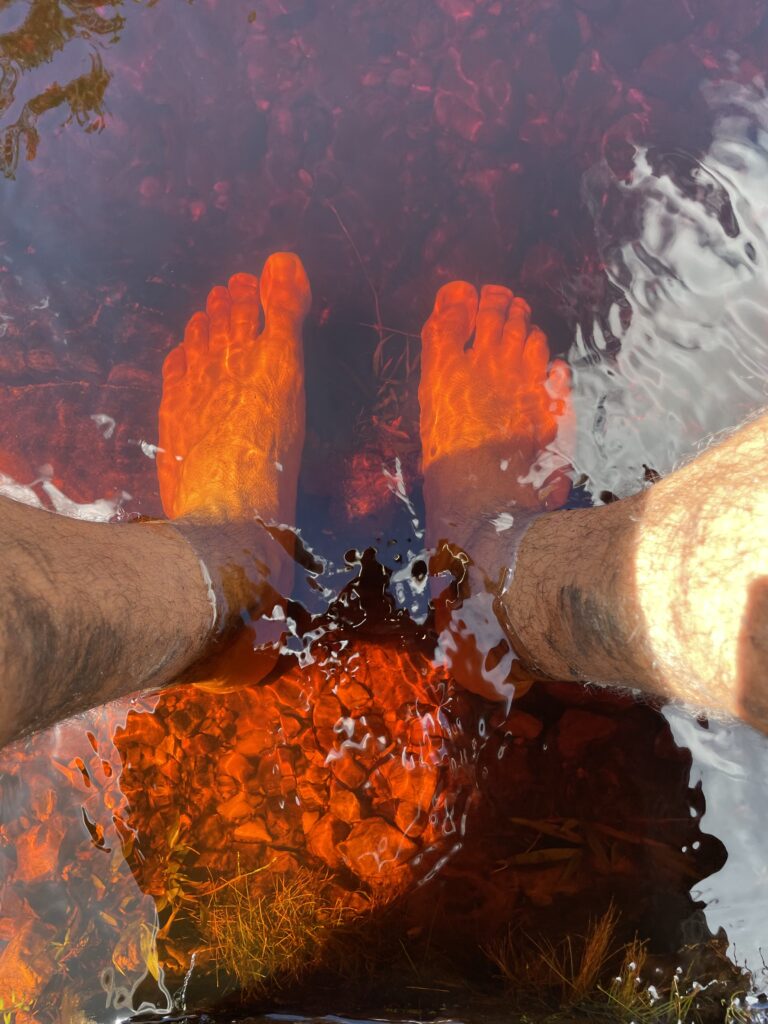
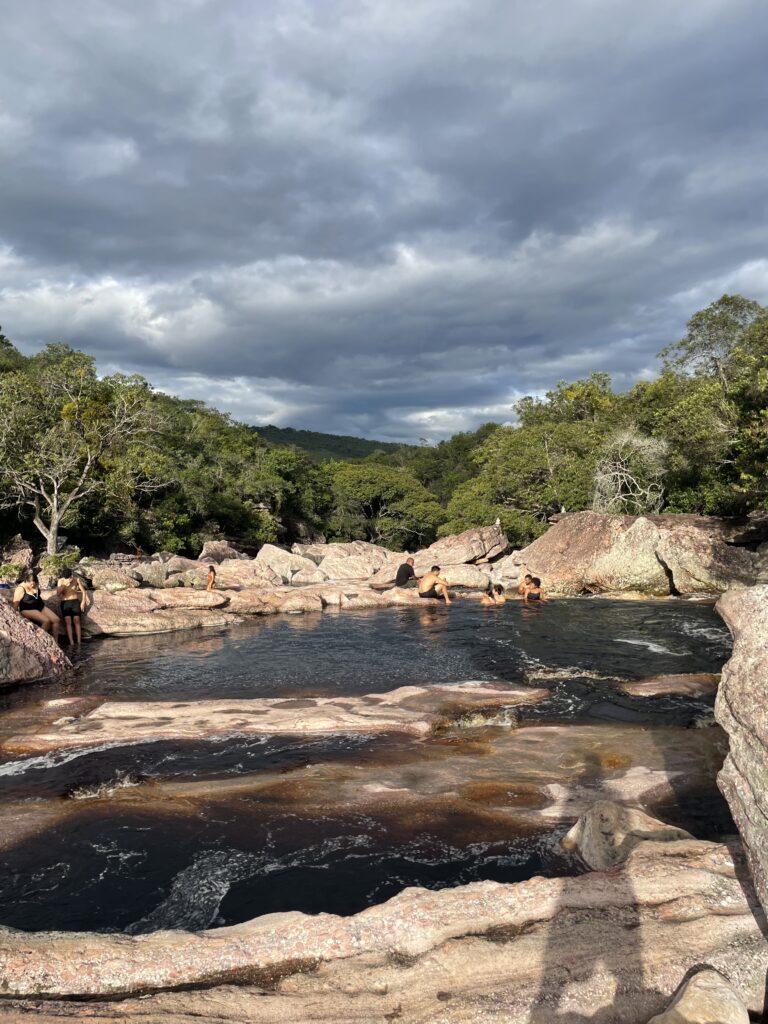
The area is actually quite large, with much smaller pools at it’s elevated parts, often with stronger currents from the river. As you descend, you’ll come across bigger pools. It’s a cool contrast.
What makes the water all around Chapada Diamantina so interesting is the orange and reddish tint from the high concentration of iron and natural tannins in the region’s soils and rivers.
In the national Park itself, the water is safe to drink, especially from non frequented streams. I drank a fair amount of the water during my trek with the approval of my guide.
RIBEIRÃO DO MEIO
If you’re looking for something a bit more grand, head to Ribeirão do Meio, another group of natural pools on a larger scale with a waterfall/natural stone slide seen in the photo below. Feel free to swim, dive in the water from a rock platform, or slide into the pool with the rushing water flowing into it.
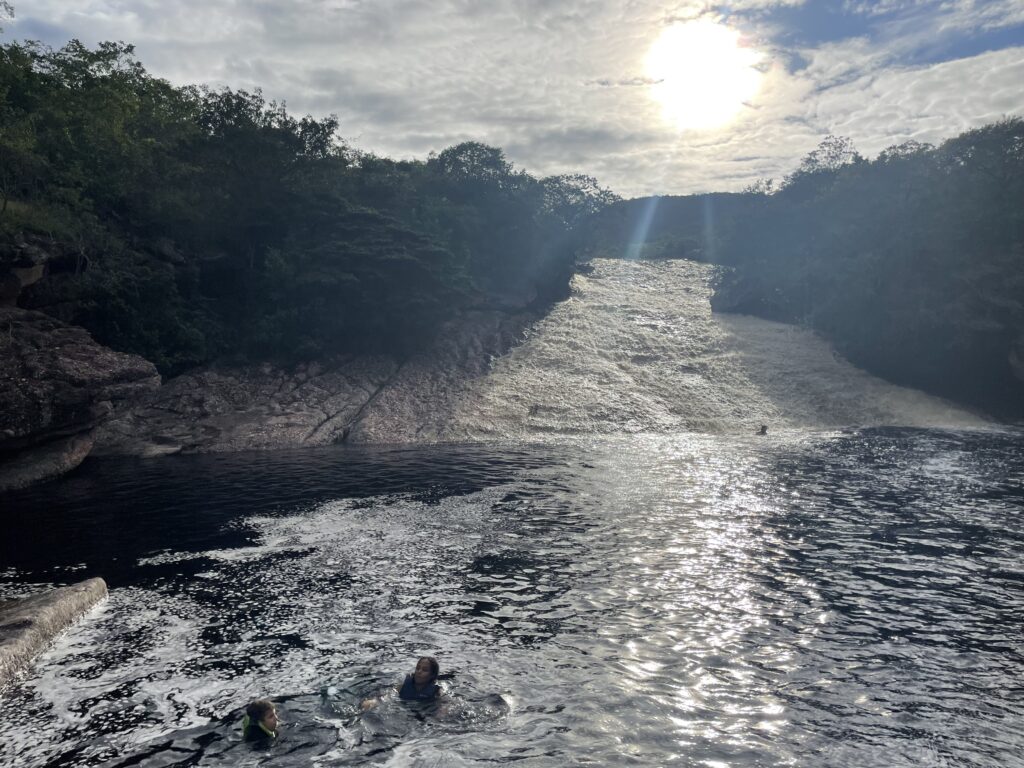
It’s located about 3.5 km from the town center, accessible via an easily walkable forest trail that takes about 40-50 minutes to complete. Even with going to Chapada Diamantina the scenery here is still very impressive, serving as a nice warm up or cap to your trip.
The Vale do Pati Trek
To start off, I did a 3-day trek in early May around the time when the rainy season was ending. That is a good time of year to do it because the waterfalls and rivers are filled with water. There is still a chance of heavy rain, mostly overnight, but in my experience the only rain I encountered while hiking was very light. The afternoons on day 2 and 3 were sunny for the most part.
WHAT TO BRING
As far as what supplies recommended to take for the trip, all the information was listed on the agency’s website. I went with fairly basic gear and some of my own snacks. I did everything in t-shirts and shorts and sometimes just shirtless. DEFINITELY wear quality hiking boots because if there’s any rain, the trail will undoubtedly be slippery, especially on first day. Some of the stuff listed, like headlamps or maybe bug spray, you honestly won’t need. Something like a 40 liter backpack is sufficient to transport everything you need. Don’t forget any first-aid.
DAY 1 – THE JOURNEY BEGINS
We left the town center around 7:30 am on a Saturday morning in an offroad vehicle and drove 2 hours to the trailhead. Upon arriving, our guide divvied up food for the trek between himself and the 3 members of our the group, which we carried in our backpacks. By the way, we ate good.
Our guide was a very experienced local that spoke Portuguese. The treks with English speaking guides provided by Chapada Backpackers are more expensive, and typically have larger groups, up to 10 people if I’m not mistaken. I was happy to have such a small crew.
Out of the entire trek the first day was the toughest, consisting of hours going up and downhill with some climbing involved, navigating some steep slopes and rocky terrain. It was kind of chilly in the morning and the initial ascent from the trailhead to the first viewpoint had a pretty significant increase of elevation. If you’re in moderate or good physical shape it’s all doable, but prepare for a workout. The most challenging part of the day may have been all the the river crossings over slippery rocks. I fell like 3 times jammed my finger.
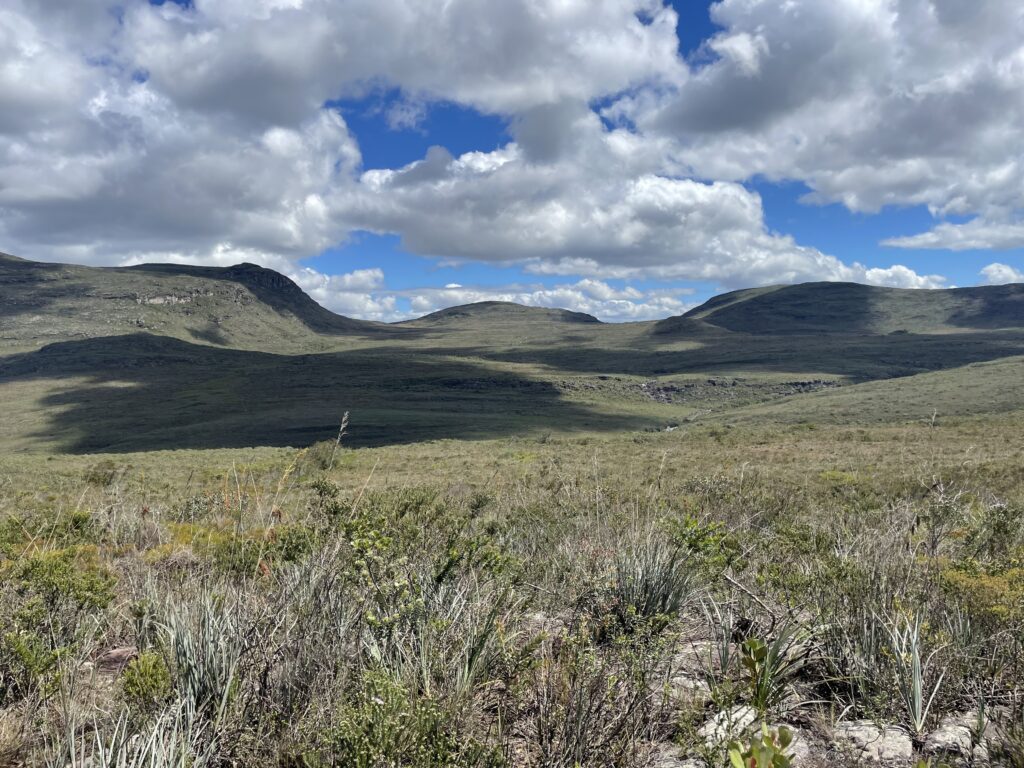
The scenery is beautiful as you pass through the open highlands and descend into the valley. The damp conditions kind of reminded me of Lord of the Rings. It was a little trippy.
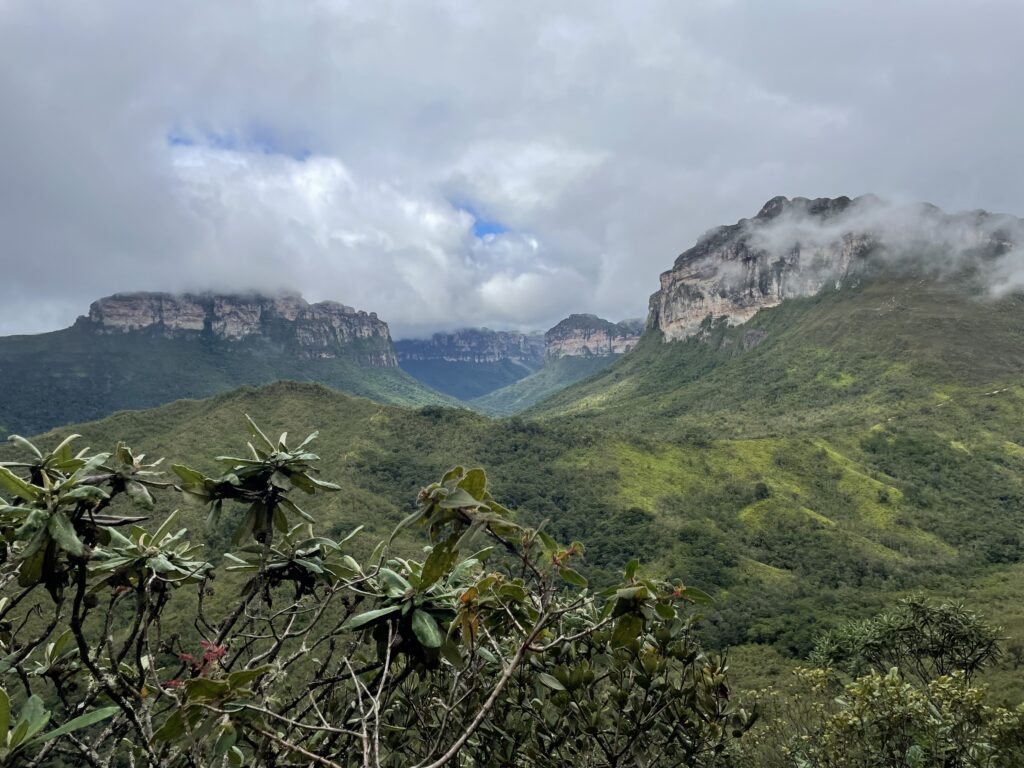
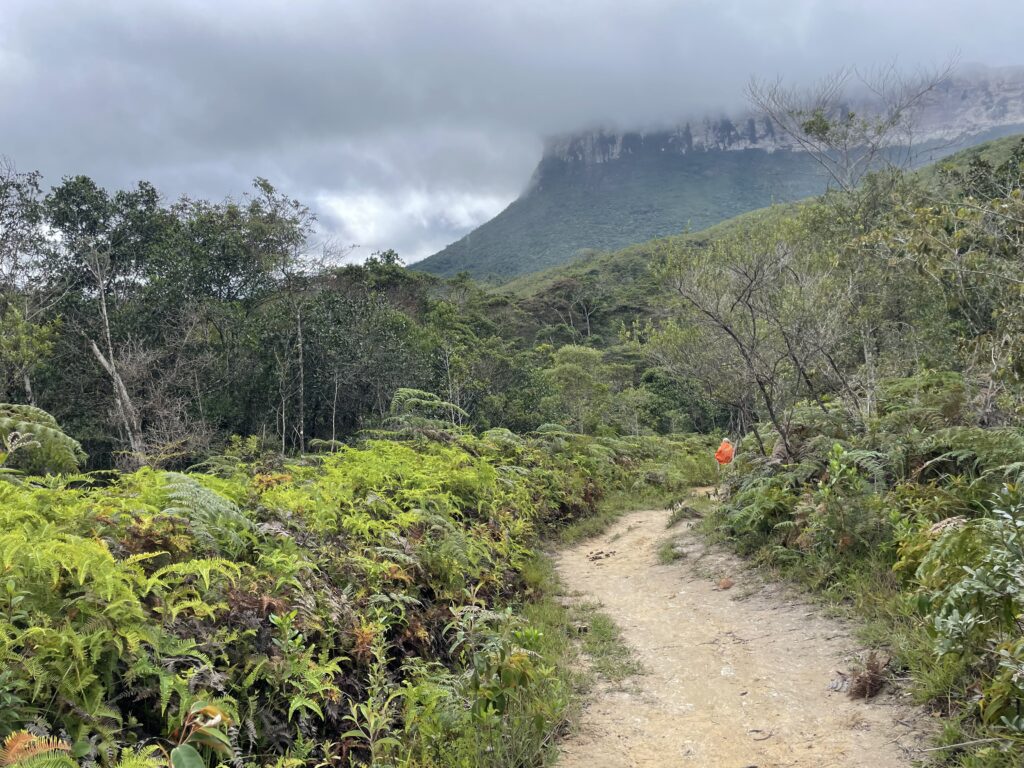
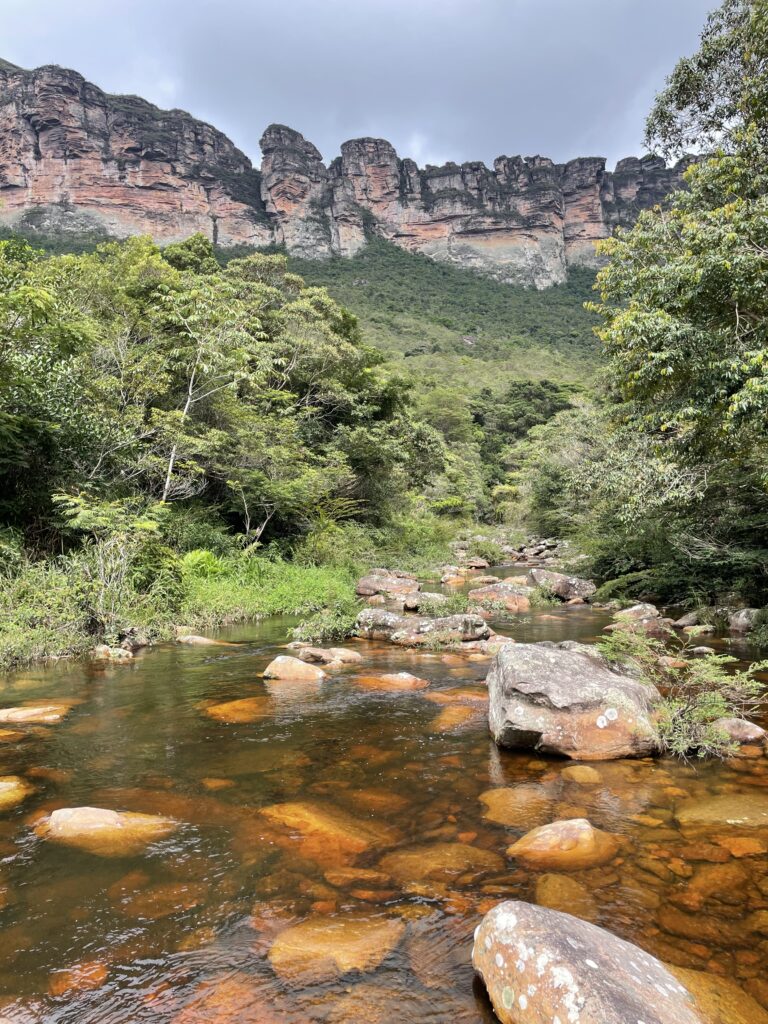
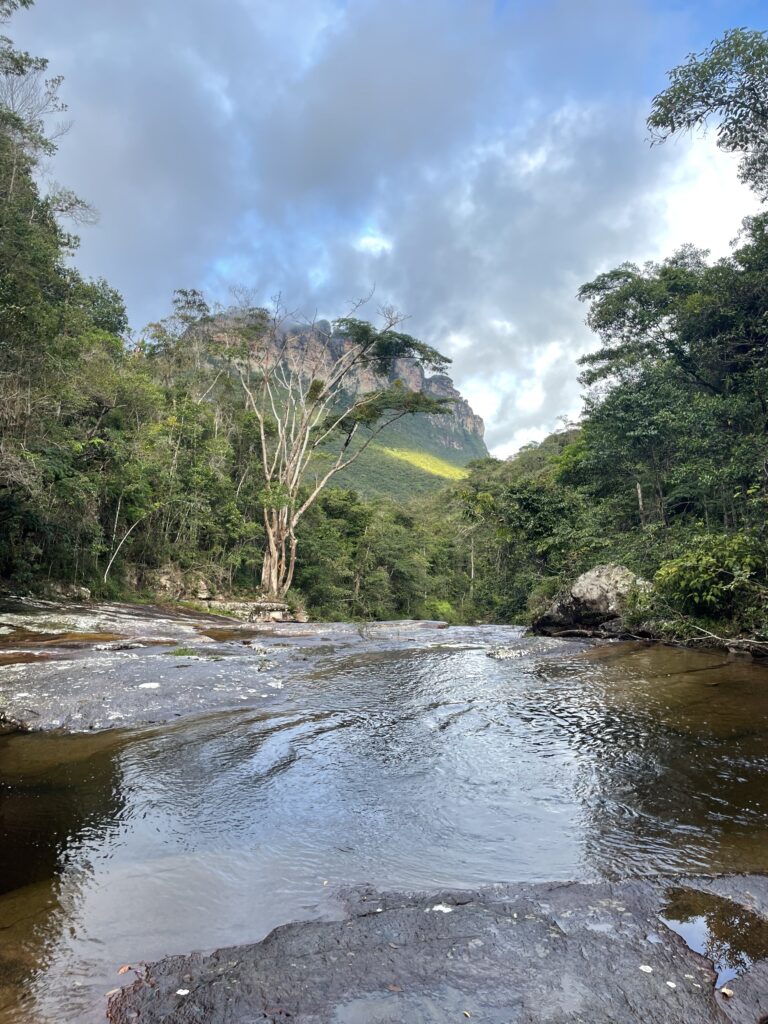
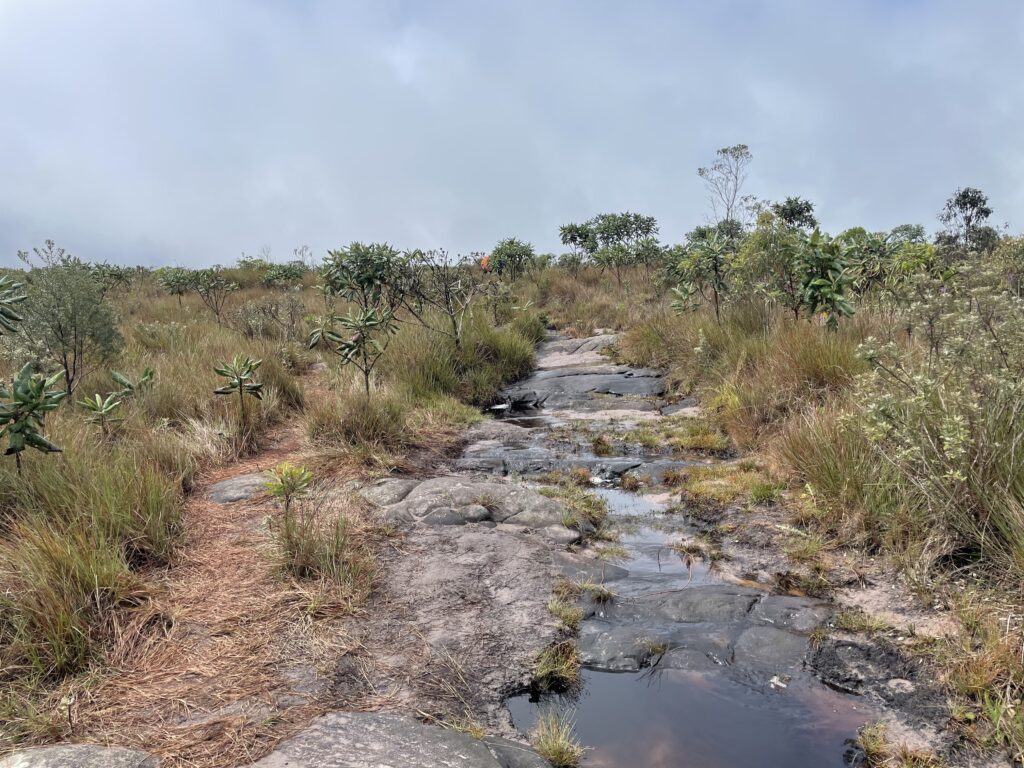
At the end of the day we slept at a Pousada/hostel in the middle of park and were served a nice dinner, then breakfast the next morning. FYI you probably won’t have any cell phone signal at all during the trip and the WIFI where we stayed wasn’t available on the first night either because the property ran on solar power. On a cloudy/rainy day the WIFI doesn’t really work. The showers were pretty cold too….not complaining just giving the details.
DAY 2 – A BIT OF RELAXATION
Originally we were supposed to hike an iconic peak of the trek, Morro do Castelo. Unfortunately, due to heavy rain from the night before, our guide determined that the trail was too slippery to take. He provided us an great alternative though, which made our day 2 pretty easy. After the insane views that we experienced on day 3, it turned out missing out on hiking Castelo this day wasn’t so bad.
Our plan B was essentially a day of swimming in the river, taking in the sun, enjoying the gorgeous landscape. It was actually some nice relief. I was loving the scenery, the morros in the distance, chilling in perfect temperature water under sunny blue skies.
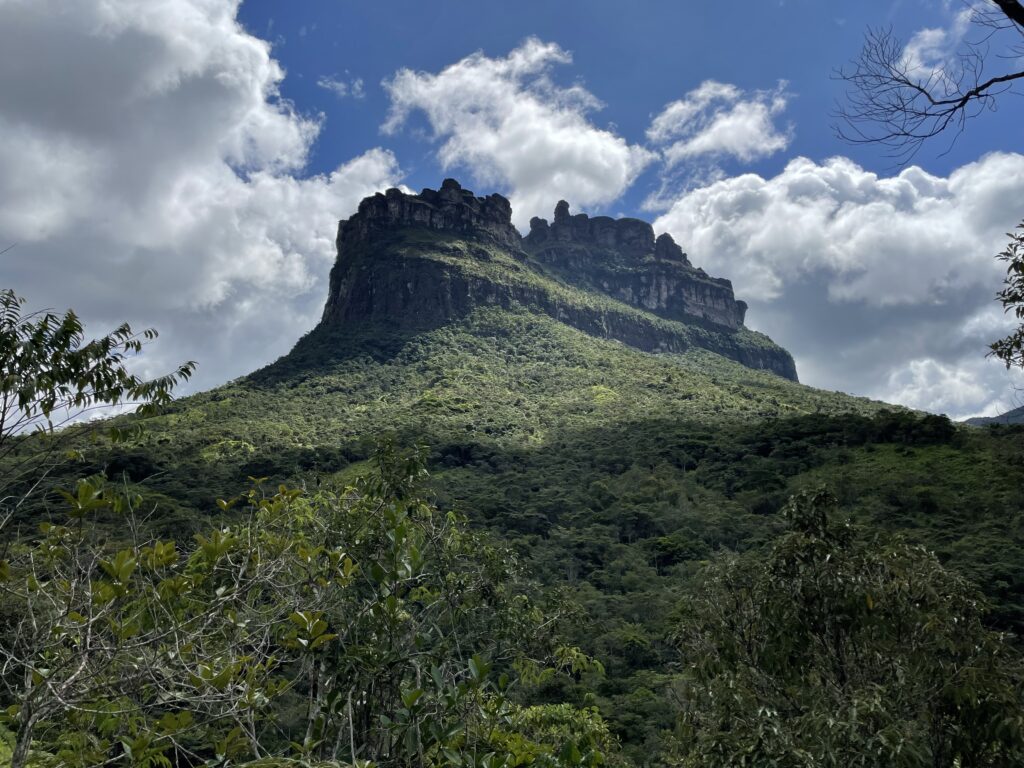
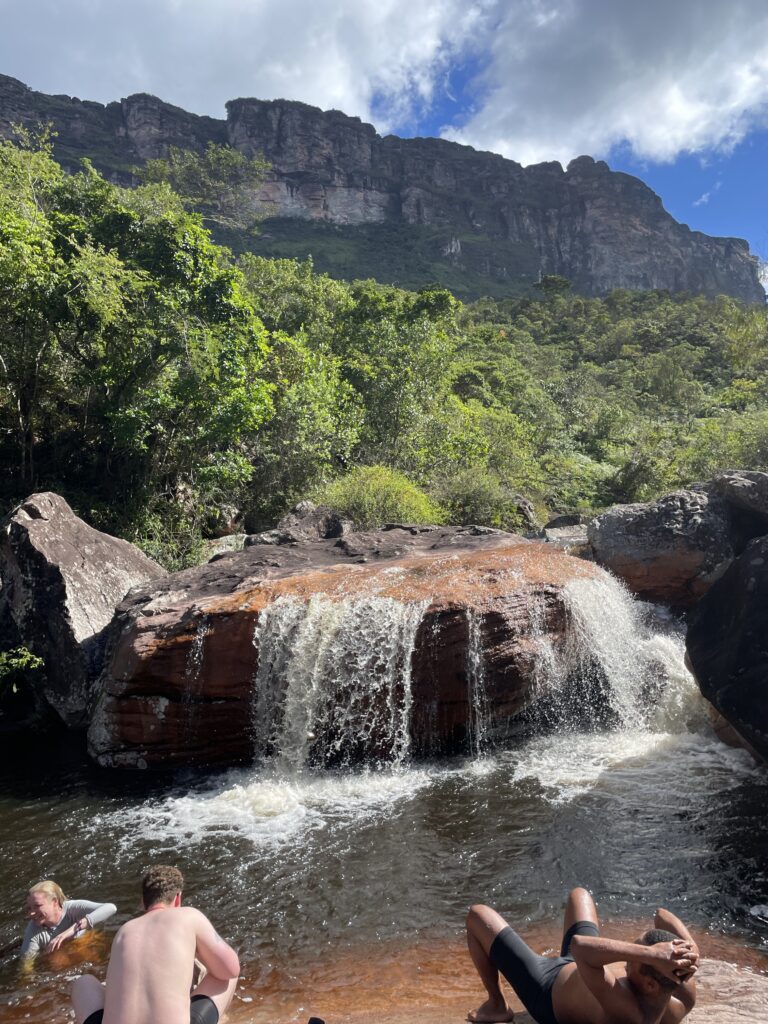
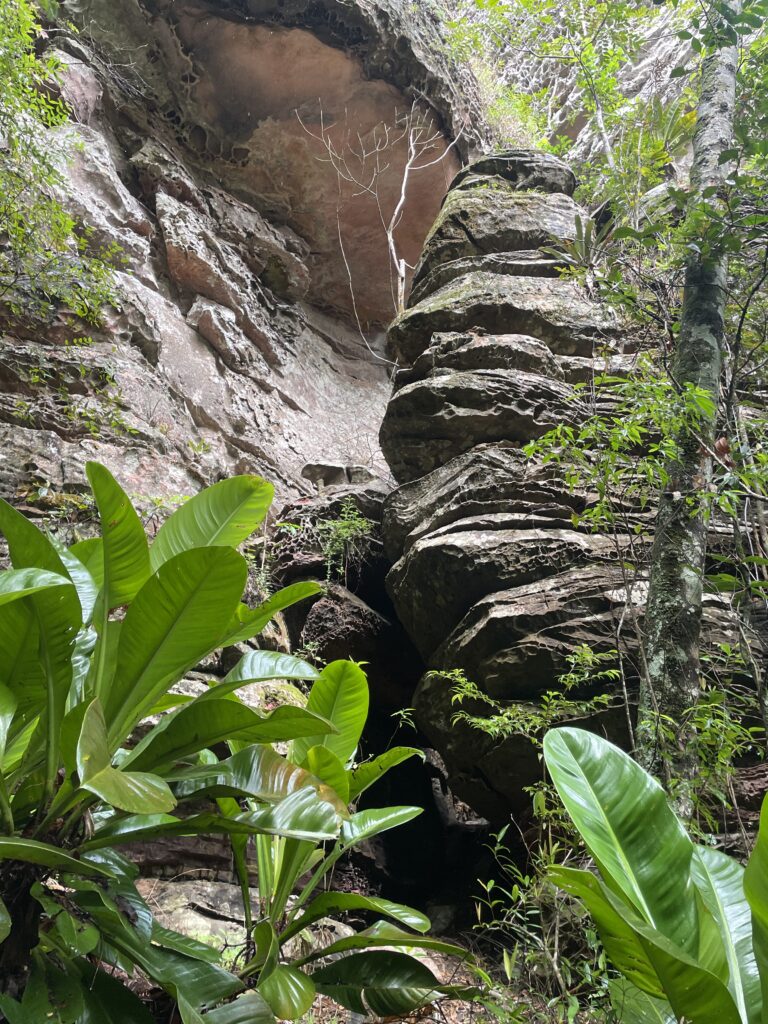
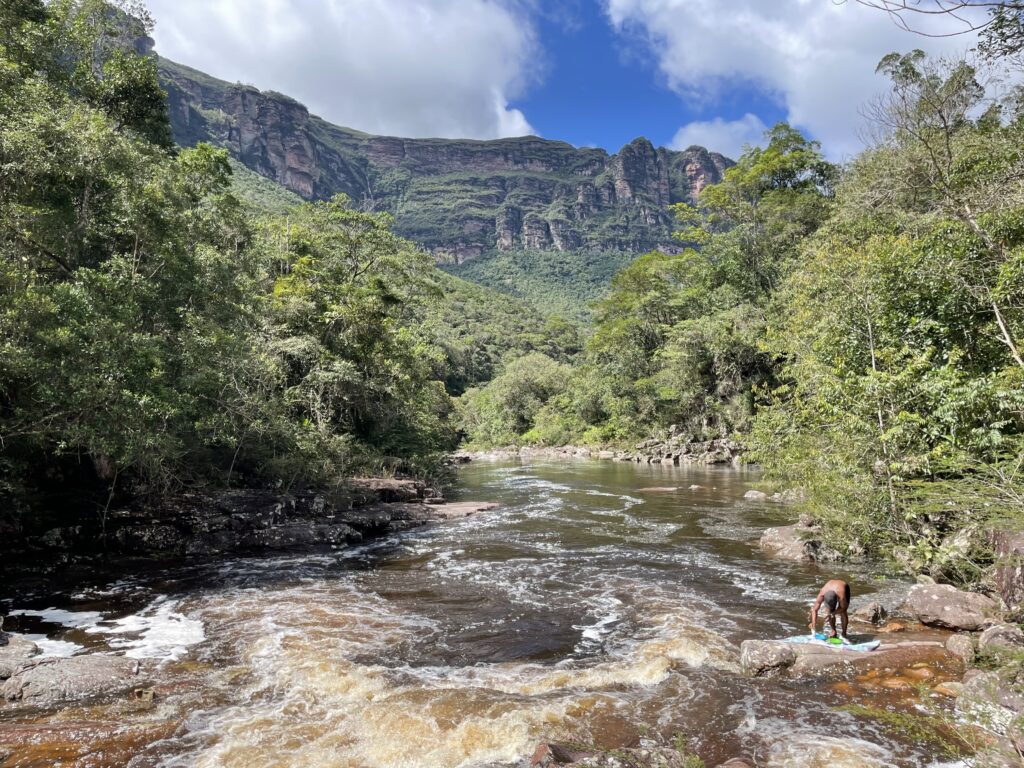
After the relaxing day we spent the night at another Pousada and our guide cooked a delicious meal for us. We caught a glimpse of the stars for a few minutes until the clouds rolled in. I imagine during dry season you may have a chance to see some really starry nights. We got some good rest to get ready for the final stretch of the trek.
DAY 3 – THE GRAND FINALE
The most epic day of the entire trip! We started with an ascent through the forest and spotted a group of monkeys hanging out in some trees, probably looking for jackfruit. We were back to some real hiking again, except our backpacks were much lighter, less burdened by all the food we had been carrying. The terrain was dry too, which was certainly appreciated. We took the narrow trail called Penda do Jacaré until we slowly had views of the valley.
After about 60-90 minutes of ascending we reached an amazing viewpoint atop a plateau, giving us look at Morro do Castelo and the green valley from above.
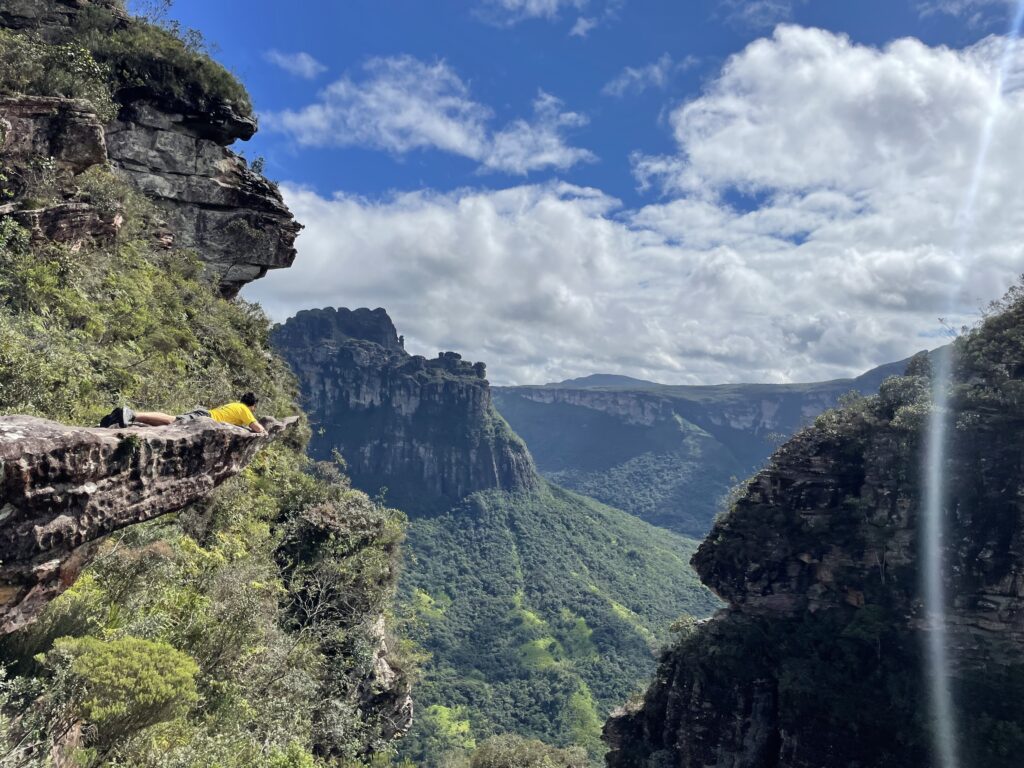
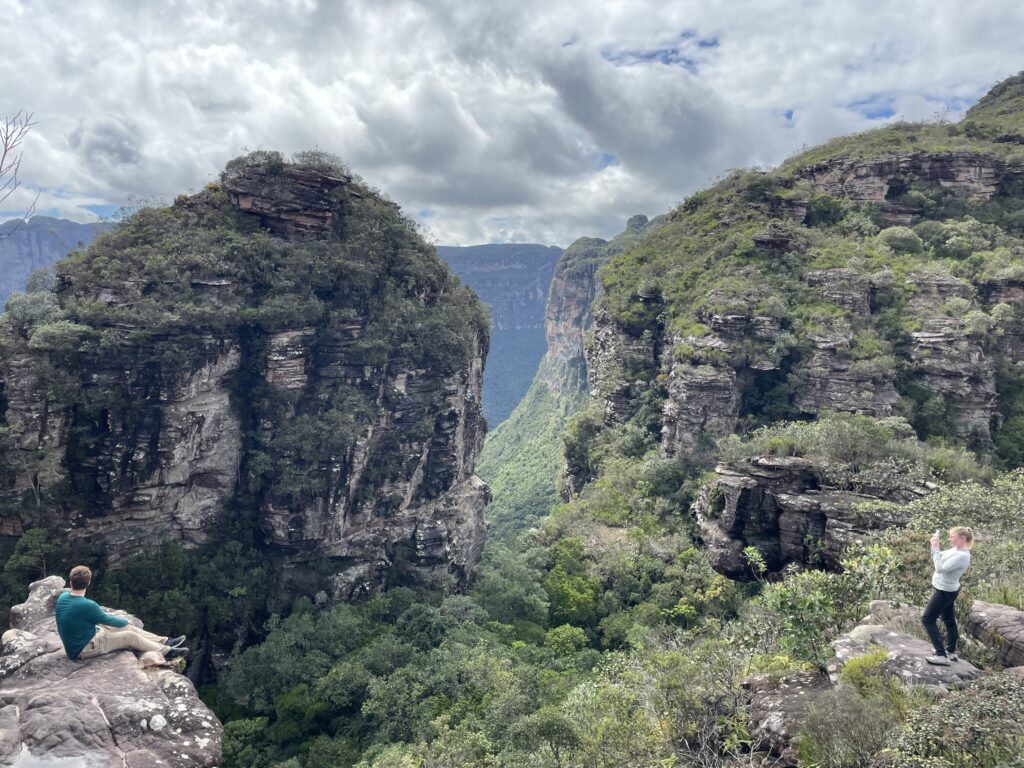
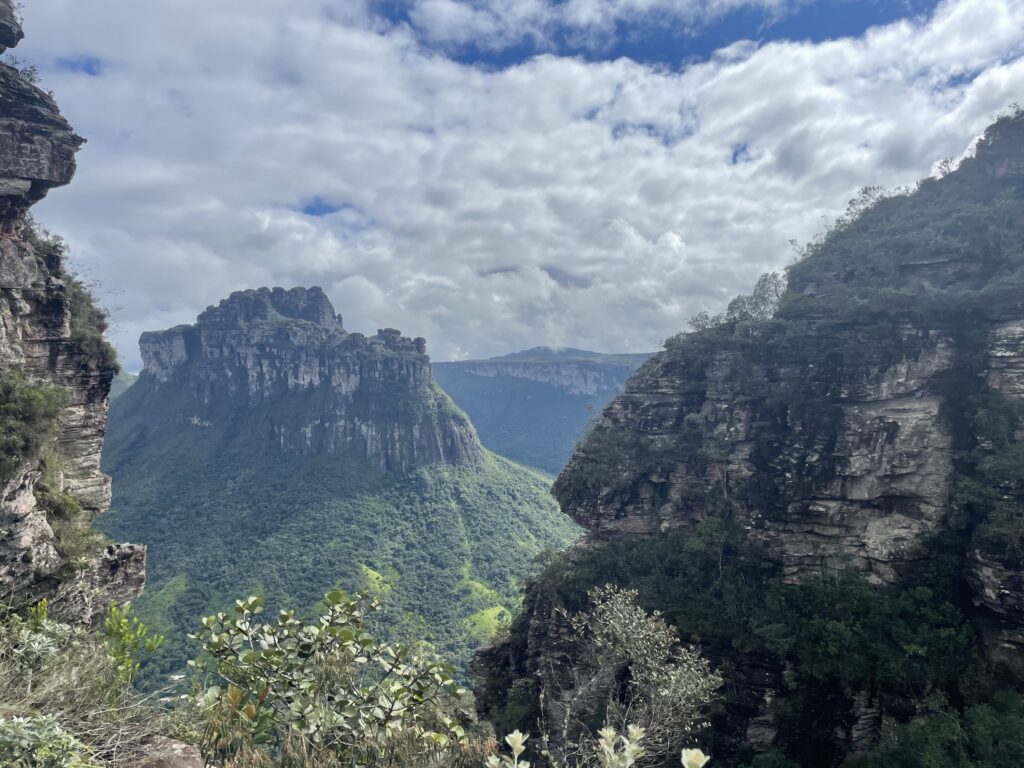
Side Note – Upon leaving this point, our guide spotted a venomous snake that slithered a couple feet in front of us. Snake bites are rare but he knew what to look for in this area.
After that we continued along the plateau until reaching the main attraction, Cachoeirão. Not only was the waterfall gushing because of the recent rainfall over the previous couple days, we were blessed with the sight a double rainbow.
Like, what? It was seriously just breathtaking.
We had the entire waterfall from above to ourselves. No rush, just in complete awe.
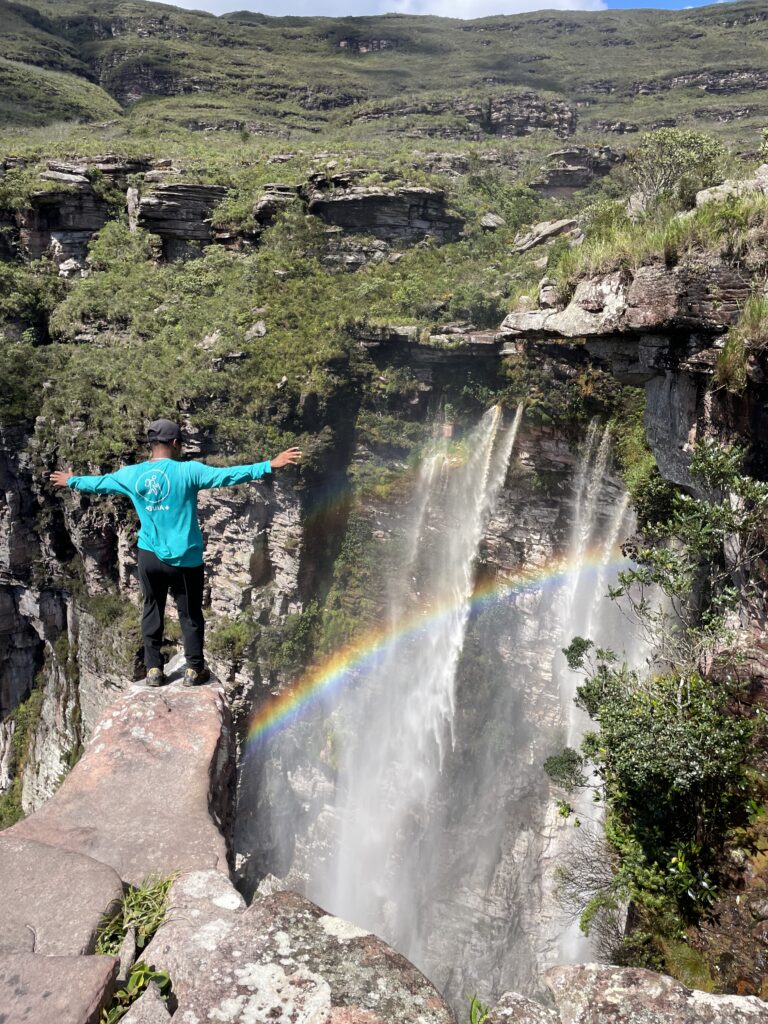
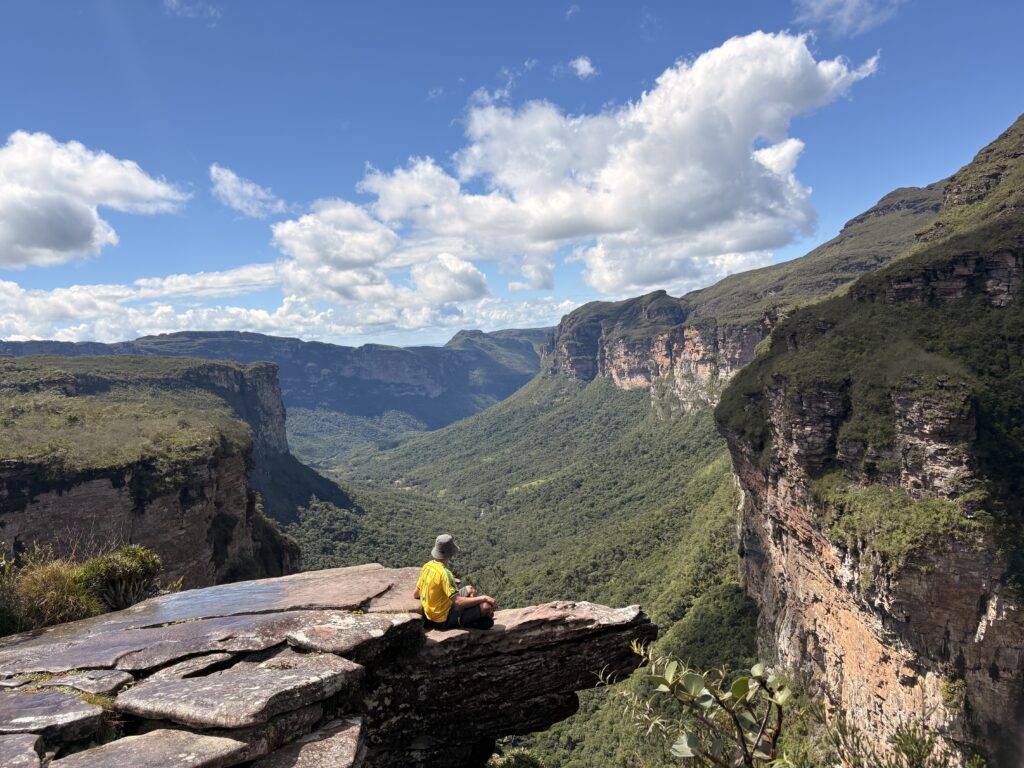
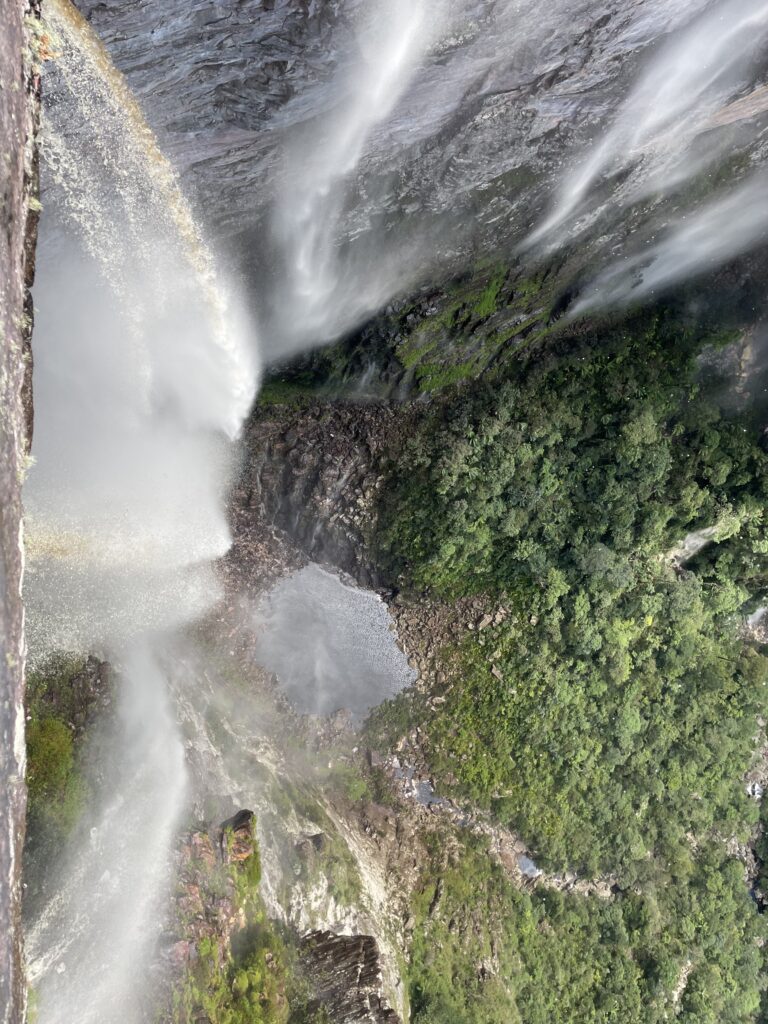
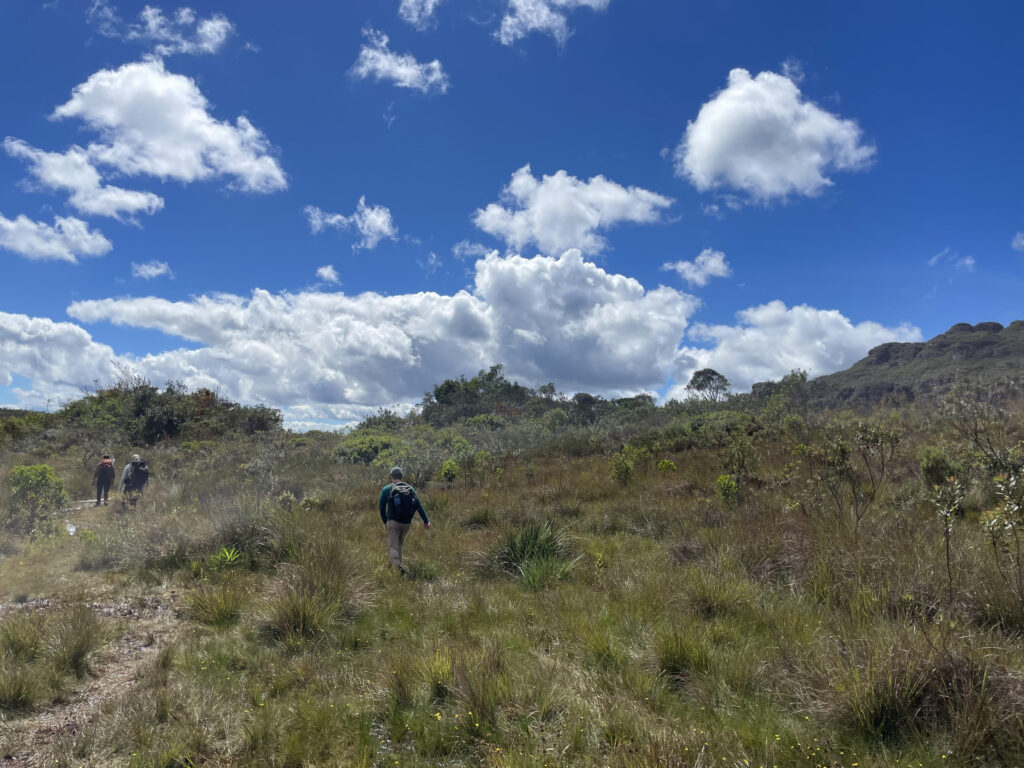
After hanging out for a while, we actually did not descend to Cachoeirão’s natural pool below, probably because the waterfall was so strong we wouldn’t have been able to swim. Or maybe the guide just said screw it. Instead, we crossed the vast open landscape for an hour or 2, then descended back to trailhead we originally started the trek.
It was an epic finish. After it was all said and done we congratulated each other for making it through the gauntlet.
Other Towns in Chapada
Chapada Diamantina is huge, covering about 38,000 square kilometers. Around the park are about 6 towns that serve as gateways to different areas of the park, as well as different access points to Vale do Pati and other trails.
- Andaraí
- Guiné
- Ibicoara
- Igatu
- Mucugé
- Palmeiras
Each of these places has something different to offer and is in particularly close proximity to certain attractions within the park. In addition, their locations provide varied routes for what could be perceived as the same trek.
For example, doing Vale do Pati from Palmeiras begins from the Vale do Capção entry point, whereas from Lencois the trailhead is from Guiné. The same thing goes with Cachoeira da Fumaça – you can reach it from above or from below. Different landscapes, different terrain, etc.
What you’re looking for specifically can determine where you might want to stay. If you’re the adventurous type or have your own transportation, it wouldn’t hurt to check out alternative options besides Lençois.
Conclusion
The experience was totally worth it. If you’re heading to northeast Brazil, don’t pass this up! Chapada Diamantina is a special place that every traveler should explore if you want some adventure in your life.