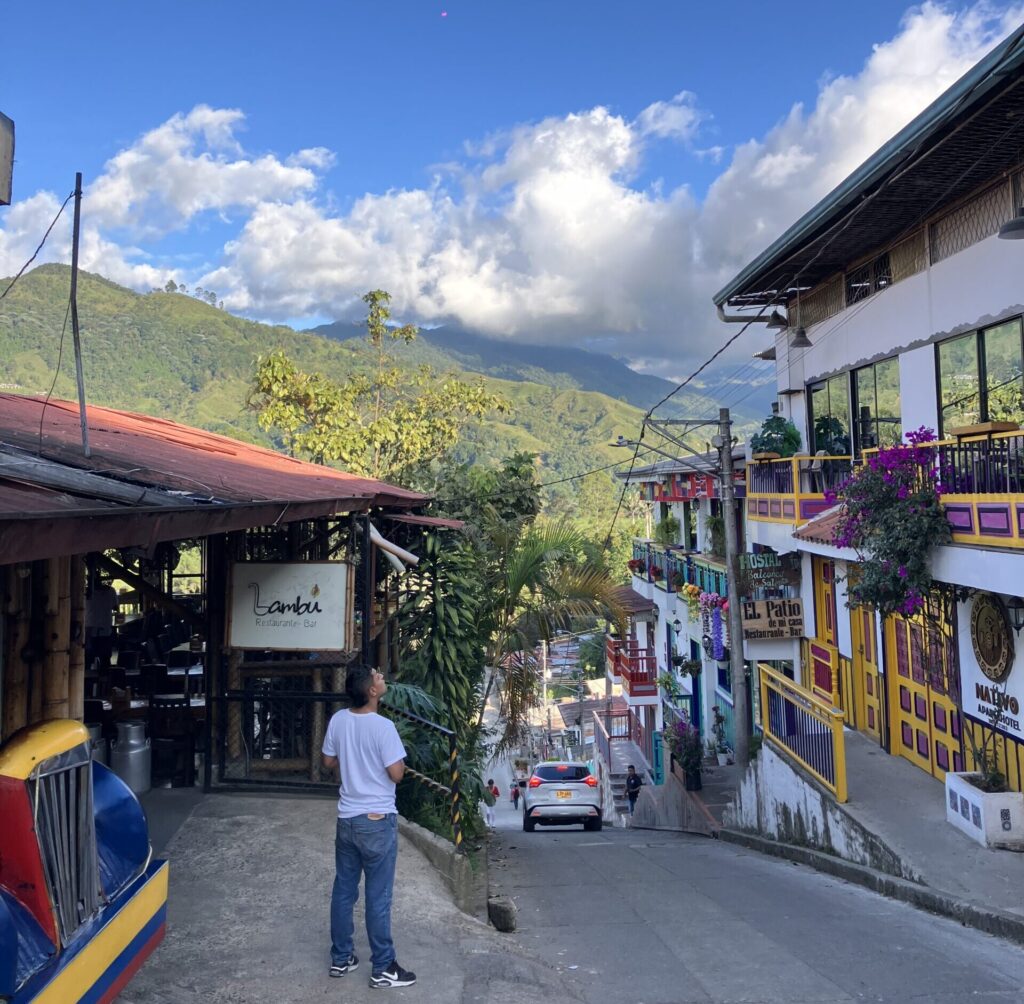
During my second trip to Colombia, I was on a mission to explore some of the country’s more unusual landscapes and attractions. After spending time in Medellín, Antioquia, I headed south by bus toward Salento, a colorful mountain town in Colombia’s most famous coffee-growing region.
I had already visited Manizales, a city known for its collection of natural hot springs, during a previous trip, so I skipped it this time on my journey. I also skipped Jardín, another beautiful town in Antioquia surrounded by coffee plantations. I went there during my third trip to Colombia and loved it.
Salento was one of those places I had heard so much about that I wanted to see what all the fuss was about. It also fit nicely into my travel plans, which included hiking through Cocora Valley, visiting the Tatacoa Desert, and eventually making my way to Bogotá.
I spent three days in Salento, exploring the town and its surroundings before continuing my journey.
Here’s what I experienced, where I stayed, and how to get around independently.
Where Is Salento, Colombia?
Salento is located in the department of Quindío, in Colombia’s central Andes, approximately 25 kilometers northeast of Armenia and within the country’s famous Coffee Cultural Landscape. In all, Colombia has about 5 main regions for coffee production.
The town sits at an elevation of around 1,900 meters (6,200 feet), surrounded by green mountains, valleys, and coffee plantations. It’s a popular destination among Colombian tourists and international travelers alike.
Salento makes an excellent base for exploring the surrounding countryside, particularly Cocora Valley and the region’s many coffee farms.
The nearest major transportation hubs are Armenia and Pereira, both of which have bus connections to other Colombian cities.
Getting to Salento and Getting Around
Most travelers arrive in Salento by bus, usually connecting through Armenia or Pereira.
If you’re coming from Medellín, you can take a bus toward Armenia or Pereira and transfer to a local bus bound for Salento. From Armenia, the journey generally takes around an hour, while Pereira is approximately 45–60 minutes away.
Once you arrive, Salento itself is relatively easy to explore on foot. The town isn’t particularly large, and most restaurants, cafés, shops, and accommodations near the center are within walking distance.
For attractions outside town, the traditional Willys jeeps are one of the most convenient transportation options.
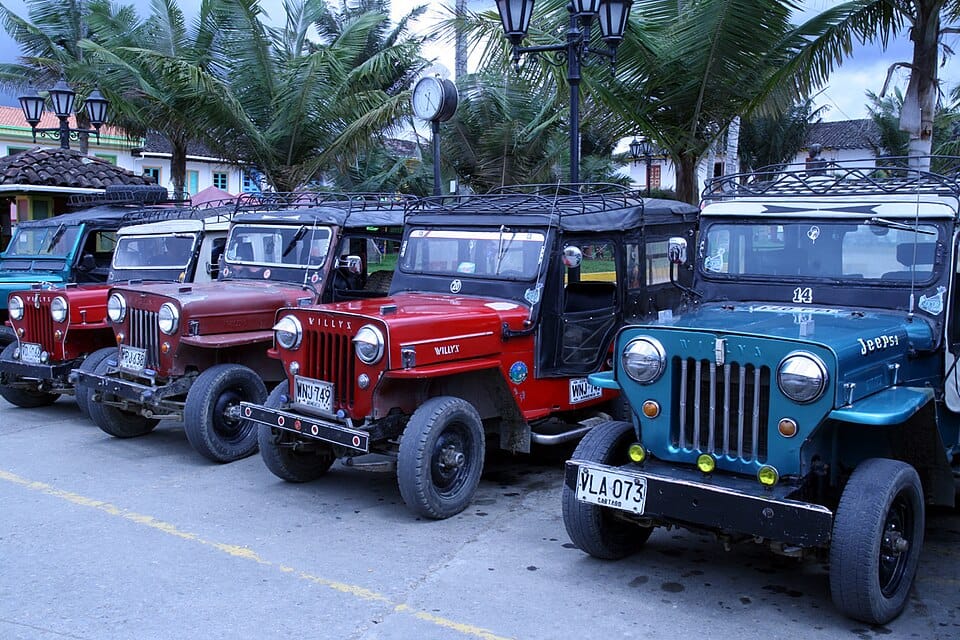
These colorful, rugged vehicles have become something of a symbol of Colombia’s coffee region. You’ll find them around Salento’s main square, Plaza de Bolívar, where they transport visitors to Cocora Valley, nearby coffee farms, and other destinations.
For travelers staying farther outside town, walking, local jeeps, and taxis are the main options. It’s worth checking transportation arrangements with your accommodation, particularly if you’re arriving after dark or carrying heavy luggage.
Exploring the Town of Salento
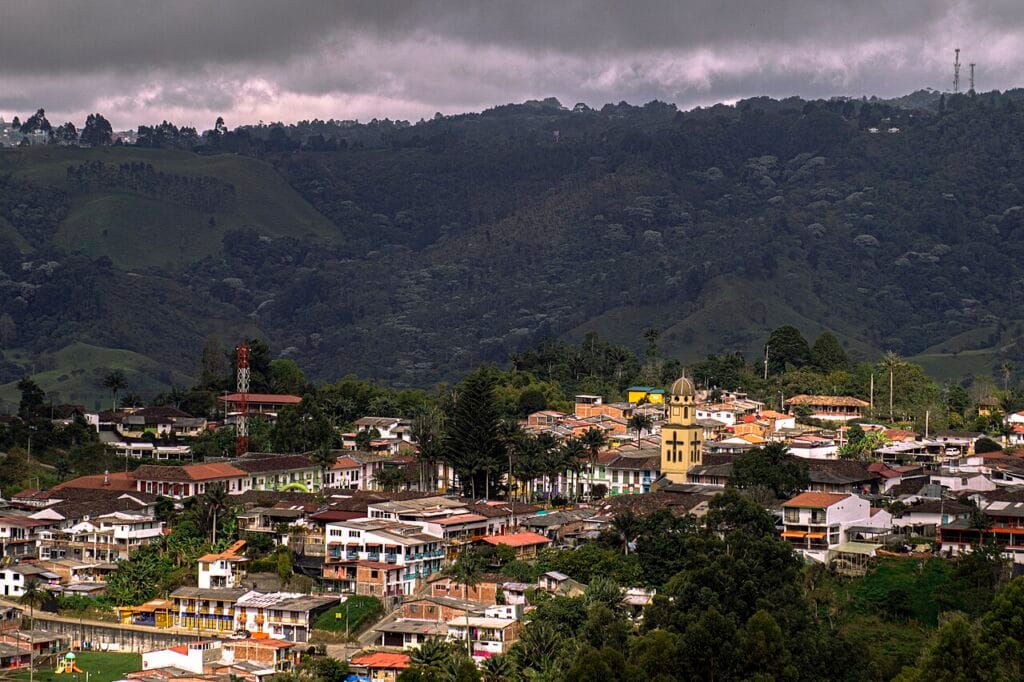
Salento is a lively little mountain town with colorful colonial-style buildings, cafés, restaurants, and souvenir shops.
Much of the activity revolves around Plaza de Bolívar and Calle Real, the town’s main tourist street. You’ll find brightly painted balconies, artisan shops, and plenty of places to grab a coffee or something to eat.
At the end of Calle Real, you can climb the steps toward the Alto de la Cruz viewpoint for a panoramic view of Salento and the surrounding mountains.
Salento is a popular tourist destination, and I enjoyed the overall cheerful atmosphere.
Hiking Cocora Valley
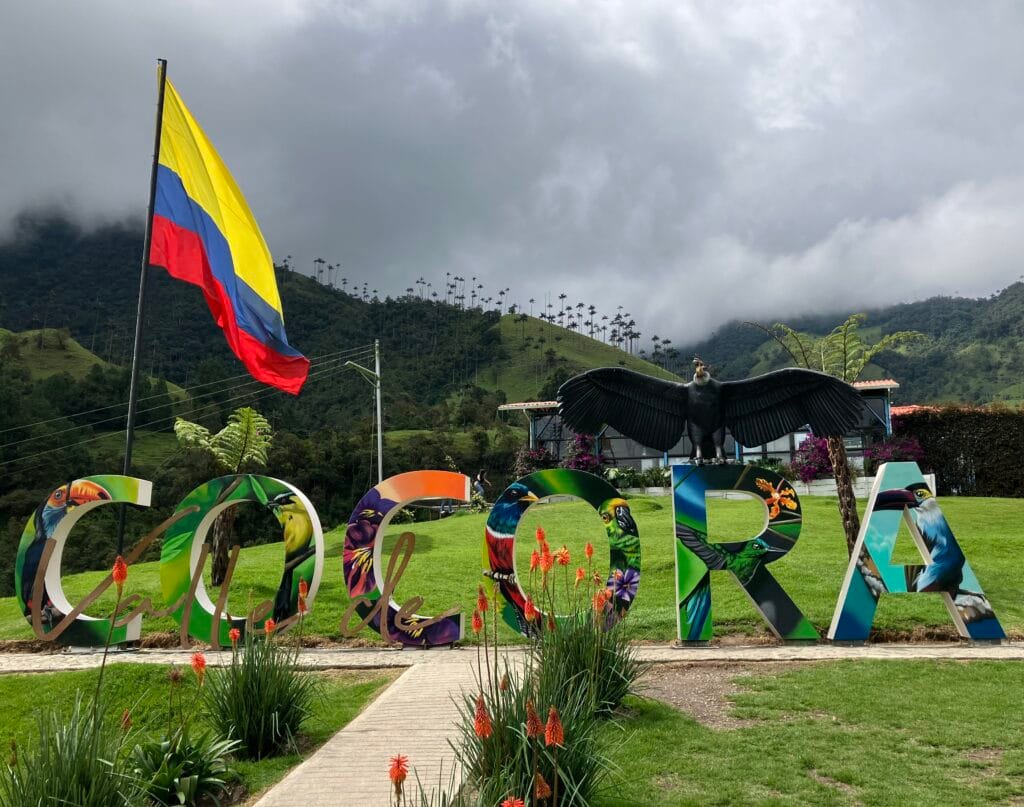
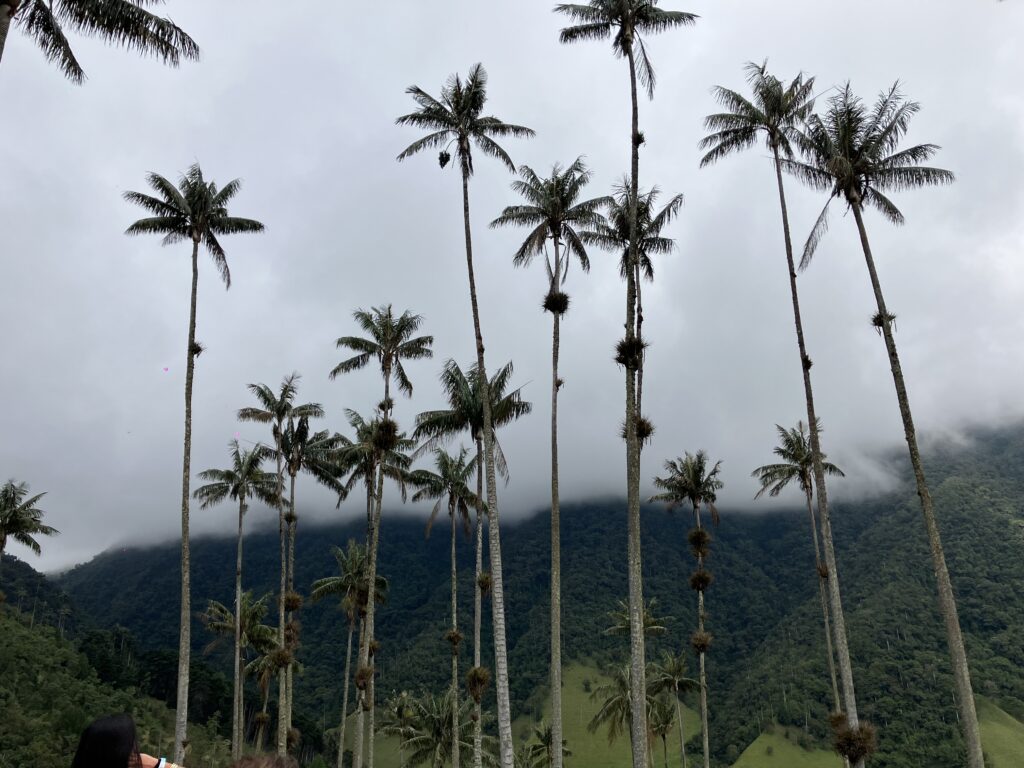
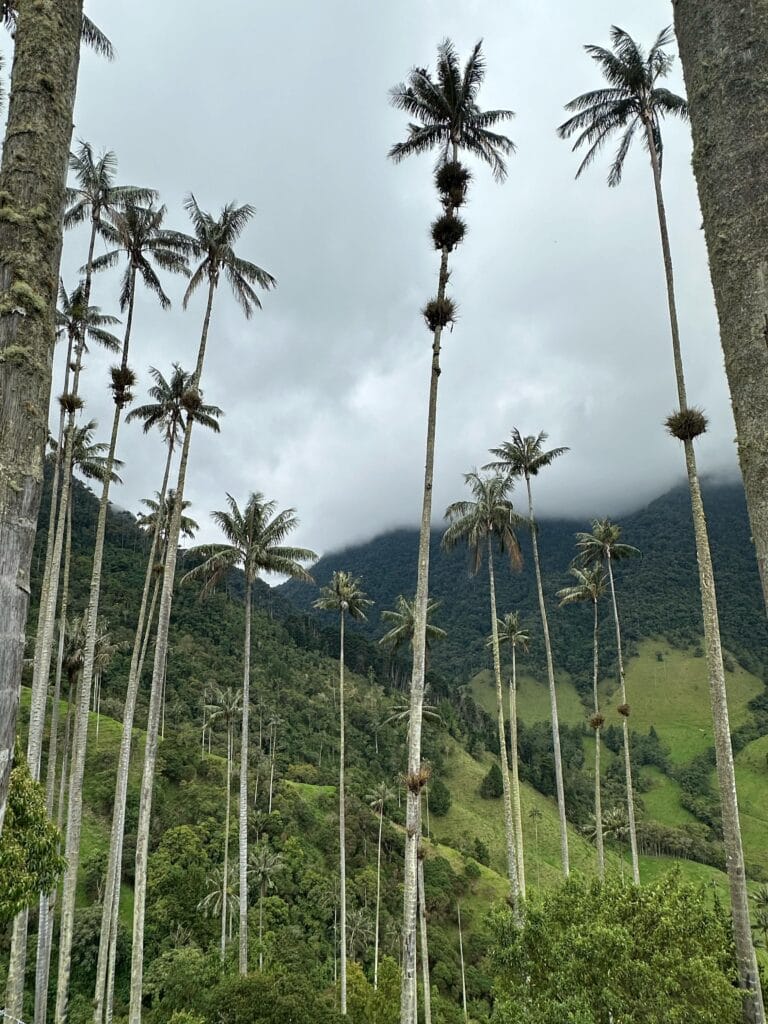
One of the main reasons I visited Salento was to explore Cocora Valley, famous for its enormous wax palms rising above the surrounding green hills.
These remarkable trees are Colombia’s national tree, and some can grow more than 60 meters tall.
You don’t need to book an organized tour to visit Cocora Valley. I went independently by taking one of the traditional Willys jeeps from Salento’s main square.
The ride takes approximately 25–30 minutes, with departures generally every 20–30 minutes during busy periods. Expect to pay around COP 5,000–10,000 per person each way, although fares and departure schedules can change.
Once you arrive, you have two main hiking options.
The shorter route takes you more directly toward the famous wax-palm viewpoints. It’s ideal if you want to enjoy the scenery, take photographs, and avoid spending most of the day hiking.
The longer circuit takes approximately five to six hours, depending on your pace and the route you choose. This is the one I completed.
I started along the trail that passes through the forest, crossing several suspension bridges before eventually climbing into the higher elevations and reaching the spectacular wax-palm landscape.
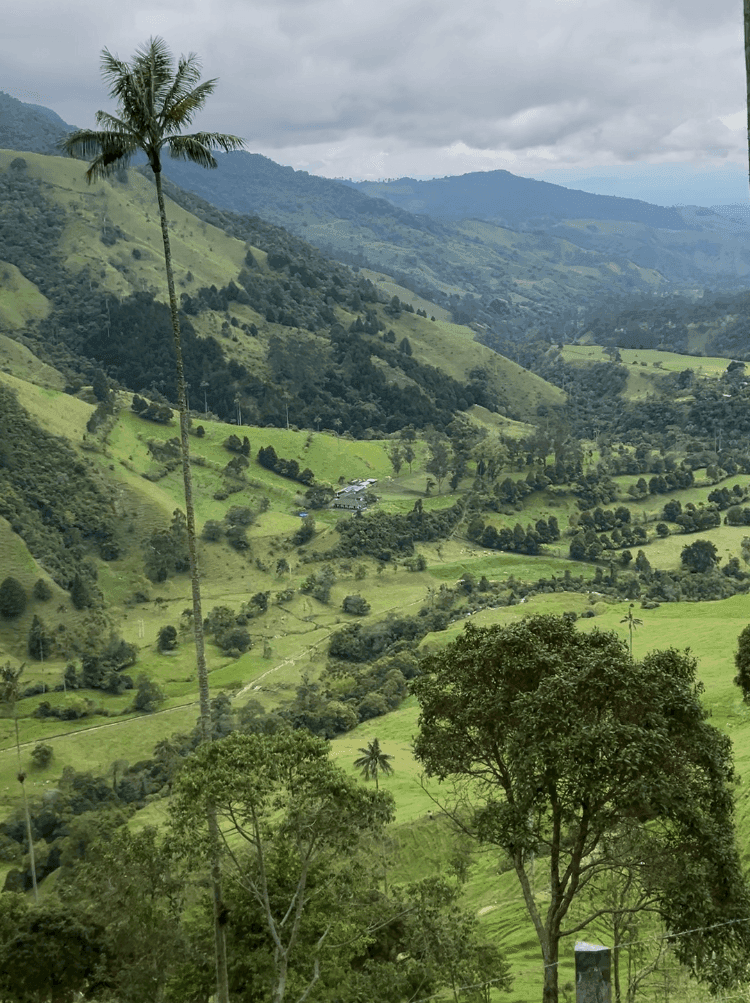
The longer route is approximately 12–15 kilometers and includes some challenging uphill sections, but the scenery is incredible. You experience much more than just the famous viewpoints, including dense vegetation, rivers, mountain scenery, and cloud forest.
If you enjoy hiking and have the time, I’d recommend the longer circuit. Otherwise, the shorter walk still allows you to experience the valley’s most famous scenery. After you’re done, you’ll wait for a Willys jeep around the same place you’re dropped off in order to head back to Salento.
Visiting a Coffee Farm: Finca El Ocaso
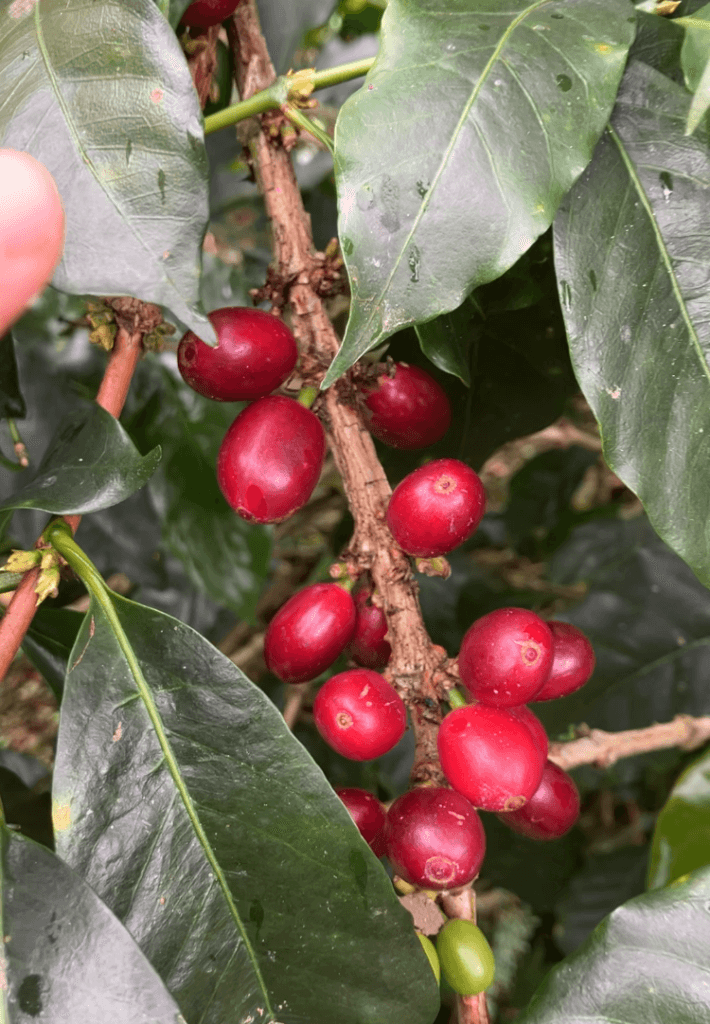
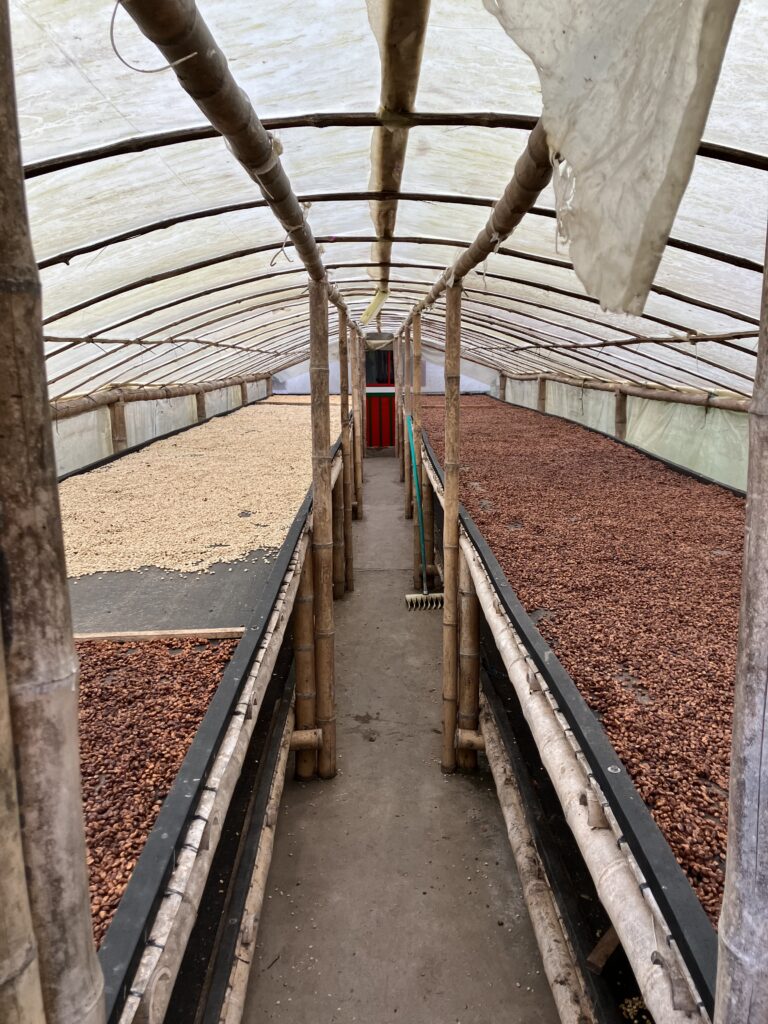
No visit to Salento would feel complete without exploring at least one of the surrounding coffee farms.
I chose Finca El Ocaso, a beautiful plantation located in the countryside outside town. The plantation was fascinating for me, situated on a lush hillside.
The tour was an opportunity to walk amongst the 24-hectare farm. I learned about Colombia’s coffee-growing traditions and its commitment to excellent quality throughout the entire process, from caring for the plants and harvesting coffee cherries to processing and preparing the finished product.
One of the most interesting things I learned was about a deadly pest infestation that devastated the region’s coffee plants, along with the subsequent solutions that came about to make sure it would never happen again.
Colombia is one of the world’s largest coffee producers, and coffee farming has played an enormous role in the country’s economy, culture, and rural communities.
I very much enjoyed my experience at Finca El Ocaso enough to include it in my article about my favorite tours around the world, where I discuss the experience in more detail.
Playing Tejo in Salento
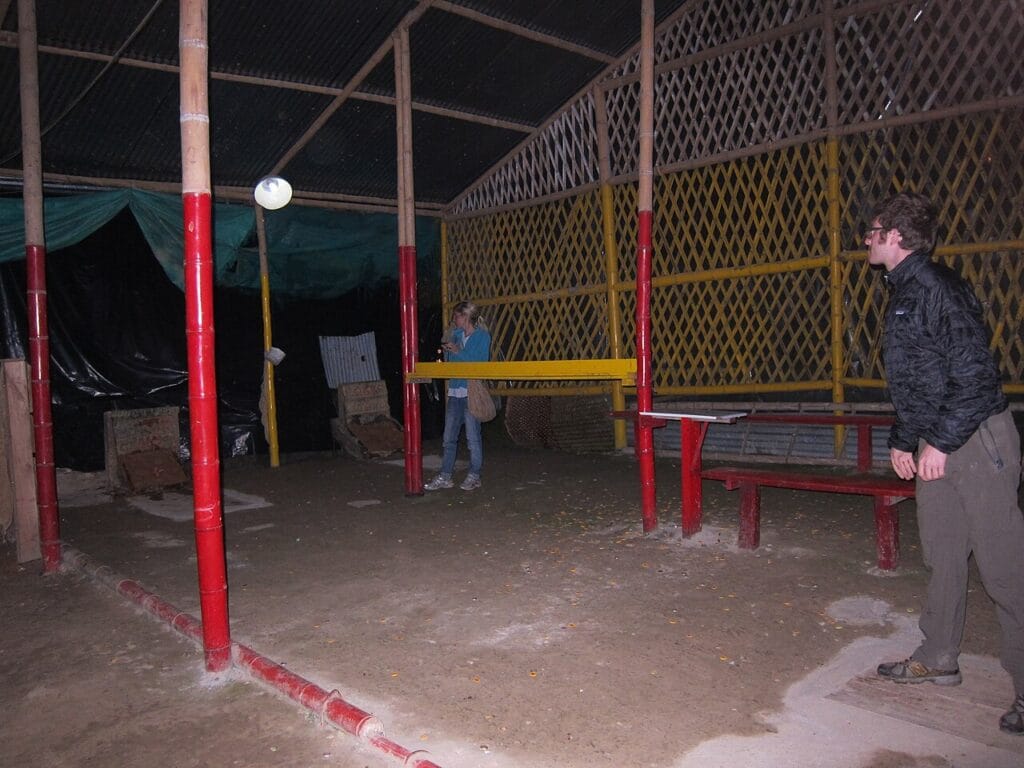
If you’re looking for something fun to do in the evening, I recommend trying tejo, one of Colombia’s most unusual traditional games. Tejo has roots in the Indigenous Muisca culture of Colombia’s Andean highlands and has been played in various forms for centuries.
The game involves throwing a heavy metal disc toward a clay-covered target containing a metal ring and small packets of gunpowder called mechas.
When your disc strikes one of these packets, it creates a loud explosion! It’s a game of fun competition and socializing, often accompanied by music and a few beers.
One popular place to play in Salento is Cancha de Tejo Los Amigos, a casual bar near the town center. Prices vary, but visitors have reported paying around COP 13,000–15,000 per person, sometimes including a drink.
Where to Stay in Salento: Two Hostels I Recommend
During my time in Salento, I stayed at two different hostels, each offering a different experience.
Cattleya Trianae
Cattleya Trianae was a peaceful and comfortable place to stay, conveniently located about a 5–10 minute walk from Salento’s main square, just at the end of town. The owners are a sweet and welcoming couple and the area is quiet.
I particularly appreciated the comfortable dorm beds, which had nice sheets and blankets. Sometimes those little details make a big difference when you’re traveling for extended periods.
It’s a great choice if you want somewhere quiet to sleep while still being close to the restaurants, cafés, and transportation options in the town center.
Yambolombia Hostel
Yambolombia offers a completely different atmosphere.
Located outside Salento along the rural road toward several coffee farms, the hostel has incredible views of the surrounding countryside. It’s an excellent option if you prefer staying somewhere peaceful and surrounded by nature rather than directly in the middle of town.
The trade-off is transportation. Walking to Salento’s main square takes approximately 20–30 minutes, depending on your pace. You can also use a local Willys jeep or arrange a taxi.
One of the advantages of Yambolombia is its location near coffee farms such as Finca El Ocaso, Finca Don Elías, and Las Acacias.
Both hostels are worth considering. If convenience and easy access to town are your priorities, I’d lean toward Cattleya Trianae. If you prefer countryside views and a more rural atmosphere, Yambolombia is an excellent alternative.
Continuing My Journey: Tatacoa Desert and Bogotá
TATACOA
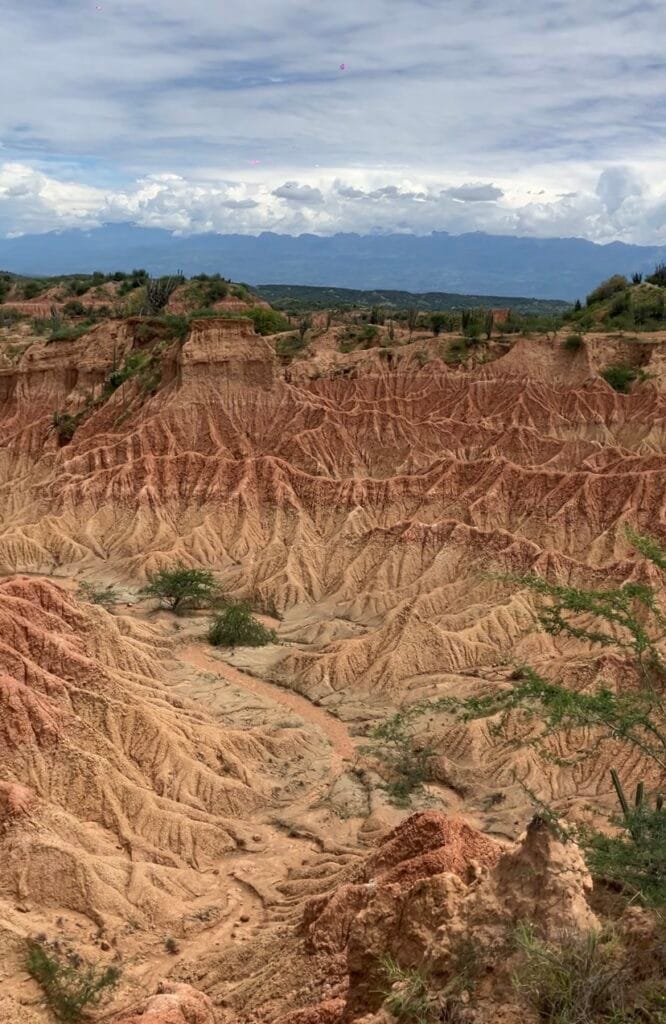
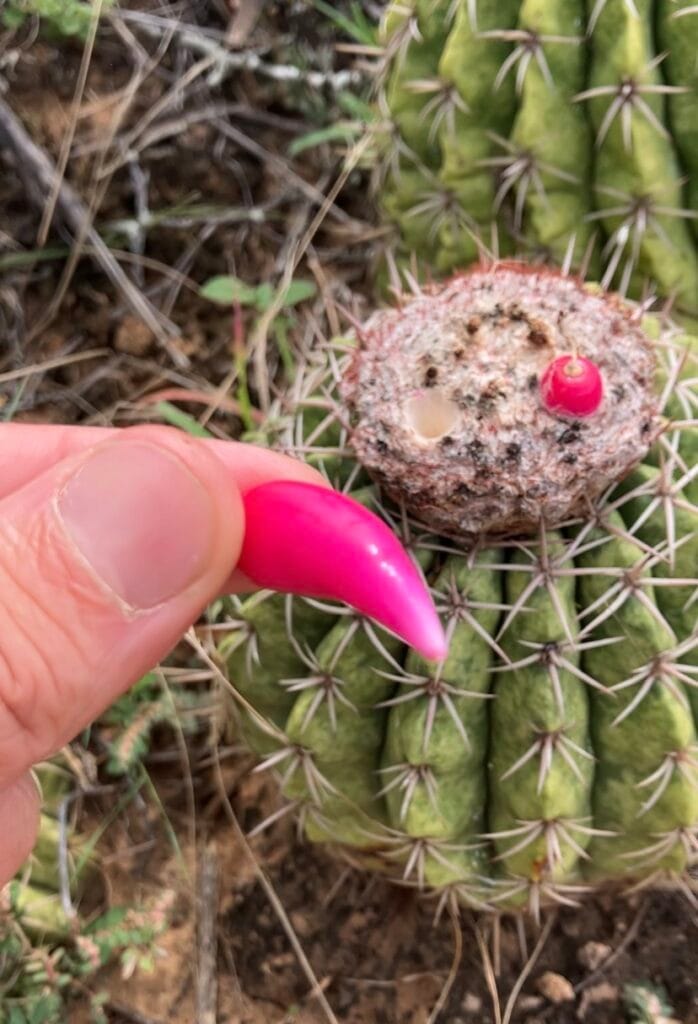
After spending several days in Salento, I continued south toward the Tatacoa Desert, one of the most unusual landscapes I’d seen in Colombia.
Many backpackers traveling south from Medellín visit Salento before continuing toward Cali. Afterwards, you can even hit Popayán, and eventually Pasto. However, I wanted to experience something completely different before flying out of Bogotá.
From Salento, I traveled through Armenia toward Neiva, the main transportation hub for visiting the Tatacoa Desert.
I stayed at Backpackers and Travellers Hostel in Neiva, which organized my desert excursion.
The tour was incredibly informative, and our guide had exceptional knowledge of the region’s geography. The desert itself was fascinating, with dramatic formations and landscapes amongst eroded canyons, completely unlike the green mountains I’d just experienced around Salento.
However, I chose the longer excursion that was offered, which involved several hours of walking under the blazing sun. Although I loved the scenery and learned a great deal, the tour eventually became quite exhausting and a bit repetitive. At a certain point it felt like endless walking.
If I were doing it again, I’d choose a shorter excursion. There’s plenty to appreciate without spending quite so many hours walking in the heat.
One practical recommendation: whenever possible, try to arrive in smaller or more rural South American towns and cities during daylight, preferably late morning or early afternoon. I arrived in Neiva late at night and had to take a taxi from the bus terminal to my hostel.
ZIPAQUIRÁ
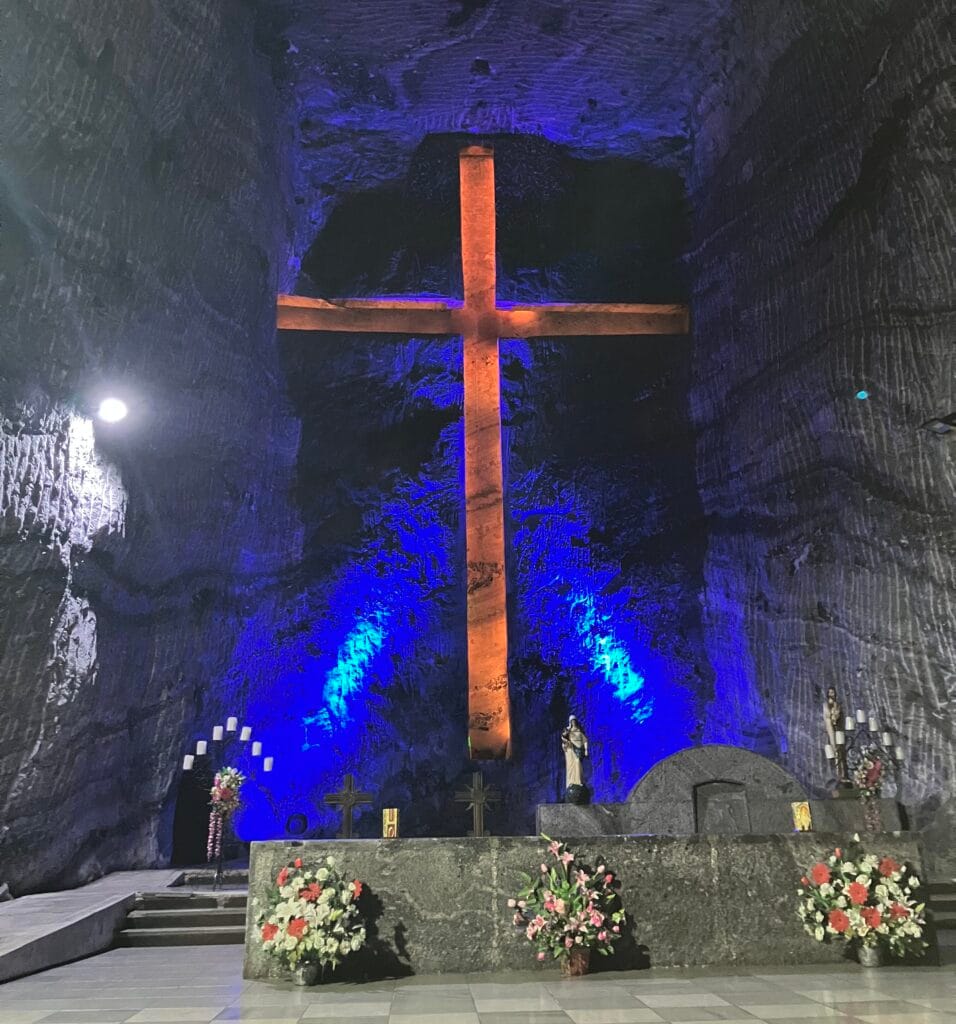
After visiting Tatacoa, I traveled north to Bogotá, where I made a trip to the Salt Cathedral of Zipaquirá.
This enormous underground cathedral, carved into the tunnels of a former salt mine, was unlike anything else I’d visited in Colombia.
I traveled there with a friend, taking an Uber to the appropriate bus departure point in Bogotá before continuing to Zipaquirá. The bus journey took approximately an hour.
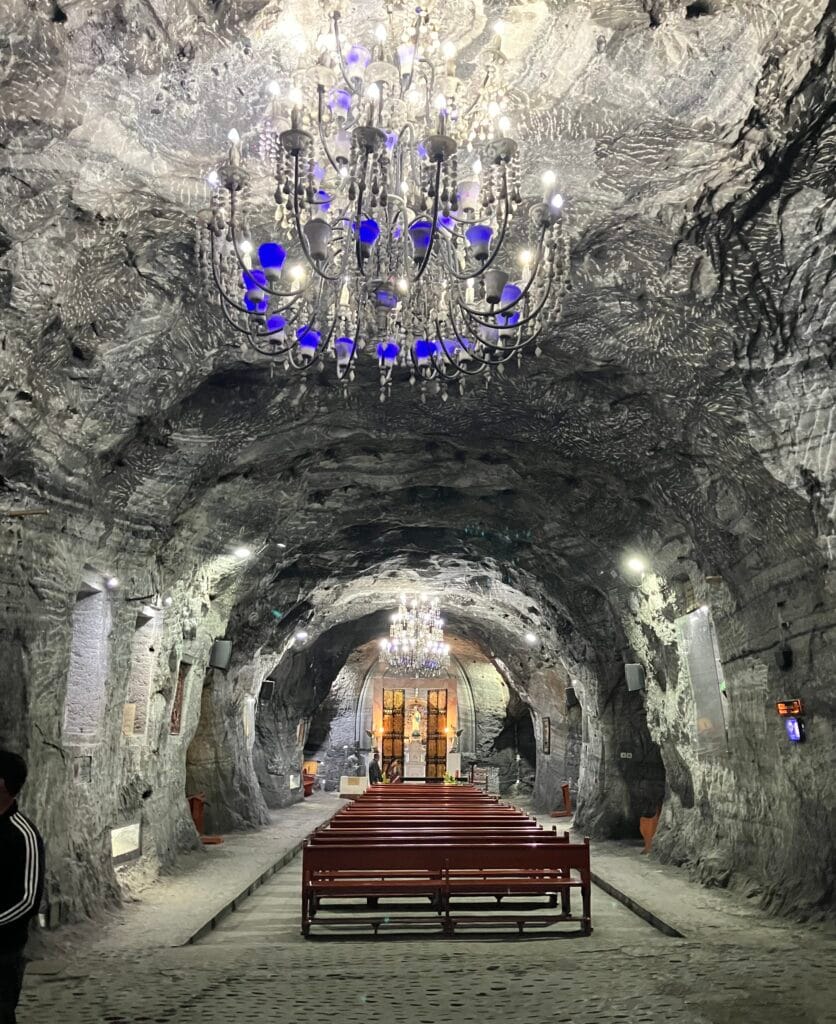
The cathedral’s massive underground spaces are extraordinary, containing possibly the largest indoor cross in the world. I’d recommend paying for the audio tour, which essentially details the well-known story of Jesus Christ. The audio guides you through the creepy underground space and adds a great deal to the experience. It is well worth the additional cost.
After you’re done exploring, browse the gift shops before you leave and check out the several figurines carved out of salt.
Final Thoughts on Salento
Salento is one of those places that works particularly well as part of an extensive Colombian adventure. Its easy access to coffee farms, hiking trails, and some of the country’s most recognizable natural scenery make it a sensible stop on a trip through a beautiful South American country.
Three days there gave me enough time to chill out, enjoy the town, explore Cocora Valley, and visit a coffee plantation.
For me, Salento was also part of a bigger journey through some very different landscapes, from the lush green mountains of Quindío to the dry formations of Tatacoa Desert and the enormous underground Salt Cathedral near Bogotá.
That’s one of the things I enjoy most about traveling through Colombia. You can experience dramatically different environments and attractions within the same trip, and there’s always somewhere else worth exploring.