One of the Biggest Parties in the World
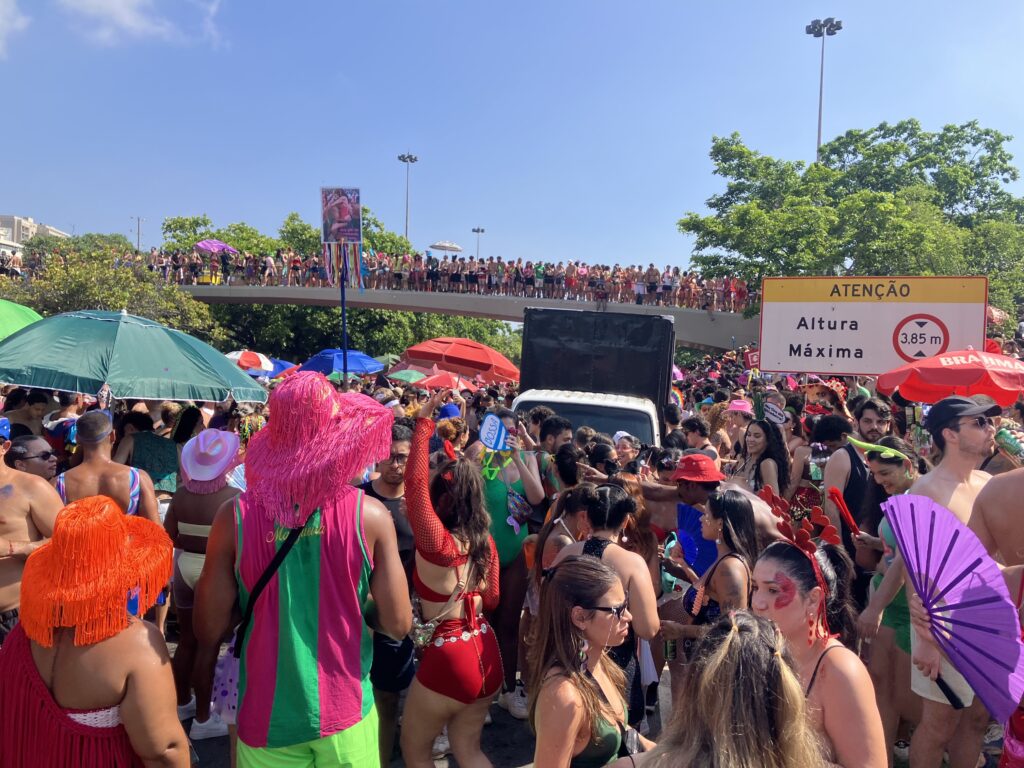
Carnival in Rio de Janeiro is a dream destination for adventurous travelers from around the world, and it’s popularity keeps growing. Carnival festivities in Brazil attract tens of millions of attendees every year, and Rio’s celebration is the grandest of them all, hosting parties all over the city.
Every year it occurs in the days leading up to Fat Tuesday and Ash Wednesday, usually in February, but because the date of Easter changes each year based on the lunar cycle, it can occasionally drift into early March.
So far, I’ve gone to twice, in 2025 and 2026. I’ve put together an informative guide to prepare you for your visit, including all the necessary tips and insights for the following:
- Accomodation & Prices, Pre-Carnival
- Transportation
- Bairros (neighborhoods) of Rio de Janeiro
- Blocos (street parties), Practical advice & Safety Tips
- Sambadrome
- Extra info
Enough of the introduction. Let’s get right into it!

Guide to Booking your Accomodation
HOTELS & HOSTELS – WHERE TO STAY
Carnival is a lively atmosphere ideal for big groups of people to join in together, so having a home base that shares the same vibe is the best starting point. Think active social space, music, pool, alcohol, etc. If you choose to stay at a hotel or a hostel, look for places where you can easily and comfortably make friends to share experiences or pass along information about events and parties.
In the Bairros section of this guide, I get into further detail regarding the neighborhoods of Rio de Janeiro, so you can decide which one caters to you more.
PRICING & AIRBNB
So you’re aware, the official dates of ‘Carnival’ is a stretch of 5 DAYS from Friday – Wednesday, although the parties start before and go on for a bit afterwards during pre-carnival and post carnival. Around this time in general, prices are most certainly elevated, but DURING THE 5 DAYS specifically, accommodation prices skyrocket. At a popular(good) hostel, you’ll probably pay from $130 to $250 a night for A BED IN A SHARED DORM. You can only imagine how much private rooms will cost you.
What a lot of people typically choose do is stay at hostels or hotels for pre-carnival and then book an entire apartment via Airbnb with a group of friends when the offical Carnival begins. This is what I’ve done to save money. Splitting the cost of that is a more economically viable option for many. If you book an Airbnb, just make sure you do it with the right people who are on the same page as you. Also, be sure to book an ENITRE APARTMENT, and not just a room in a shared apartment. I’ve seen people book a room by mistake.
If funds weren’t an issue and I had a bigger budget, I would just stay in a hostel the entire time for the social perks. That’s just my personal preference.
What & When is Pre-Carnival?
Pre-carnival a period of festivals and events that really ramp up about 1-2 weeks before the start of the official dates of Carnival. Festivities in general in Rio may begin even a month before, but the momentum gradually snowballs every week.
Many people actually prefer the pre-carnival period because it’s less crowded, but there are still parties happening, including free Sambadrome rehearsals. During this time, the festive vibes are in the air without as much chaos in the streets. I recommend experiencing pre-carnival as a warm-up to what happens afterwards. It’s interesting to see the “calm before the storm” and then the massive influx of humans that fill every crack and crevice of the city.
WHEN TO BOOK YOUR ACCOMODATION
If you can, book months at least a couple months in advance. If not, at least don’t wait until the last minute because it will make your life difficult.
HOST POLICIES
Policies for bringing guests to your room, apartment, etc vary from place to place. Some establishments don’t allow outside guests, some require an ID check or prior notification, some places are more lax and open. Before you book anything, check all the details according to what your preferences are.
MY PERSONAL EXPERIENCE (Where I Stayed)
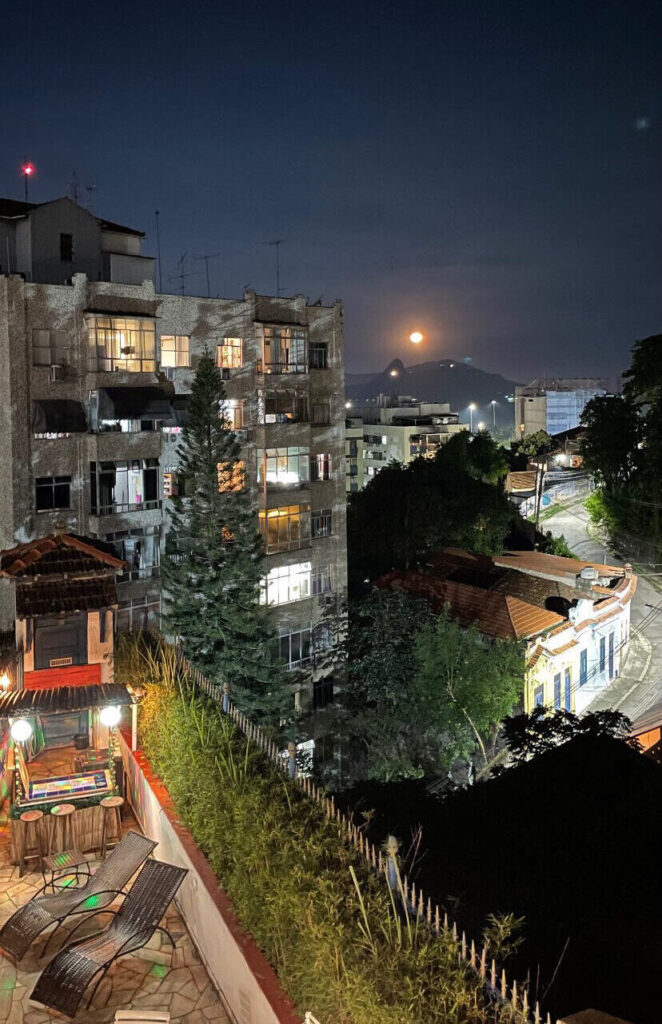
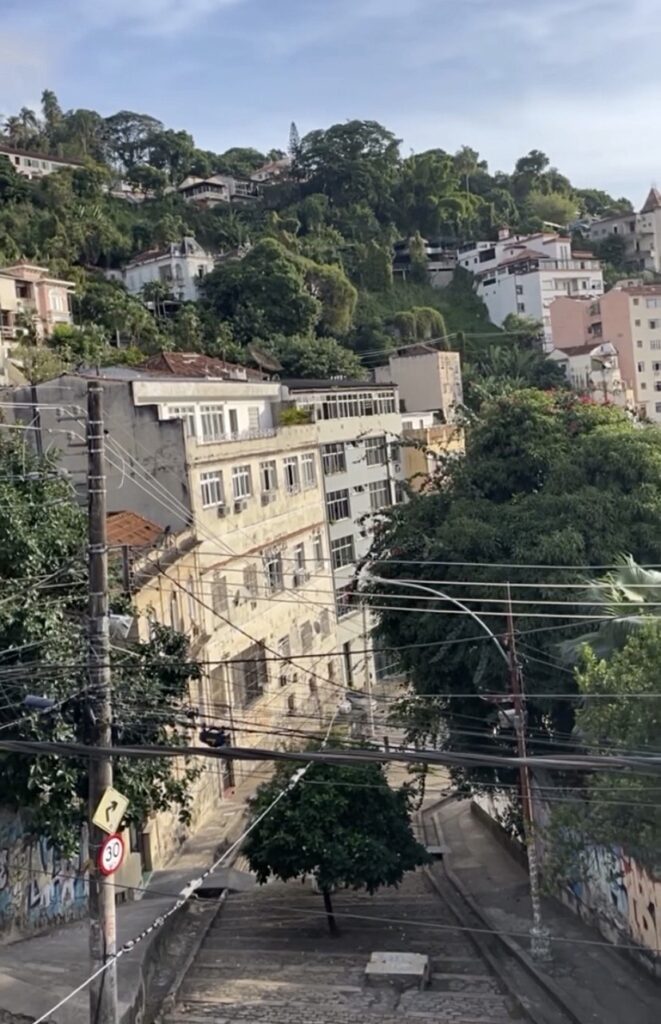
IMPORTANT TIP: The neighborhood of Santa Teresa is a bit of a maze, littered with inclined streets that just keep going and going. Consider this in terms of walking to and from your accommodation if you can’t find transportation during the chaos of Carnival, or just don’t want to pay for it. This could be an issue for some individuals.
For both of my stints at Carnival, I stayed in hostels and Airbnb’s (as a backpacker I rarely stay in hotels) in the neighborhoods of Gloria, Lapa and Santa Teresa. I liked the centralized location of this zone of the city, especially for Carnival when it’s a bit more difficult to commute with all the traffic. The prices here are also cheaper than they would be near the beach in the South Zone of Rio, and it’s less touristic. The only downside is it’s not in walking distance to any beaches other than Flamengo Beach.
During pre and post-carnival, I enjoyed my stays at Hostel Sunrise and Castelo dos Tucanos, homes to great atmospheres and the perfect spacial settings with pools to cool off in the summer heat. Hostel Sunrise is ideally located on the edge of Santa Teresa (still on a hill though), in between Gloria and Lapa, while Castelo is simply a full package for amenities, although more isolated in it’s location. Other popular options in the area, each a bit different, are Discovery, Mambembe, and Books.


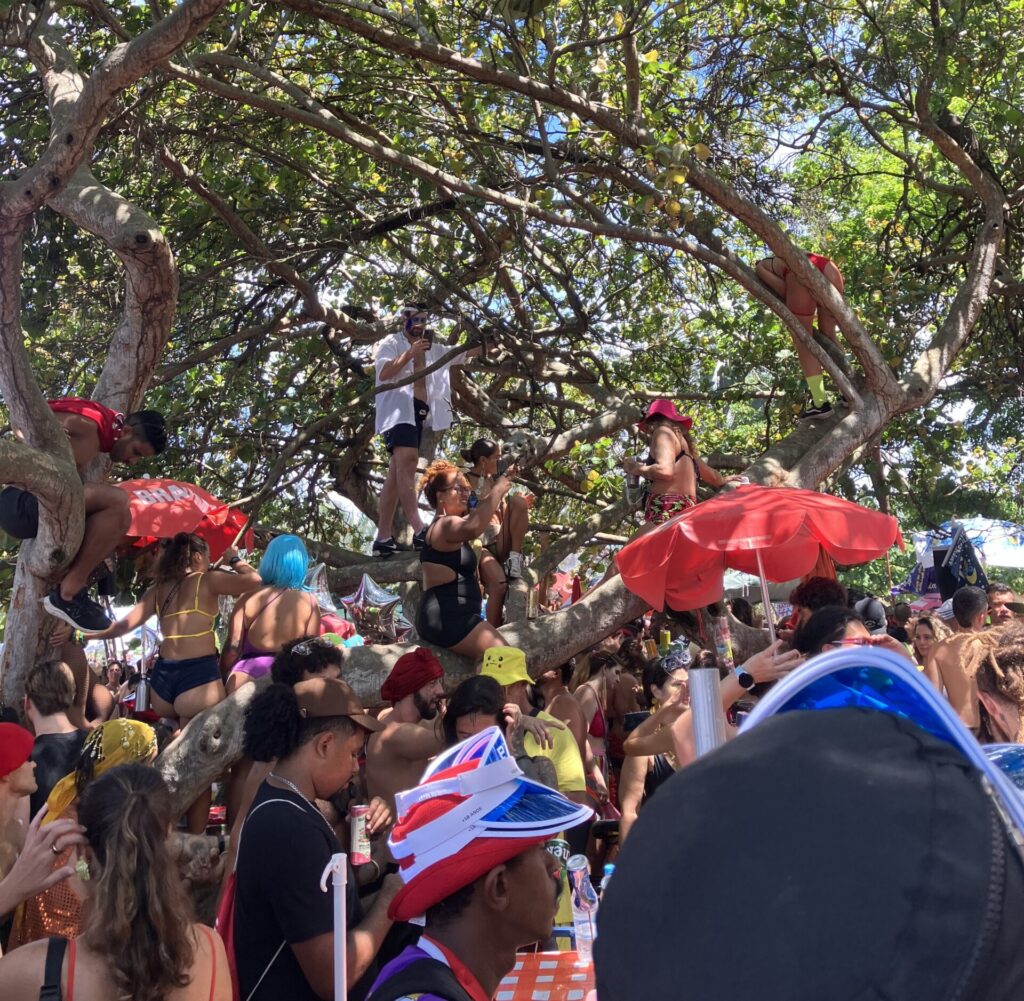
Transportation During Carnival
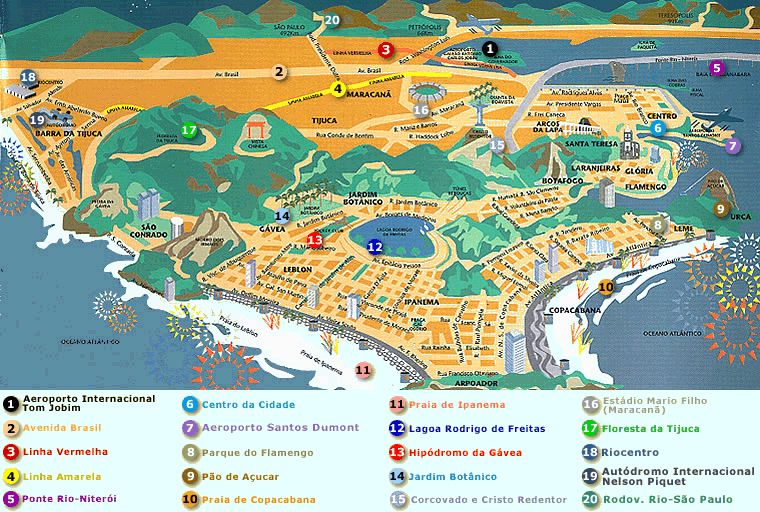
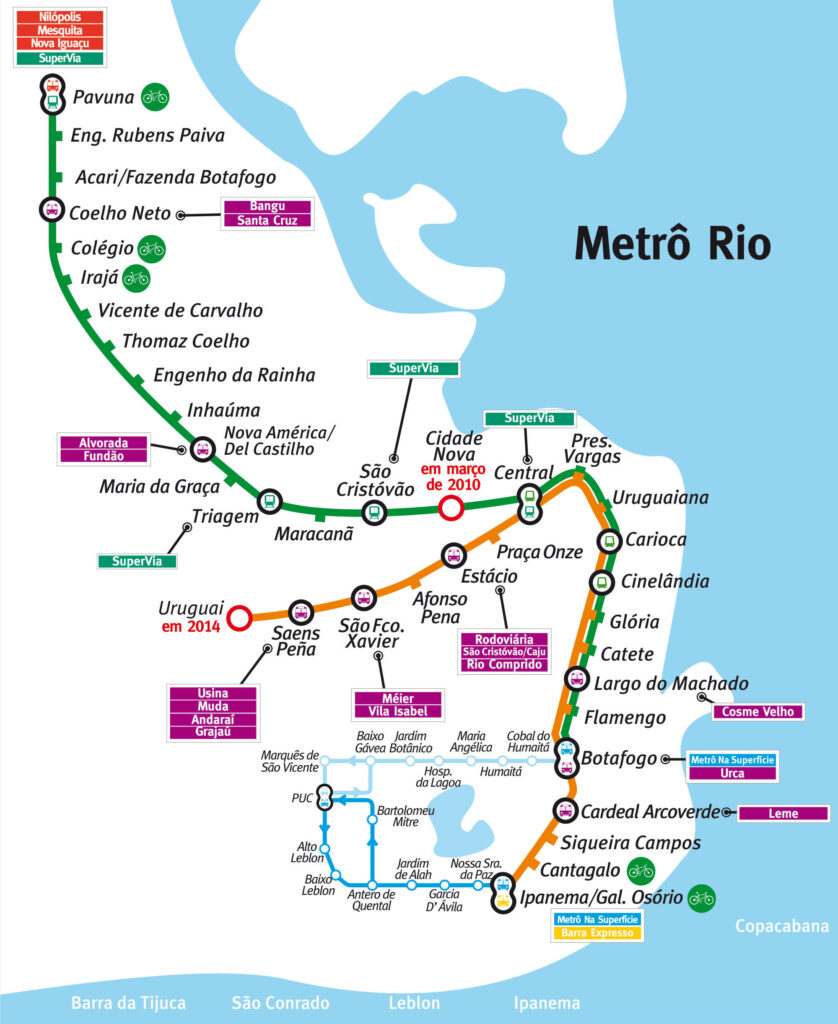
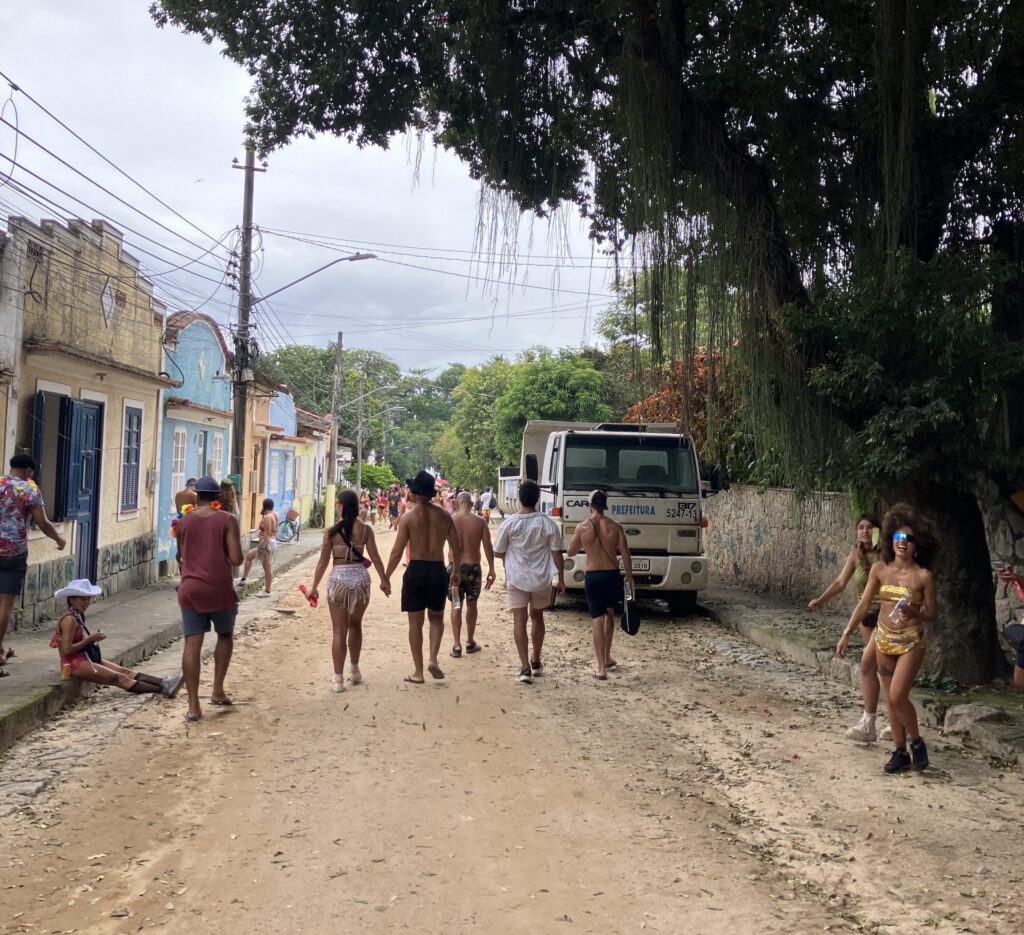
The two best modes of transport during Carnaval are the metro (subway), and moto taxis (via Uber). If you need a car for groups, Uber is just fine as well. Below are a couple maps that you can use them as visuals.
METRO (SUBWAY)
The Metro in Rio is fast, affordable, and avoids traffic. It’s very clean and I felt safe as a rider. Check out this guide for some valuable information regarding operating hours and pricing options: https://rioandlearn.com/rio-de-janeiro-metro/
For reference, the distance between Pura Vida Hostel in Copacabana and Hostel Sunrise in Lapa is about 11 km. If you coordinate it with the city map, it’s Copacabana/Ipanema to Gloria, and using the metro stop map it’s General Osario to Gloria. The train ride between both stops just 15 minutes. You rarely have to wait more than 5 minutes a train, so in totality the metro is quite efficient.
MOTO TAXIS
Moto taxis are cheap, bypass traffic jams, and are available 24 hours. I normally only took them over shorter distances like 5 km or less, but I had friends who routinely took them for several kilometers, mostly women who tended to be shorter and lighter than men. For me, long distance rides were physically uncomfortable.
TIP: It’s difficult to catch Ubers in and around major blocos. It’s best to book rides in an easily accessible avenue away from heavy traffic. Sometimes streets are closed down. Also, getting an Uber, even a moto taxi sometimes, from the Ipanama/Copacabana to other parts of the city during Carnival is extremely difficult. Don’t rely on it.
Popular Bairros (neighborhoods) of Rio de Janeiro
During Carnaval, there will be events going on all over the city, and you’re going to want to explore. For the purpose of this quick guide, the places I’ve listed below will be the most active and easy to commute. I group neighborhoods together by proximity.
LAPA, SANTA THERESA, GLORIA
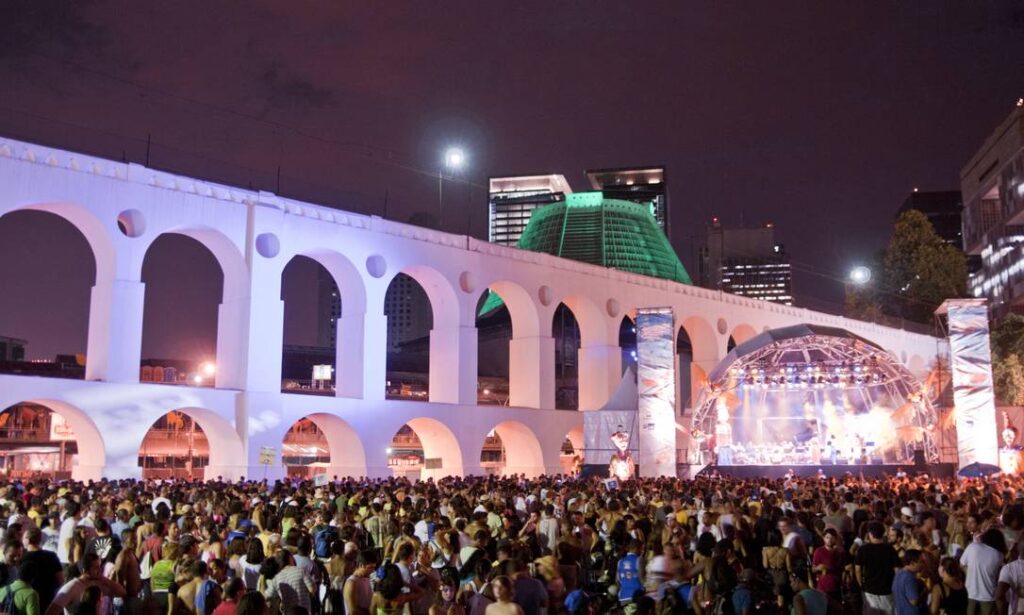
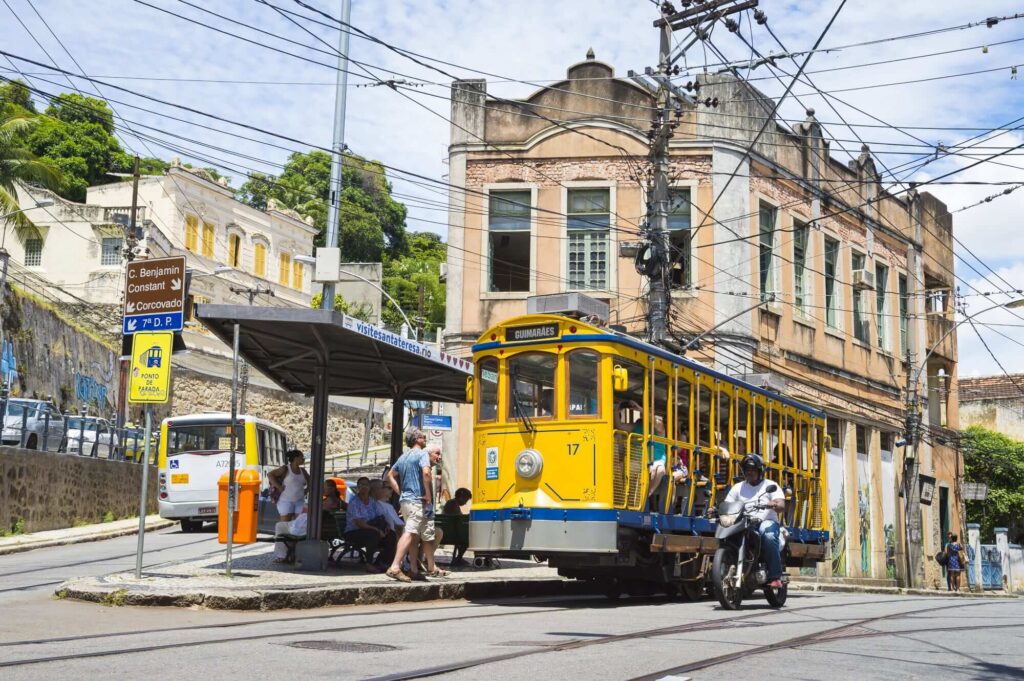
Gloria and Lapa are right next to each other and very walkable. In Lapa, you’ll find the famous Escadaria Selaron, many clubs/bars along a main avenue, the Lapa Arches (tons of street food here at night if you want a cheap bite to eat), Catedral Metropolitana de São Sebastião, and other nearby attractions. The neighborhood is pretty gritty and there is a pretty large drug market, so it can be sketchy in certain spots. It’s best to be careful at night. I’ve spend a lot of time here and I enjoyed it, though I admit it can be a bit dangerous at times.
Gloria is a bit further south and is somewhat of a bridge between Lapa and Flamengo. It’s good centralized location for Carnival. A lot of good street parties occur between Flamengo and Santa Theresa. Gloria is close enough to everything. One of the main avenues also leads to Catete, an area with a bustling shopping strip of affordable goods.
Nearby Santa Teresa is a bohemian style neighborhood with good restaurants, and nice views of the city. It’s aesthetically charming and definitely a place you should explore during the day. Riding the Santa Teresa tram is popular activity. Some of my favorite Blocos took place there. It’s a good Airbnb location as well. Walk out of your front door and there’s a party right there on some days!
SIDE NOTE: The tram actually rides atop the arches in Lapa at one point.
TIP: Pedra Do Sal is an extremely popular outdoor Samba party in Centro that takes place every Monday and Friday. I must say though, it gets insanely crowded on Mondays and in my personal opinion, Fridays are better. More info here https://freewalkertours.com/pedra-do-sal-the-place-where-the-samba-was-born/
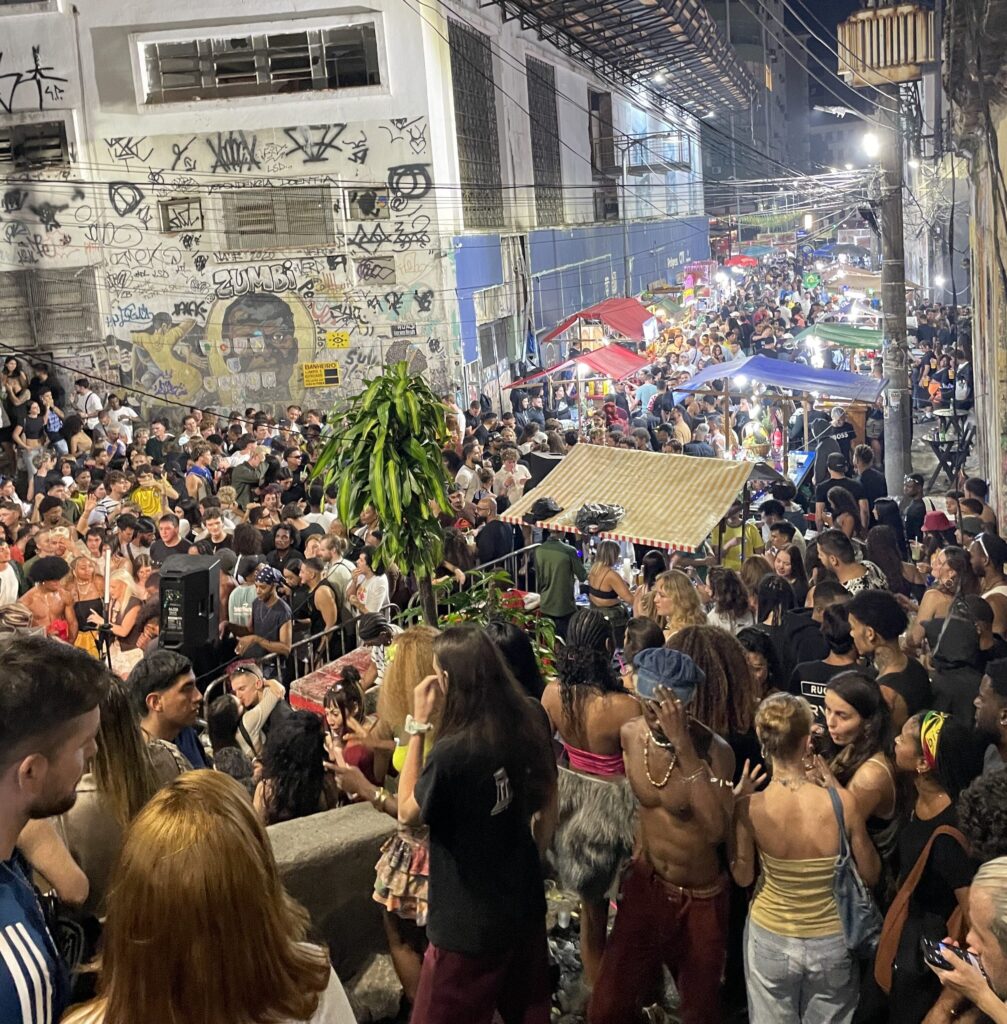
BOTAFOGO & FLAMENGO
Botafogo is a safe and trendy neighborhood with lots of good restaurants and nightlife, just not as open and wide as Lapa. It’s more intimate and residential with a lot of bars and restaurants on small streets. Nonetheless, It’s a hot spot for locals and tourists alike.
Flamengo is a beautiful place for walking and cycling. It’s lush, pleasant, and home to see a nice relaxed beach with gorgeous views of Sugarloaf mountain in the distance. The ocean waves tend to be more calm as well in comparison to Copacabana and Ipanema. The water here is dirty though, according to locals. You won’t find many people swimming from my experience.
TIP: Check out Mundo Lingo at Bar Bukowski in Botafogo, which takes place every Thursday. It’s a popular language exchange and a great social event https://mundolingo.org/city/Rio-de-Janeiro
COPACABANA, LEME, IPANEMA – THE SOUTH ZONE


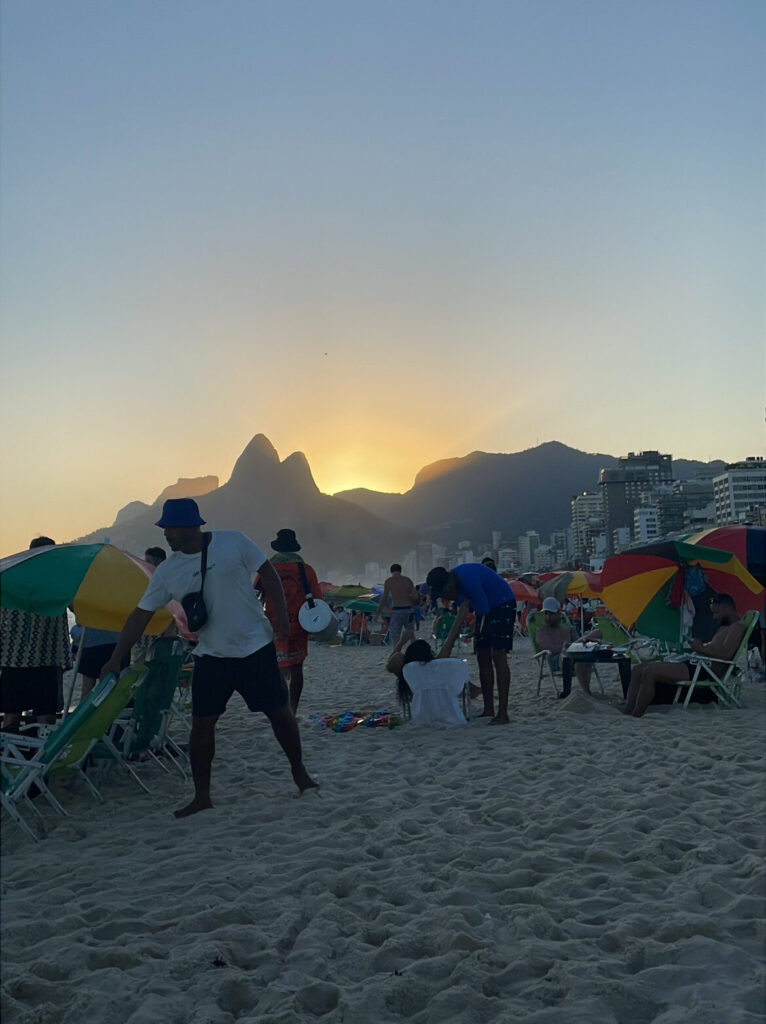

This is the most touristic part of Rio, full of life, with a feel of cleanliness, safety and luxury compared to the grittier parts of town towards Centro. Copacabana is the most animated, Ipanema is kind of a bit less wild, and Leme has more of a secluded feel (close to the action but a nice sense of tranquility).
The main attractions in are Sugarloaf Mountain and Pedra Do Aproador (the most emblematic sunset spot in Rio), and the beaches. The best way to commute in this area is by bicycle. It’s fun to rent a bike and cruise next to the beach in the bike lanes. The beaches are super long and you’d be surprised at how long it takes to go from Leme Beach to the end of Ipanema Beach and beyond to Leblon.
My favorite beaches in the area are Ipanema Beach and Praia Da Vermelha, which is next Sugarloaf Mountain. Ipanema has amazing vibes and I find it much better than Copacabana Beach. Vermelha is a great option during the week, usually, but during Carnival it’s more crowded than usual.
TIP 1: Sugarloaf Mountain (Pão de Açucar) hosts sunset DJ sets at Parque Bondhino on weekends. More info on their website https://www.bondinho.com.br/en
TIP 2: If you can, go watch multiple sunsets. The best viewing point that’s easy to access is at Pedra do Arpoador, next to Ipanema Beach.
Carnival Parties
Before proceeding, follow these Instagram pages for lists, times, updates, and footage:
@blocosrj.oficial @blocos_cariocas
WHAT IS A BLOCO?
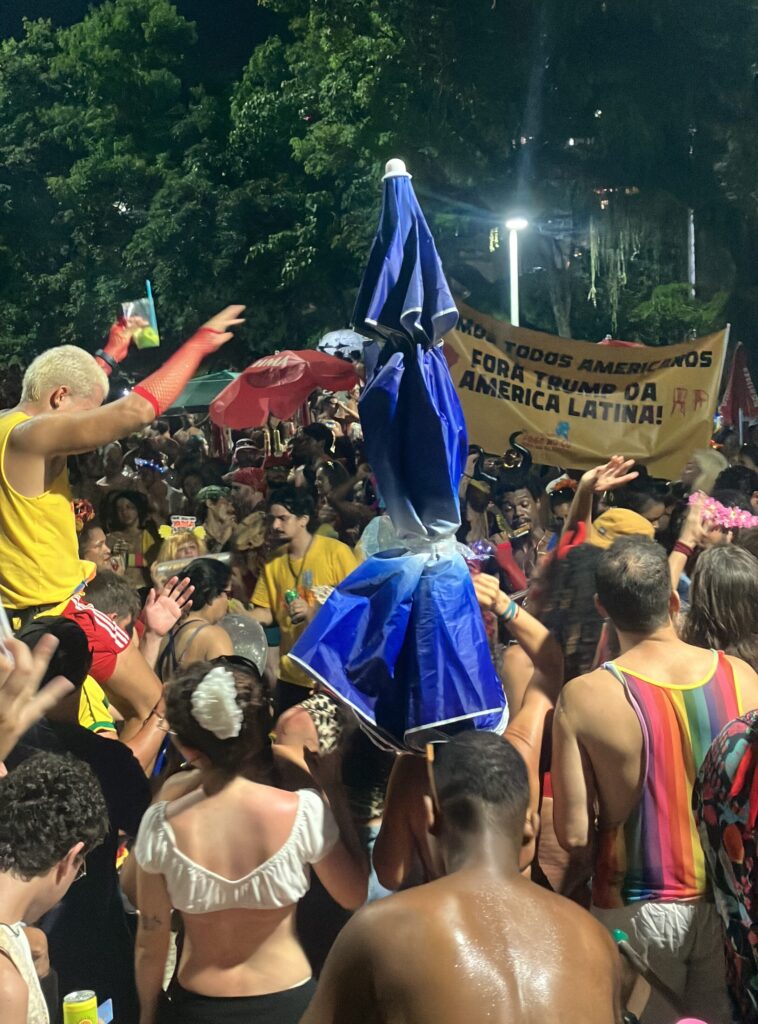
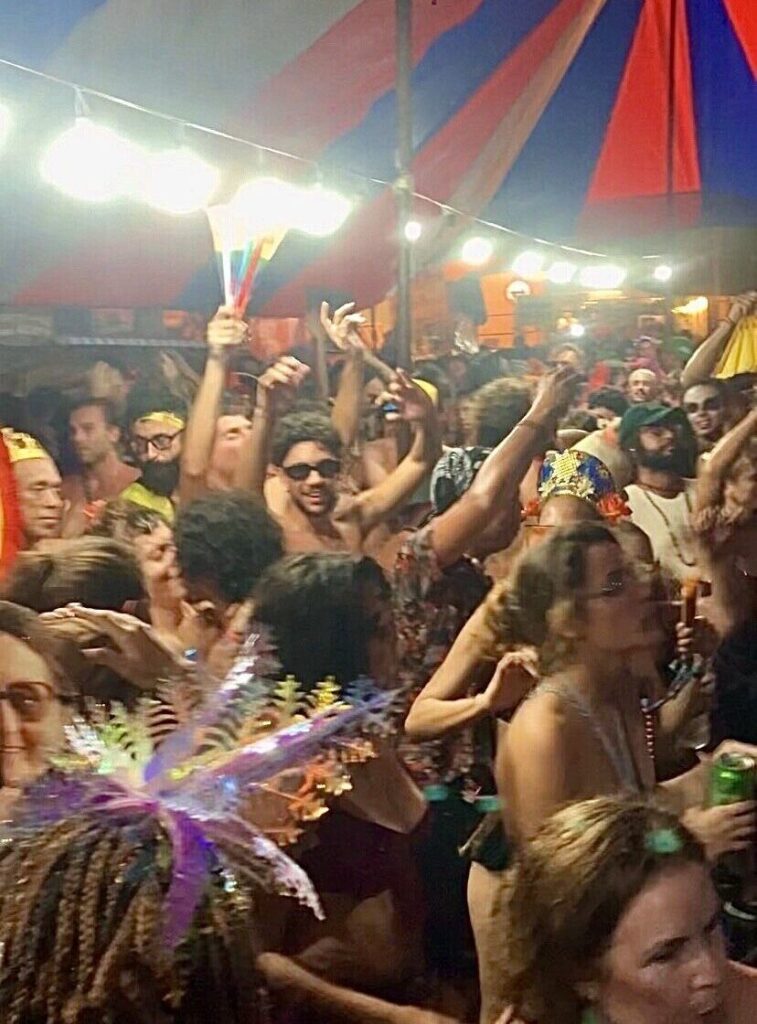
Finally, what we all come for, the infamous open-air street parties that take place all over the city during Carnival – Blocos
These parties vary in a few different ways, from their generally themes, music, and cultural message, but generally speaking they are spilt into larger 2 groups: Stationary & Moving.
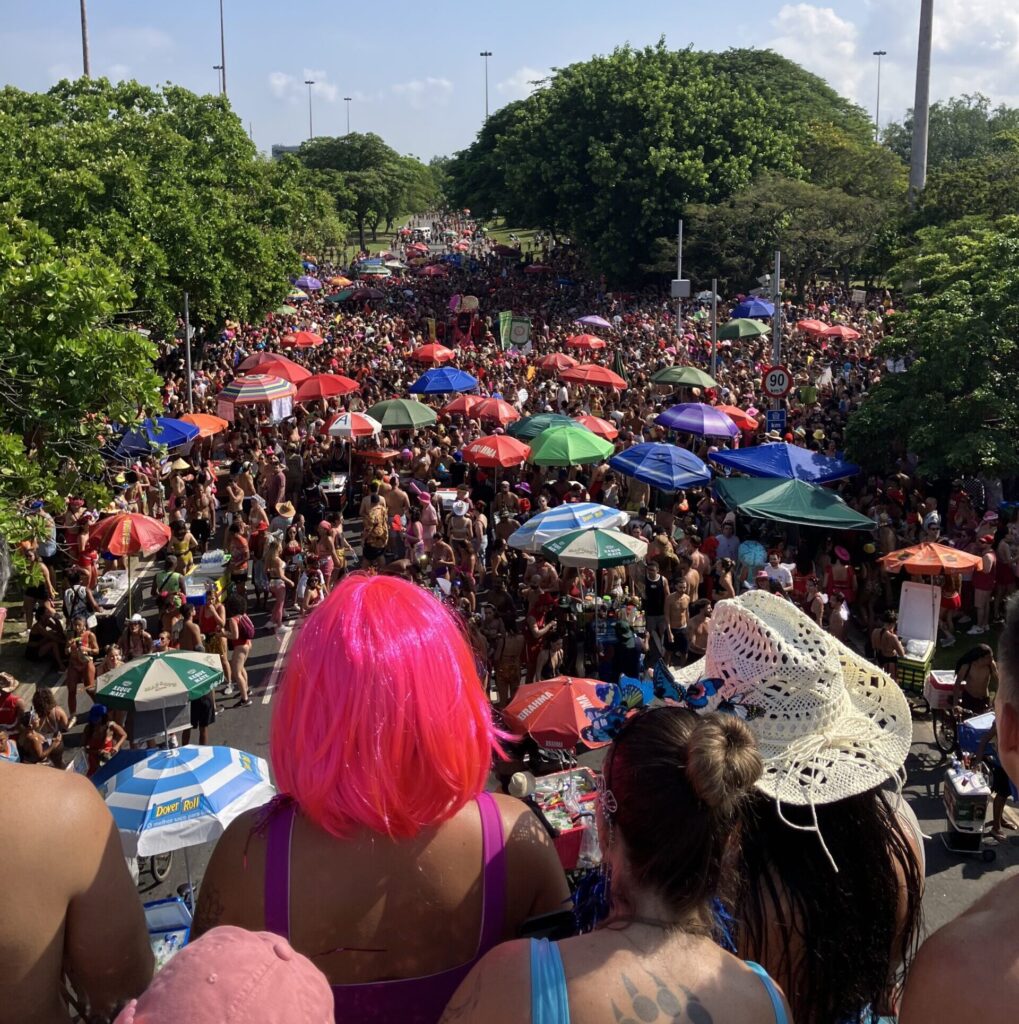
Some blocos are essentially slow moving parades that follow a samba band through the streets. These can become extremely crowded. Sometimes you’re just stuck in there and can be uncomfortable if you don’t like being in tight spaces with sweaty people around you. It’s usually more fun to be close to the front near the band. Eventually, the parade has an endpoint where the party continues, without the walking involved, or they stop for a break along the way, and then continue moving.
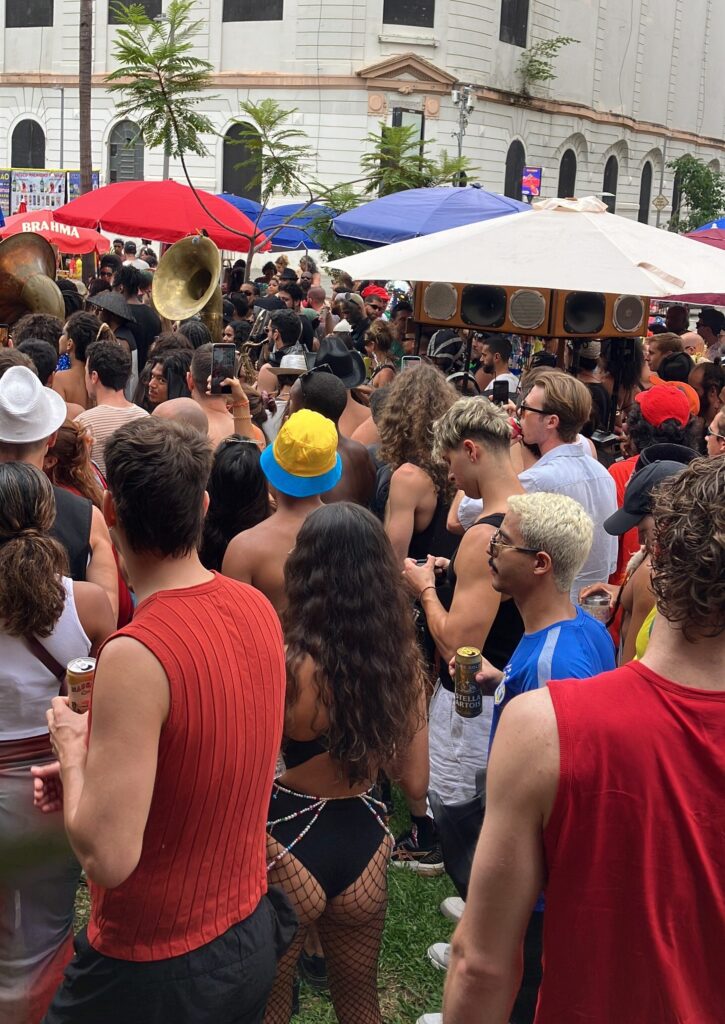
Other blocos are completely stationary, large gatherings or events in an open space like a plaza or park. Wherever you go, it’s a bunch of people celebrating. You’ll find some that are large with stages for musical acts, while others are less extravagent. Just know this, THERE IS ALWAYS ALCOHOL AND MUSIC.
IMPORTANT INFO: The final bloco of Carnival, which actually occurs during ‘post-Carnival’ on a Sunday, is called Boto Marinho on Paquetá Island. The party starts on a huge ferry ride from Rio and continues to Paquetá Island. It’s probably the best Carnival finale you can have. Don’t miss out!

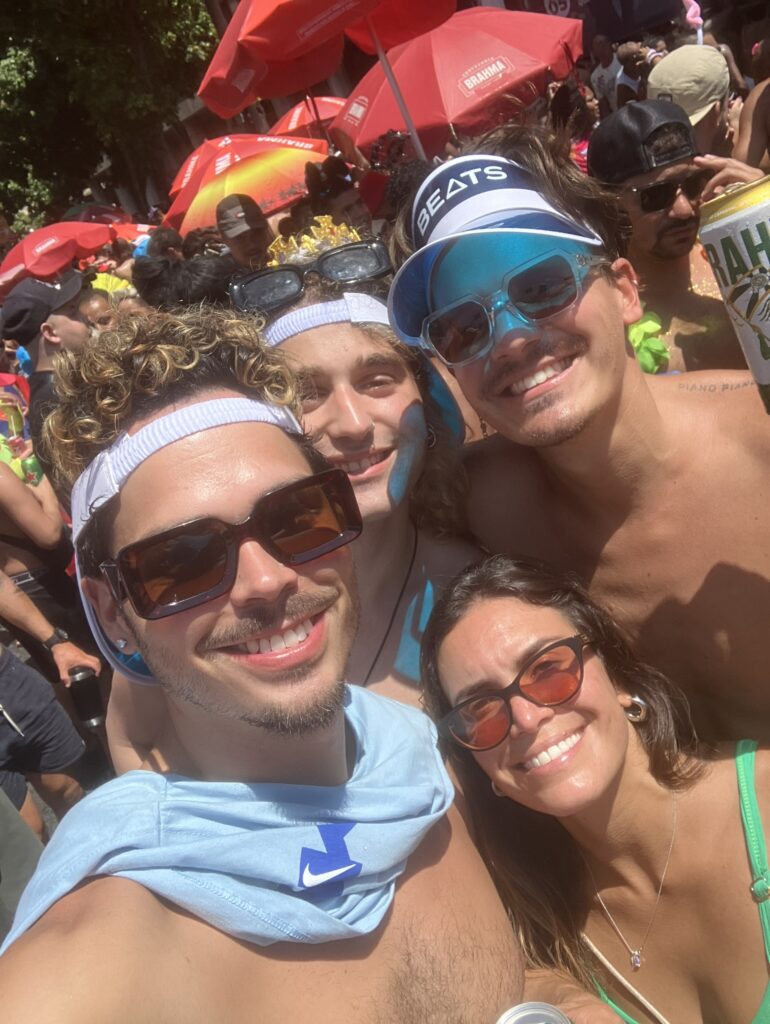
10 IMPORTANT TIPS & FACTS FOR ATTENDING BLOCOS
1. Decorate yourself – glitter, costumes, crazy sunglasses, facepaint, hair dye, wear bright colors, whatever you’re comfortable with. You can even bring some stuff to put on other people. Have fun with it.
2. Bring water. More than enough since you’ll be sharing it with friends. If you’re staying at a good hostel, they’ll have free filtered tap water. Use that.
3. Keep all important belongings in a fanny pack in front of you, and covered by clothing if possible. Theft is an issue during Carnival. Many Brazilians don’t even bring their phones to blocos. If you have a backup phone, a good strategy is to just bring that instead of your real phone. Don’t be the gringo getting your phone snatched taking a bunch of photos in crowds. I’m not saying don’t take photos or don’t use your phone, just be cautious. Don’t just stand around texting with a bunch of people around you either.
4. Blocos usually last from like 2 to 4 hours and happen throughout the day and evening into the night. Some start as early as 7 AM. Since many of them tend to move, it’s best to arrive when they’re just starting or soon after so you don’t have to chase them after they’ve left.
5. Try to go out in a group of at least 4 people.
6. Almost every vender accepts card payments. You almost don’t need cash. However, some of the vendors have the cheap small card readers that don’t work well, and on some occasions they’ll have to find a neighboring vendor who has a better machine to charge your card. If you want to avoid such issues bring a little bit of cash (small bills) or just try to spot the vendors who have the big readers. You’ll know what I’m talking about when you see them.
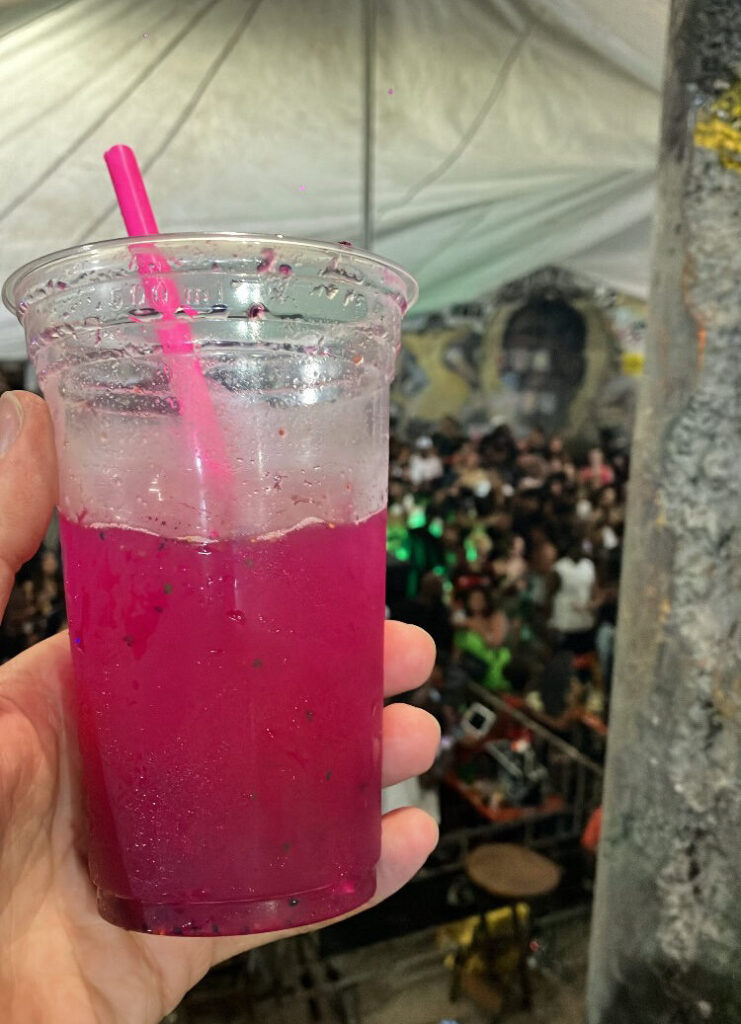
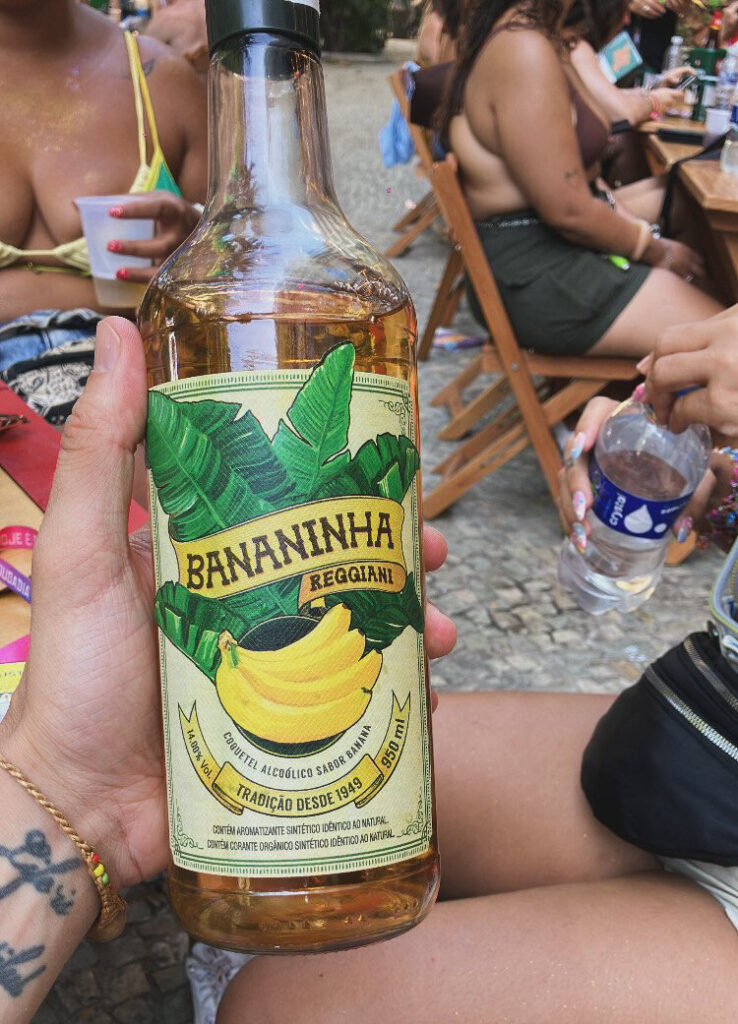
7. Try different Caipirinhas – Among the fan favorites are with Maracuya (passion fruit) and Limao (lime). I’ve even had a Caipirinha with watermelon, dragon fruit, and even Cacao fruit.. Just know they are loaded with alcohol and sugar. Even if you say just a little sugar, they’ll still add 2 large scoops. Feel free to say no sugar if you want.
8. The sun is no joke in Rio. Use sunscreen, or If you’re the type that doesn’t use it, like me, maybe wear a hat or don’t stay shirtless for too long. Use your best judgement.
9. Be free, but also respectful, Don’t be a jerk like you’ve never been outside before.
10. Kissing – I’m sure you’ve heard about it, and if you haven’t, this is kind of how it goes. You lock eyes with someone for a second or 2, and then start makeout. Maybe you’ll talk a bit beforehand or exchange numbers, maybe you won’t say anything to each other and you walk away. It’s up to you. I think the mystique in itself is blown out of proportion like Carnival is some outdoor orgy. It happens but It’s really not THAT rampant.
SAMBADROME
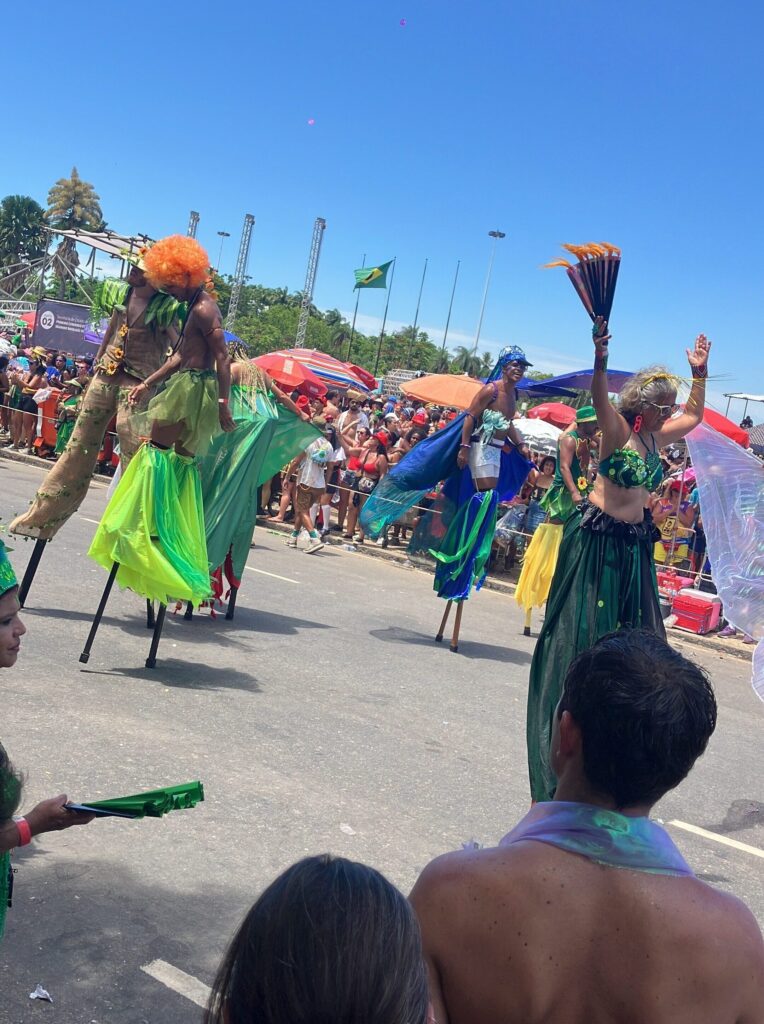
This is the biggest event of Carnival and it’s recommended to book tickets far in advance. It takes at Sambadrome Marquês de Sapucaí, located between the metro stops of Centro and Cidade Nova. It hosts a epic dance competition of Rio’s most famous Samba schools. The event takes place 3 nights in a row, starting from 9 or 10 PM until about 5 to 7 AM the next morning!
It’s a spectacle to say the least. The tickets are quite expensive, but there is a very affordable option as well. You can watch the rehearsals free of charge, and you won’t be disappointed.
The stadium is located outside of the most touristic areas, but is easily accessible by metro. It’s huge deal and a must see in my opinion. Don’t miss out!
Here’s a link with quite literally all the information you need, from Rio & Learn, Rio de Janeiro’s number 1 language school for Portuguese (I took classes there):

Random Tips for Rio de Janeiro
- Try to learn some Portuguese before you go. It’s helpful. I had just started learning a couple months before I arrived to Brazil for the first time and already spoke more Portuguese than 95% of the tourists visiting.
- Coffee shops for digital nomads are few and far between. Don’t rely on it.
- Go to a farmers market. Lots of fresh tropical fruits and juices. The Gloria Sunday market is the best one.
- Rio is full of amazing viewpoints and some good hikes. Take advantage.
- Visit a local restaurant in Santa Teresa and eat the Feijoada.
- See multiple sunsets, as many as possible. The best viewing point that’s easy to access is at Pedra do Arpoador, next to Ipanema Beach.
- Rolling tobacco is decent quality and cheap.
Conclusion
Carnival in Rio de Janeiro is a once in a lifetime opportunity for many travelers. I hope I was able to provide some useful insight for you! If you decide to go, good luck and have an amazing time!