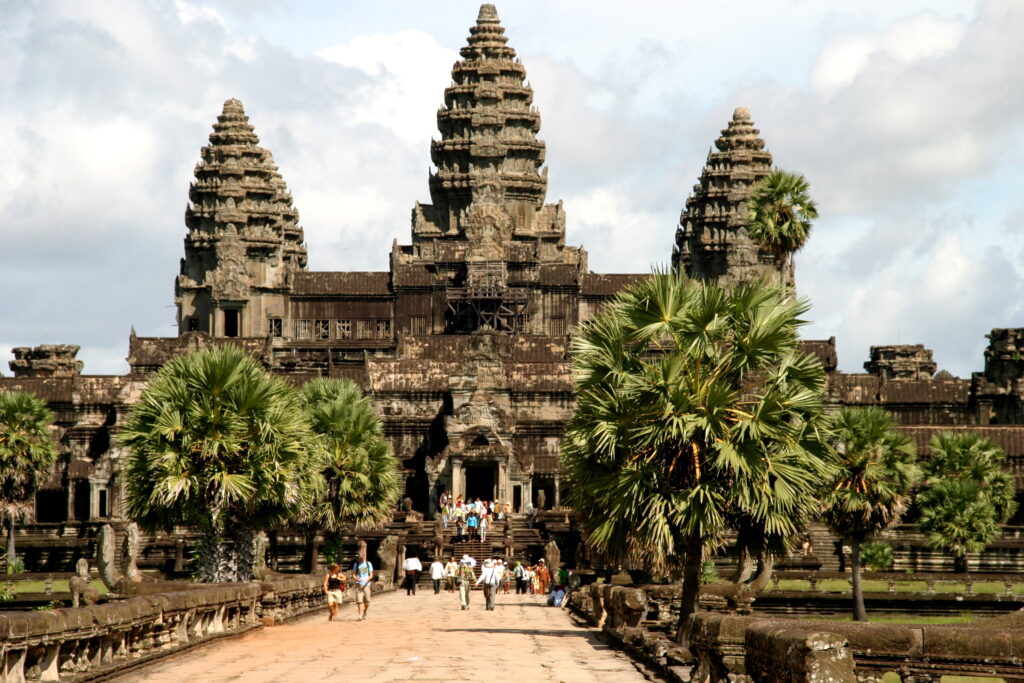
Angkor Wat was one of those places I knew I had to see when I traveled through Southeast Asia.
Located near Siem Reap, Cambodia, Angkor Wat has been a UNESCO World Heritage Site since 1992. It’s the largest religious monument in the world, covering about 162 hectares (402 acres). It was constructed during the reign of Khmer King Suryavarman II in the early 12th century and originally dedicated to the Hindu god Vishnu. Its architecture symbolically represents Mount Meru, the sacred mountain associated with the gods in Hindu cosmology.
But Angkor Wat is only one part of something much grander.
The surrounding Angkor Archaeological Park covers roughly 400 square kilometers and contains the remains of different capitals of the Khmer Empire, including dozens of accessible temples, ancient roads, reservoirs and other structures. I visited while backpacking through Cambodia. I unfortunately lost almost all of my photos and videos from Siem Reap, but that day remains one of my most memorable travel experiences.
And strangely enough, what happened after visiting the temples affected me just as much as Angkor itself.
READER PREVIEW
- Getting from Siem Reap to Angkor Wat and hiring a tuk-tuk
- Angkor Wat tickets, practical tips and visitor rules
- Exploring Angkor Archaeological Park and its temples
- Angkor Wat, Bayon, Ta Prohm and other highlights
- My unexpected invitation to my tuk-tuk driver’s home
- A meal and cultural experience I’ll never forget
- What the experience taught me about travel, privilege and perspective
Visiting Angkor Wat from Siem Reap
I spent a couple of days in Siem Reap before visiting Angkor. Getting to Angkor from Siem Reap is a simple 15–30-minute ride by car, taxi, or tuk-tuk, and 30–40 minutes by bicycle. Before this, I had been spending some time traveling through southeast Asia by scooter.
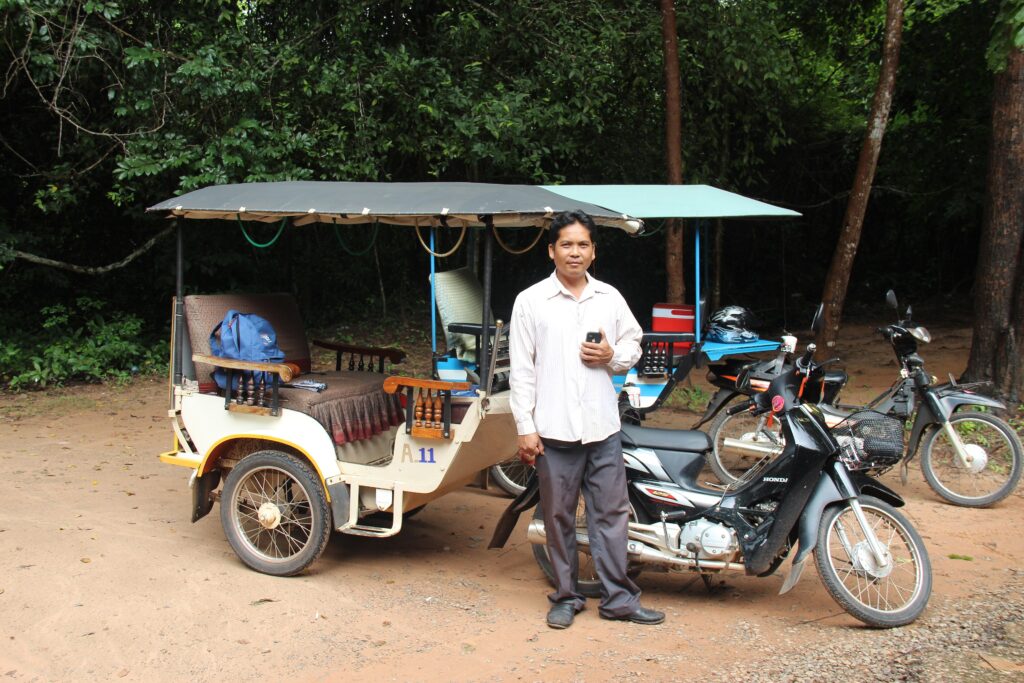
Upon arrival, one of the classic ways to explore the temples is to hire a tuk-tuk and driver for the day. In Cambodia, you’ll commonly see a motorcycle pulling a covered passenger carriage behind it. Rather than simply dropping you off, a driver can chauffeur you around a circuit of temples, wait while you explore each one, and then continue to the next stop.
That’s essentially what my two friends and I did. A typical tuk-tuk covering Angkor’s popular Small Circuit generally costs somewhere around $20–25, although there isn’t one official fixed rate. Prices depend on the route, length of the day, sunrise pickups, and any additional temples you want to visit.
Quick tip: Sunrise tours involve a bit more planning, which you should look into ahead of time.
If you’d like to go more off the beaten path, the Grand Circuit, around 26 kilometers, crosses paths with many impressive lesser-known temples. If you’re looking for a way to escape all the crowds, you’ve found it here.
My arrangement was a little more custom, which I’m not sure is very common. My friend found a driver who would take us around the temples and then bring us to his home afterward for a meal with his family. At the time, that sounded like an awesome idea.
I had no idea what that second part of the day was going to turn into. We’ll get to that later.
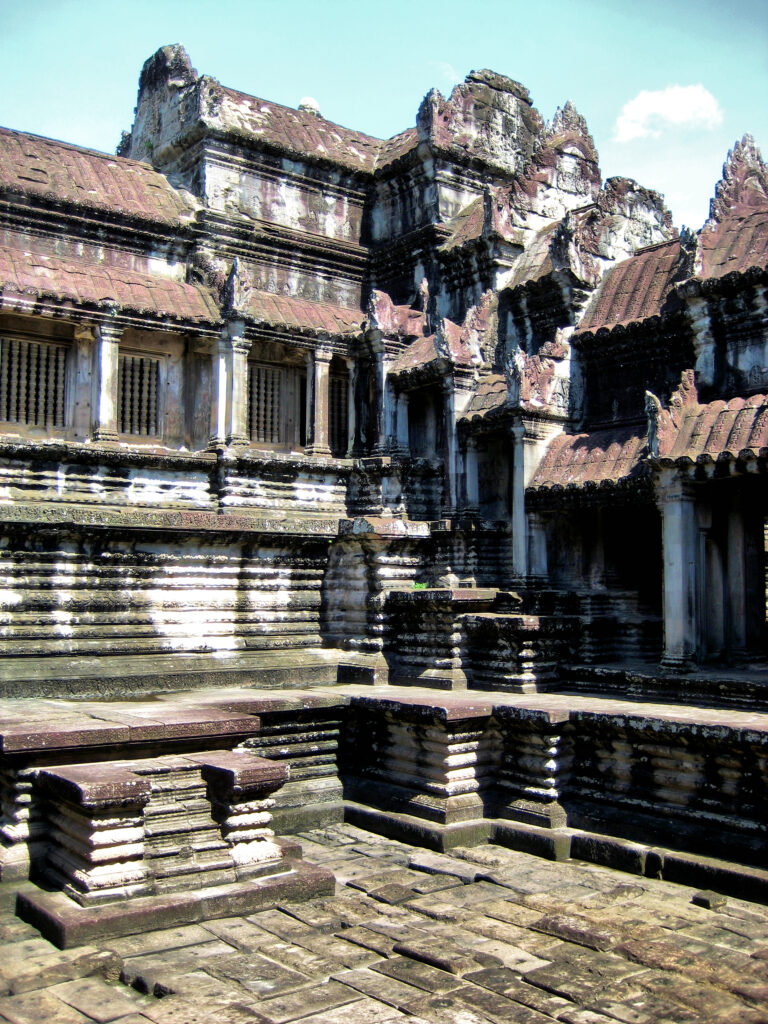
Photo: Francisco Anzola / Wikimedia Commons / CC BY 2.0Angkor Wat Tickets & Practical Tips & Rules
As of 2026, the official Angkor pass to enter the grounds costs $37 for one day, $62 for three days and $72 for seven days. A one-day pass gives you access to more than 50 temples and is enough to follow the classic Small Circuit, which includes Angkor Wat, Bayon, Ta Prohm and several other sites.
If you only have one day, that’s enough to experience the highlights. If you’re particularly interested in Khmer history, architecture or photography, multiple days would let you explore at a much slower pace.
Bring plenty of water, sunscreen, insect repellent and comfortable walking shoes. Cambodia can get brutally hot, and you’re going to spend a lot of time outside and walking over uneven surfaces.
Angkor is also a sacred religious site, so dress accordingly. Shoulders and knees should be covered when entering temples, and visitors are expected to respect monks, worshippers and protected structures.
Cambodia’s relatively cooler dry months are generally the most comfortable time to explore. November through February brings better weather but also more visitors. The wet season is hotter and rainier, but the landscape becomes incredibly green and crowds can be lighter.
Personally, I liked the lushness of Angkor almost as much as the temples themselves.
Exploring Angkor Archaeological Park by Tuk-Tuk
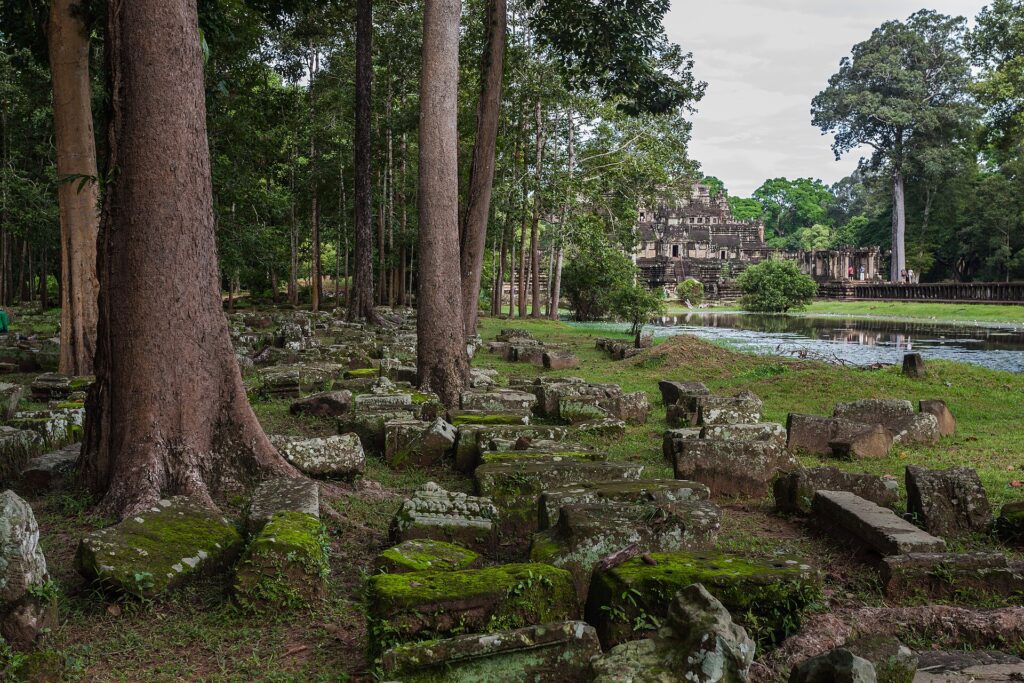
One of the things that surprised me most was the scale and landscape of Angkor. You’re not walking around one enormous temple complex all day. You’re traveling through a vast archaeological landscape filled with forest, gigantic old trees, grassy areas, ancient structures and individual temples separated by roads. It reminded me in some ways of exploring Tikal in Guatemala, where ancient structures are similarly surrounded by an enormous natural landscape.
We would ride for a while, stop at another temple, get out and explore, then return to our driver and continue.
You will find vendors and tuk-tuk drivers around the busy areas, but when actually exploring the temples, the experience feels remarkably open. I really didn’t wait in lines to enter anything, but certain highlighted temples were more visited than others. You don’t get those places to yourself at all.
Some temples felt almost maze-like inside. I’d wander through corridors and dark interior spaces before emerging into open courtyards or climbing onto higher levels. That freedom to simply explore was one of my favorite parts of the experience.
The temples also felt surprisingly integrated with the surrounding landscape. Between stops, we were constantly passing trees and greenery rather than moving through some giant paved tourist attraction.
It genuinely felt like exploring.
Angkor Wat, Bayon & the Rest of the Temples
Angkor Wat, the most famous individual temple inside Angkor Archaeological Park, is the monumental centerpiece. It sits near the main entrance of the park from Siem Reap. Throughout the complex, there stand over 1,000 temples! Truly a maze of nature and architecture.
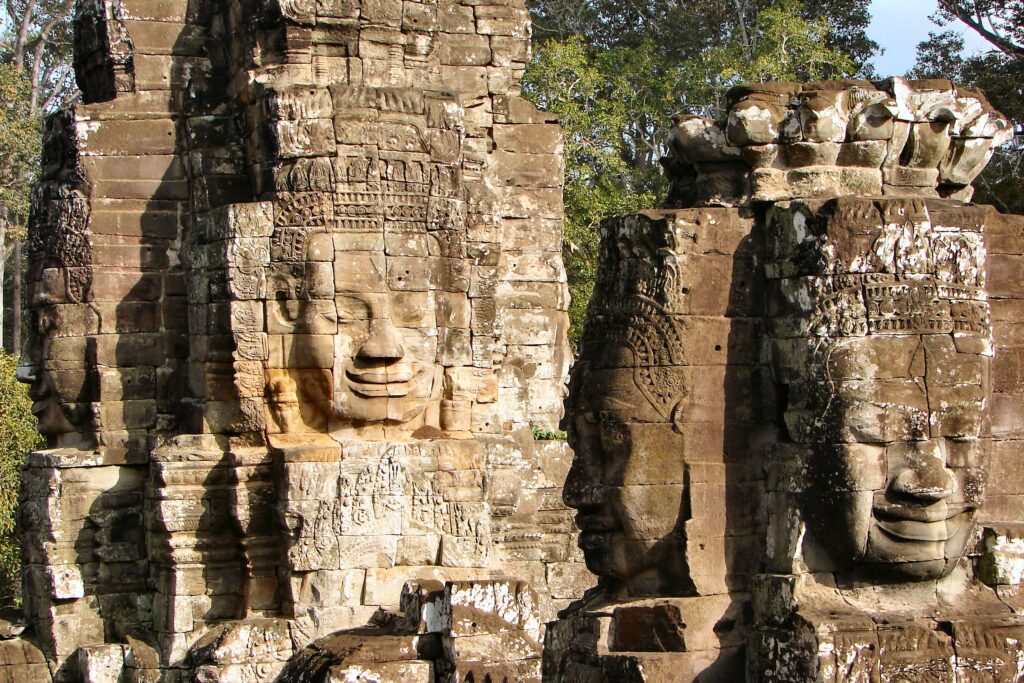
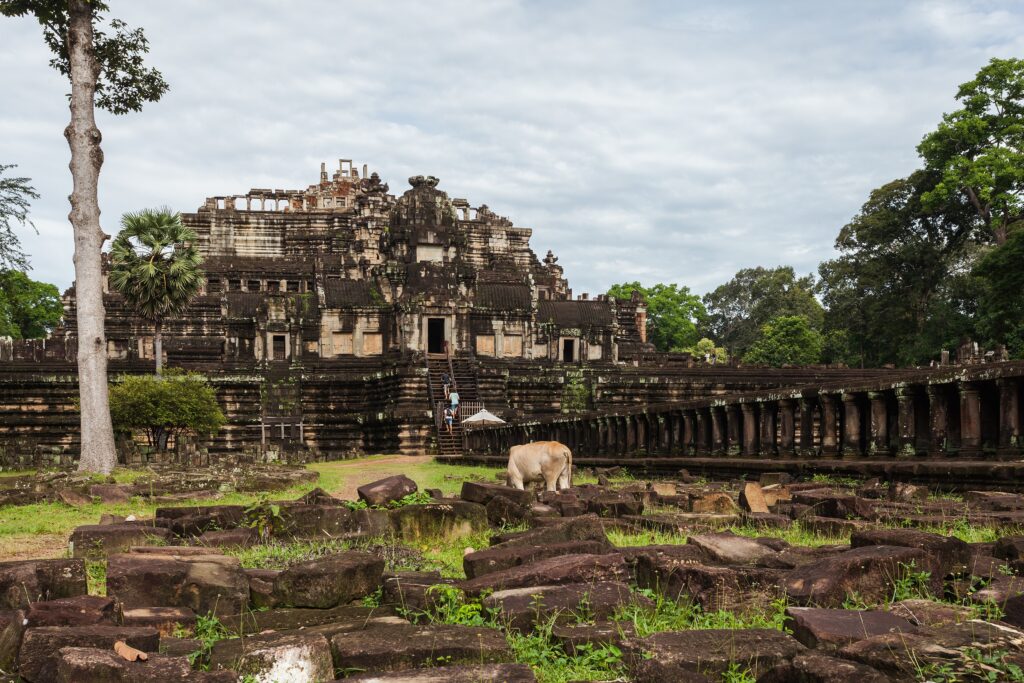
Bayon temple, Angkor. Photo: Bjørn Christian Tørrissen / Wikimedia Commons / CC BY-SA 4.0One of my favorites along the way was Bayon, the extraordinary Buddhist temple at the center of Angkor Thom. Bayon was constructed during the reign of King Jayavarman VII in the late 12th century and is famous for its enormous stone faces staring out from the towers. Their exact identity remains debated, although they’re often interpreted as representations of the bodhisattva Avalokiteshvara.
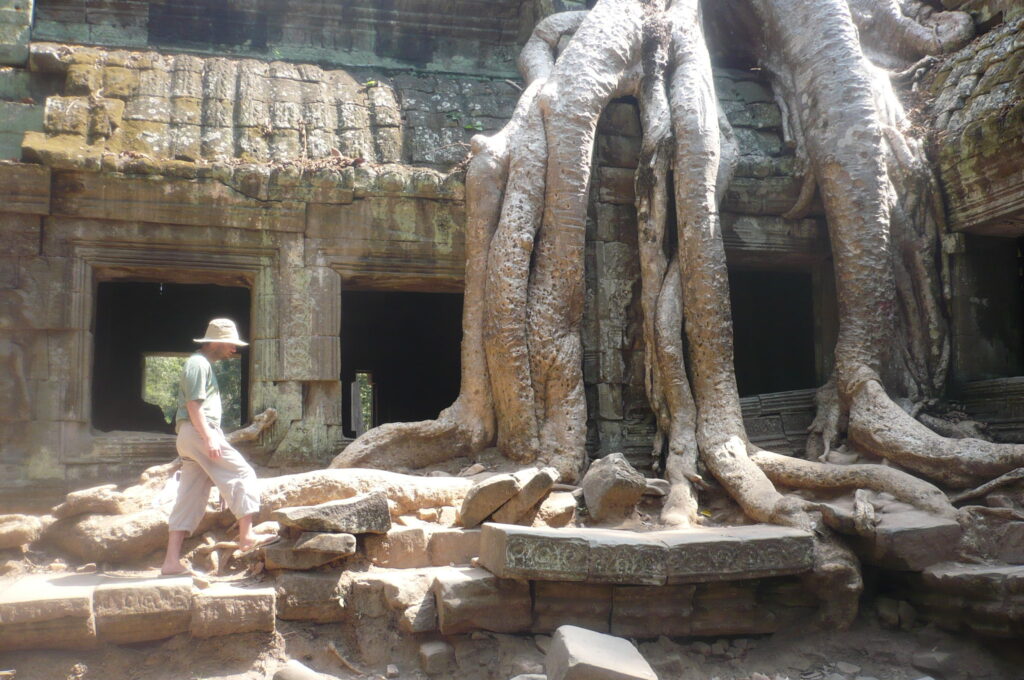
Other famous stops on our circuit included Ta Prohm, known for massive trees growing among its ruins, along with Angkor Thom and several smaller temples. You don’t need to understand every architectural or religious detail to appreciate the place. I definitely didn’t when I visited, but it would have been nice to know!
I was mostly impressed with the variety of ancient structures still standing around me and the fact that I could actually walk through them. The feeling of entering an ancient world was very present in my personal experience. I’ve visited other ancient ruins, but Angkor just feels more like an immersion in a fantasy world.
The Invitation That Changed My Day
At the end of our tour, our tuk-tuk driver took us to his home for the meal that had been part of our arrangement.
We drove roughly 45 minutes away from the temples, gradually leaving the tourist environment behind and passing increasingly residential areas. Small homes and roadside businesses passed by as our ride seemed to go on forever.
The living conditions became much poorer than anything I had personally experienced. Eventually, I started wondering where the hell we were going.
When we finally arrived, I wasn’t prepared for what I saw. We walked around the house into a backyard with hard dirt beneath our feet. Nearby was a small, worn structure where our driver’s girlfriend and a young child appeared. It looked like a small garage. Scattered next to it were piles of garbage. The place was pretty filthy. I peeked into the little garage-like house, and it just looked like a dingy bedroom.
I was completely blindsided.
Looking back, I wouldn’t pretend that one family’s circumstances represented the “real Cambodia.” Cambodia was—and is—far more complicated than what I saw during one afternoon. But at that point in my life, I had never been confronted so directly with living conditions so different from my own.
I didn’t know what to make of it.
A Meal I’ll Never Forget
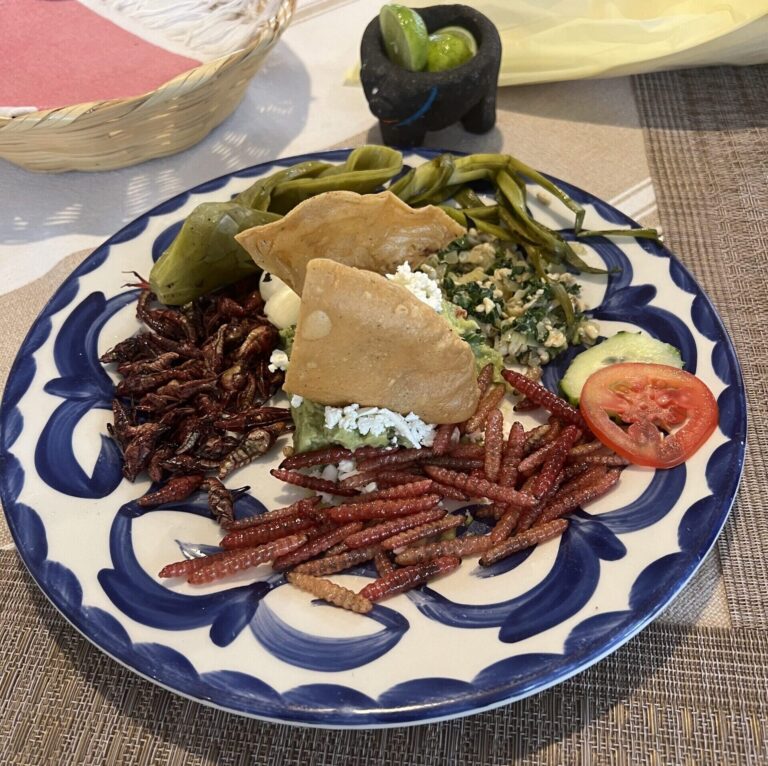
Then came the food. First, we ate grilled crickets. They were crunchy, tasty and easy to eat.
Next came small grilled river snakes, which surprised me in a good way! I was loving the world exploration I was experiencing at that moment. Eating the snakes was considerably more difficult than the crickets, though. There wasn’t much meat, and what was there tasted exactly like I’d imagine a little river or swamp reptile tasting.
But I was fascinated. Food seemed to arrive from people around the neighborhood and was cooked right there.
Then came the duck.
Someone arrived with a live duck and handed it to our driver. I think we all knew what was coming.
Our driver jokingly asked whether one of us wanted to kill it. We politely declined. He then asked if we wanted to film it.
We declined that too.
He slaughtered the duck in front of us and collected some of its blood in a bowl to be used in a soup that we later ate. One of my friends couldn’t watch. I remember telling him something along the lines of, “If you can’t watch this, you don’t deserve to eat meat every day.”
I still understand what I meant.
Most of us who buy neatly packaged meat from supermarkets are completely separated from the reality that an animal had to die for it to get there. Watching that process directly wasn’t pleasant, but it forced me to confront something that modern life makes extremely easy to ignore.
Eventually, the duck was cooked, we ate, and it was time to leave.
The Ride Back to Angkor Wat
It was a long, quiet ride back.
I had started that morning exploring one of humanity’s greatest archaeological sites. Hours later, I was sitting in a tuk-tuk thinking about poverty, food, privilege and the randomness of where we’re born.
Why did this family live the way they did while I grew up with so much more?
What made me special? Nothing, really. Part of me felt guilty. Another part was simply confused.
I didn’t leave Cambodia with some brilliant philosophical answer, and I don’t have one now. What I gained was a little more awareness of how limited my own understanding of the world had been. That’s one of the things travel can do to you. Sometimes the most important part of visiting a famous destination has nothing to do with the attraction you traveled there to see.
Angkor Wat was incredible. But the ride away from it—and the ride back—I remember just as much.