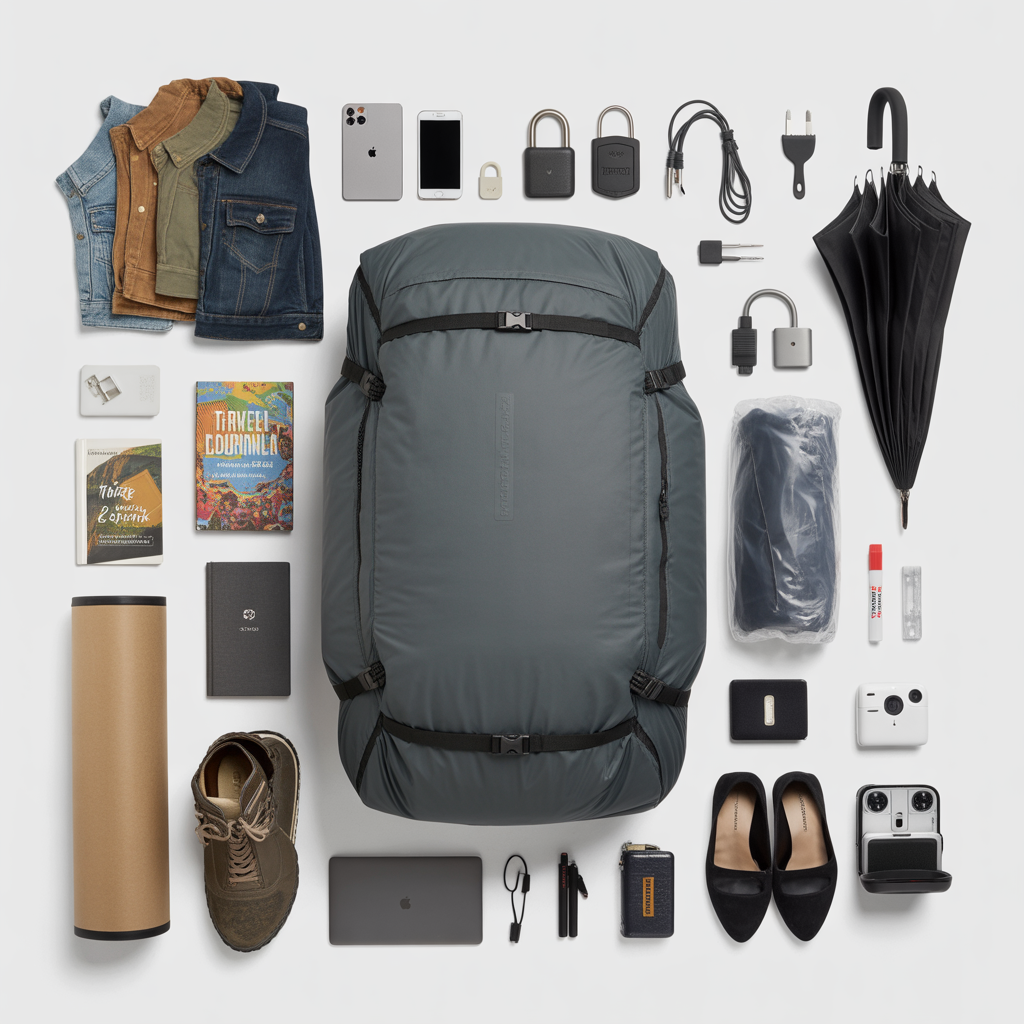
If you’re backpacking for four months or longer, you’re probably going to be on the move frequently. I’ve taken plenty of long trips over the years, and through trial and error, I’ve learned a lot about what is actually worth packing—and what isn’t. Long-term travel has also taught me plenty of lessons that have nothing to do with what’s inside my backpack, especially when it comes to anxiety, sleep deprivation, and finding balance on the road.
Below is my long-term travel packing list, along with a few lessons I’ve learned from making plenty of mistakes along the way. Some extra attention goes a long way.
One of my biggest philosophies is simple: don’t overpack. You can always buy clothing, shoes, or other basic items while traveling. At the same time, there are a few small things that are worth having backups of because losing or breaking them can become a major inconvenience on the road.
1. Make Not Losing Your Stuff the #1 Priority
It’s surprisingly difficult to achieve the goal of returning home with everything you left with, but it’s a worthy goal to have. Don’t waste your hard-earned money and time replacing things. Protect your belongings from both loss and theft.
2. Choose the Right Backpack Size
I personally like using a 75–85-liter backpack. It provides enough room for everything I need, and my philosophy has always been to have more than enough space rather than not enough.
That doesn’t mean everyone needs a backpack that large. If that size is too big for you, consider something in the 65–70-liter range—or whatever size makes sense for your body, packing style, and trip.
More importantly, don’t treat extra space as an excuse to fill your entire backpack.
3. Pack Two Small Padlocks
Bring two small padlocks.
Hostel lockers come in all shapes and sizes, and I’ve found that tiny locks tend to be more versatile. Some locker openings are surprisingly narrow, so avoid assuming that a larger, heavier lock will always work.
This is also one of those situations where having a backup pays off. Locks are small, light, and easy to lose, so I prefer carrying two.
4. Bring a Waterproof Laundry Bag
You don’t want damp or dirty clothing mixing with clean items in your backpack. A waterproof laundry bag makes separating everything much easier.
Consider bringing more than one lightweight bag if you like keeping things categorized. Staying organized becomes increasingly important when you’re living out of a backpack for months.
5. Pack a Travel Journal
Write in it after every memorable experience—or as often as you want.
It’s incredibly refreshing to read later and can remind you of all the things that a photo can’t describe. I promise you won’t regret doing this.
6. Pack a Small, High-Quality Umbrella
Make sure it’s high quality and not some cheap piece of crap from Amazon or Temu. Spend some extra money and get something good.
There have been so many times when I needed an umbrella and didn’t have one. A small one doesn’t take up much room and can be worth carrying for months.
7. Bring Less Clothing and More Socks Than You Think You Need
Ask yourself how much clothing you ACTUALLY need based on the places you’re visiting and the activities you’ll be doing.
From my experience, bringing around half to two-thirds of what you initially want to pack is a good starting point. Do laundry more often and, if necessary, on a scheduled basis to compensate for carrying fewer clothes.
Underpacking clothing isn’t the end of the world. If you discover that you genuinely need something, you can buy it while traveling. The only thing I would overpack is socks. They get lost no matter how you try sometimes.
8. Pack a Lightweight Beach Blanket & Quickdry Towel
Easy to pack and takes up very little space. If beaches, along with showers of course, are part of your trip, this is a no-brainer.
9. Consider a Small Art Transport Tube
If you like buying paintings, drawings, prints, or other artwork while traveling, a small art transport tube can be extremely convenient.
Just keep the tube’s size in mind when buying something. Don’t buy a piece that’s impossible to carry around for the rest of your trip.
Art is one of the best souvenirs you can buy.
10. Bring a Reusable Travel Water Bottle
A reusable water bottle or thermos is super convenient and efficient. It’s also useful for sharing when needed.
11. Bring Only One Book
It should be a book that you know you’ll actually read completely or frequently, or something that will take you a while to finish.
Books are heavy and bulky, so I would bring one and two at the absolute most. If you have a Kindle or prefer audiobooks, great.
I always find myself reading less than I expect when I travel.
12. Avoid Bulky Headphones
These are a complete waste of backpack space for me.
Smaller headphones or earbuds are much easier to pack when you’re traveling long term and constantly moving between accommodations.
13. Pack Earplugs and an Eye Mask
Some hostel rooms, hotels, buses, airplanes, and other sleeping environments will be noisy or bright from ambient light.
Earplugs and an eye mask take up practically no room and can make a huge difference for light sleepers. I don’t use them personally, but I’ve seen plenty people that do.
14. Protect Your Electronics and Jewelry
Go above and beyond with maintenance and storage. Handle electronics and other valuable items carefully, and make sure they stay clean and dry.
The longer you’re traveling, the more opportunities there are for something to get dropped, wet, lost, or damaged.
15. Carry a Mini First-Aid Kit
You never know what could happen. It’s better to be prepared.
Keep it small and practical rather than carrying an unnecessarily large medical kit around for months. It’s easy to find a travel medical kint with all the essentials. It’s worth the trouble.
16. Consider Bringing a Backup Cell Phone
If you have an older working phone, bring it as a backup.
If your primary phone gets lost, stolen, or broken on the road, having another one ready can save you the trouble of immediately buying a phone in a foreign country.
Depending on the device and destination, you can use an eSIM or local SIM and get yourself connected again immediately. I saw a few people have their phones stolen while I was in Brazil during Carnival in Rio de Janeiro. In a situation like that, a backup phone can be extremely useful. You can leave your primary phone somewhere secure when going out, or at least have another device ready if your main phone disappears.
17. Bring Two Phone Chargers and Backup Outlet Adapters
Having extras pays off.
Chargers and adapters are small, relatively lightweight, and easy to misplace. This is another category where I prefer having a backup rather than relying on one. Buying quality adapters abroad is hit or miss as well. It’s better to have quality ones with you from the beginning.
And if you lend one to somebody, do NOT forget to get it back.
18. Choose Footwear Based on Your Trip and Lifestyle
There’s no magic number of shoes that every backpacker should bring.
Think about where you’re going and what you’ll actually be doing. Depending on your trip, that could mean sneakers, flip-flops, hiking sandals, hiking boots, formal shoes, heels, or something completely different.
Prioritize your lifestyle.
Personally, I don’t go to fancy places, and on one trip lasting almost eight months, I traveled with two pairs of sneakers, one pair of flip-flops, and one pair of hiking shoes or boots. Four pairs of footwear is generally the maximum I would personally carry (I was using a huge suitcase as well).
Other travelers might need only a pair of sneakers and flip-flops.
Your backpack size, foot size, destinations, activities, and personal style should dictate the decision. Shoes can take up a ridiculous amount of space, so don’t load your bag with bulky footwear you’re unlikely to use that can be dirty or smelly over time.
If you can’t decide, take fewer pairs than you want. You can always buy another pair during your trip.
19. Pack a Portable Phone Charger
A portable charger can go a long way when you need it.
Whether you’re spending an entire day exploring a city, taking a long bus ride, hiking, or simply somewhere without convenient access to an outlet, it’s a nice insurance policy to have.
20. Pack a Few Small Repair and Utility Items
A few random things can become surprisingly useful on the road: scissors, superglue, a permanent marker, and a small multi-tool or Swiss Army knife.
They take up very little space but can help with small repairs and unexpected problems.
Just remember that knives, scissors, multi-tools, and similar objects may be restricted by airport security or local laws. Check the rules for your transportation and destinations before packing them, particularly if you’re traveling with carry-on luggage.