Why Antigua Is Worth Staying a While
One of the perks of long-term backpacking is that sometimes you can find a comfortable place to put your things down, take a break from moving around, and just enjoy simplicity for a while, experiencing life at a slower pace.
Not every destination needs to be packed with sightseeing, tours, and adventures.
Antigua, Guatemala, is one of those places.
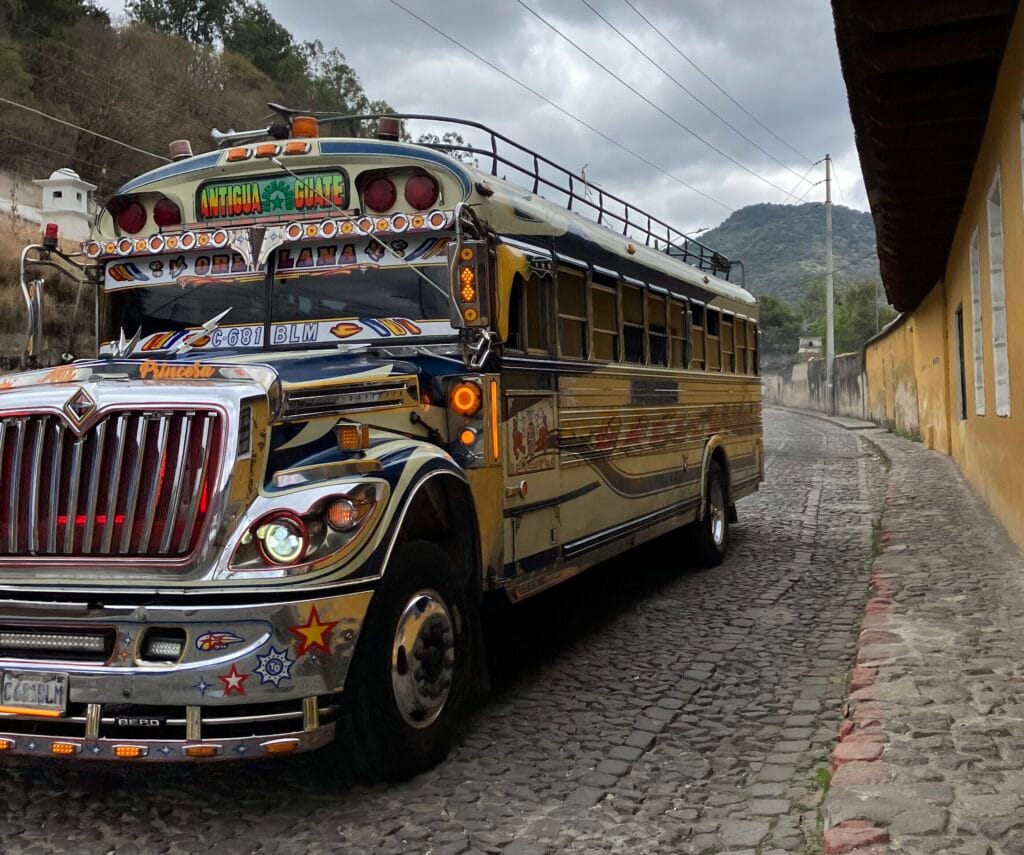
After visiting Tikal National Park in northern Guatemala, I spent roughly two weeks in this beautiful colonial town, surrounded by volcanoes and filled with colorful buildings, cobblestone streets, interesting architecture, and the most badass public buses I’ve encountered during my travels.
Many travelers come to Antigua for two or three days.
For the majority, the reason for the visit is primarily to hike Acatenango Volcano and witness the eruptions of nearby Volcán de Fuego. I actually chose not to do the hike because Fuego wasn’t visibly erupting during my visit. Considering how physically demanding the overnight trek can be, I wasn’t interested in going through all that without the experience I was hoping for.
Instead, I spent my time exploring the town, enjoying the restaurants and cafés, visiting historical sites, and simply relaxing.
What I discovered is that Antigua has just about everything you need for a comfortable extended stay. It’s small enough to explore on foot, has an excellent selection of restaurants and coffee shops, and offers plenty of interesting activities when you’re in the mood to do something.
And when you’re not? It’s a wonderful place to do absolutely nothing.
Here’s why I think Antigua deserves more than just a quick stop on your journey through Guatemala, and why it’s one of my favorite cities in the world.
Quick Navigation: What You’ll Find in This Guide
- Antigua’s Architecture and Historic Landmarks
- Parque Central, La Merced, and Cerro de la Cruz
- Free and Paid Activities in Antigua
- Chocolate-Making at ChocoMuseo
- Guatemalan Food, Coffee, and Restaurants
- Shopping for Handicrafts and Jade Jewelry
- Nearby Villages and Hobbitenango
- Nightlife, Festivals, and Semana Santa
- Hiking Acatenango and Visiting Pacaya Volcano
- Where to Stay in Antigua
- Antigua for Digital Nomads and Long-Term Travelers
- Weather and the Best Time to Visit
Antigua’s Beautiful Architecture and Cobblestone Streets
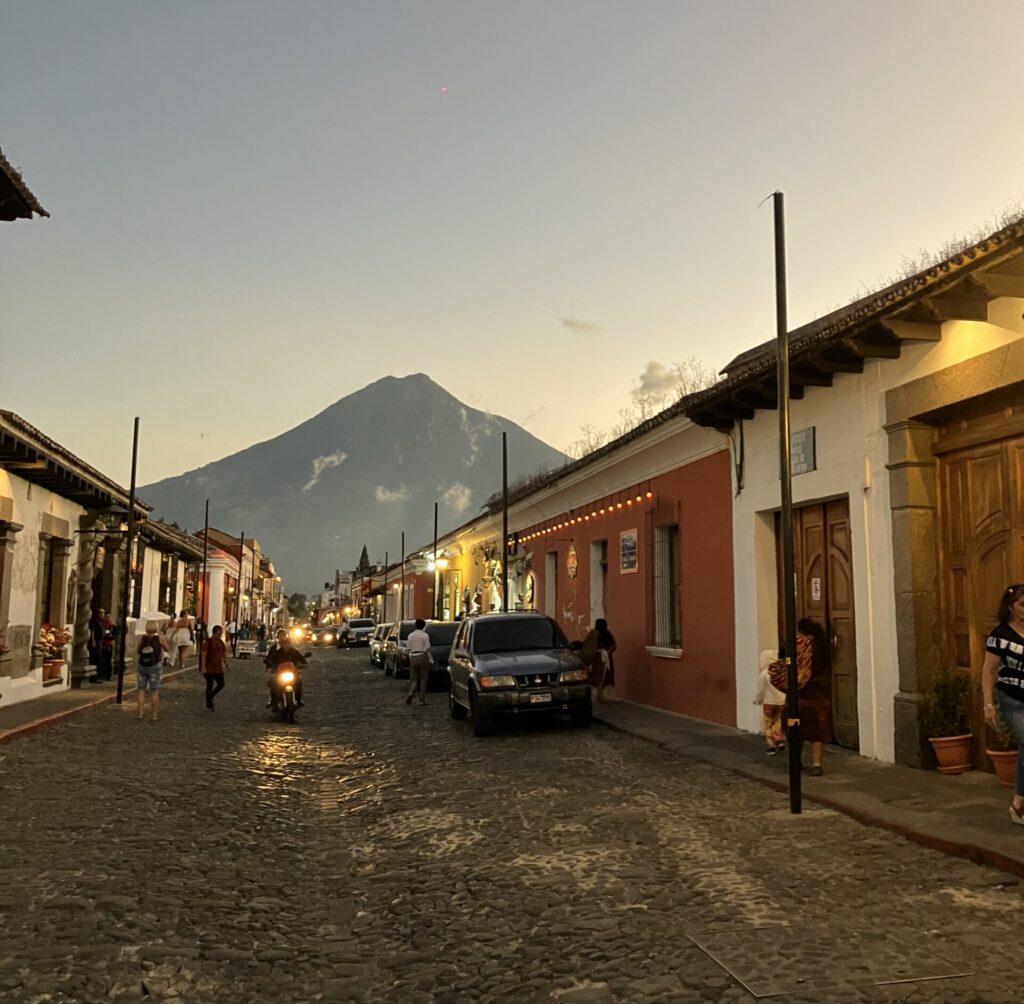
One of the first things you’ll notice about Antigua is how visually appealing it is.
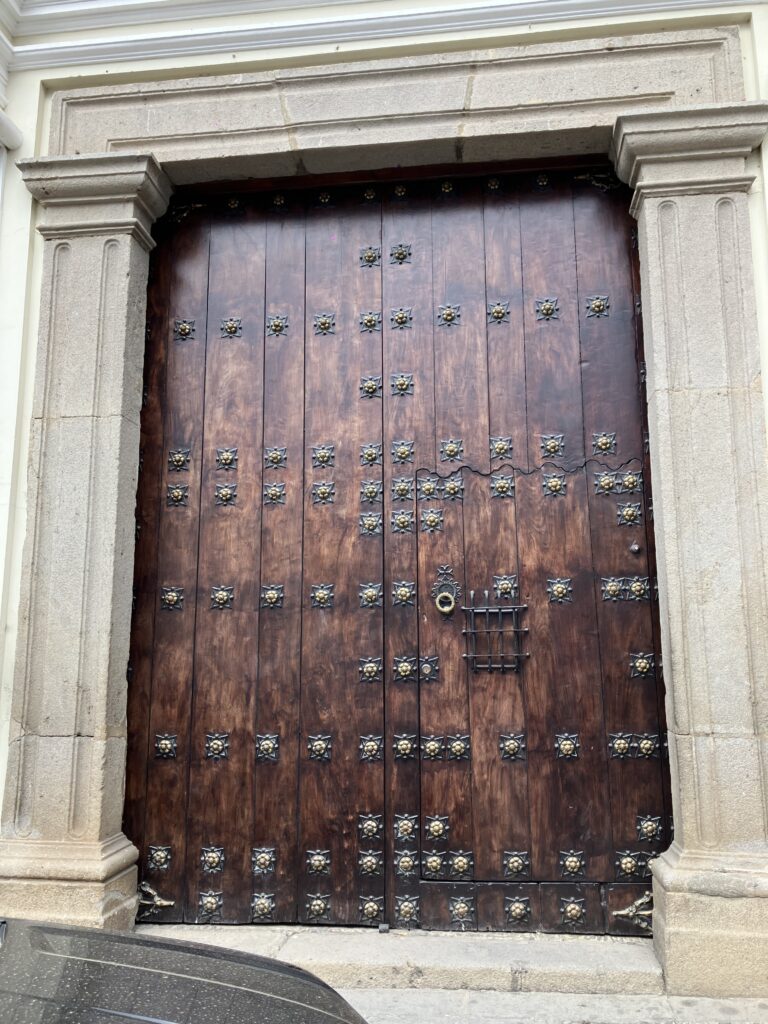
The cobblestone streets are lined with colorful colonial buildings, many featuring beautifully designed wooden doors, elaborate stone entrances, and decorative architectural details.
Some doors are painted in bright colors, while others showcase beautifully polished wood. It’s almost as though every building has its own personality.
Someone once told me that businesses in Antigua were required to have unique doors. Although I haven’t been able to verify that specific claim, Antigua’s historic preservation regulations certainly contribute to the town’s distinctive appearance.
The result is a place that feels incredibly artsy, almost artisanal.
Antigua was once the capital of the Kingdom of Guatemala during the Spanish colonial period. A series of devastating earthquakes in 1773 eventually led to the relocation of the capital to present-day Guatemala City.
Today, Antigua is a UNESCO World Heritage Site, recognized for its preserved colonial architecture and historical significance.
One of my favorite things to do was simply walk around with no particular destination in mind.
There are churches, ruins, cafés, shops, courtyards, and interesting architectural details everywhere you look. You can easily spend an entire afternoon exploring the streets, taking photographs, and discovering little places you hadn’t noticed before.
And the best part? Walking around doesn’t cost anything.
Parque Central: My Favorite Town Square in Latin America
If you’ve traveled extensively around Latin America, you’re probably familiar with the central plazas found in just about every town and city.
I’ve spent time in some beautiful ones, including Parque Sabaneta near Medellín, Parque Principal El Libertador in Jardín, Colombia, and the main square in Granada, Nicaragua.
But Antigua’s Parque Central might be my favorite of them all.
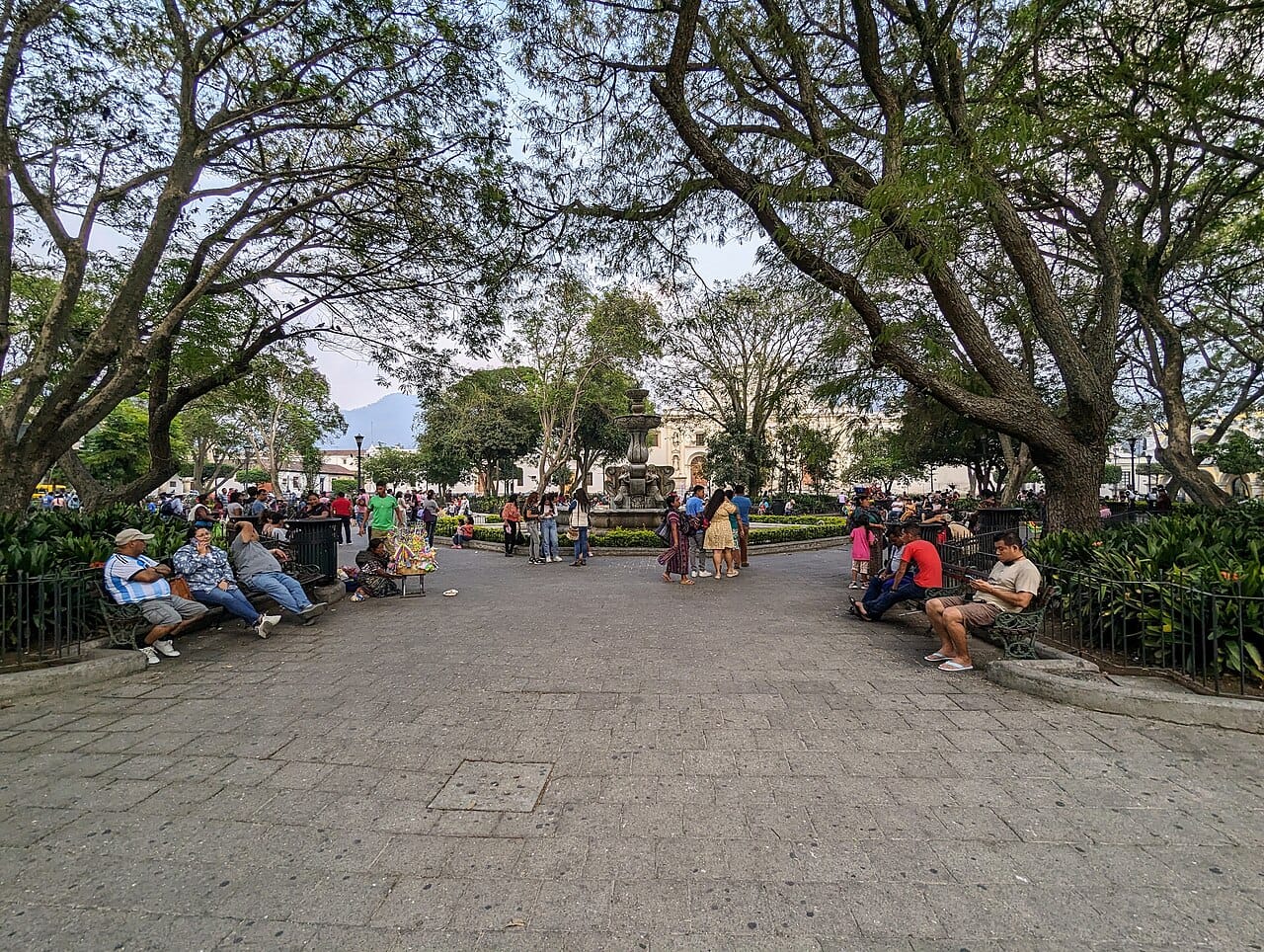
It’s a beautiful centerpiece surrounded by historic buildings, shops, people hanging out, and flocks of pigeons. The square is filled with trees, benches, a central fountain, and people going about their day.
There’s always something happening. Locals gather to socialize, tourists take photographs, vendors sell their products, and people sit around enjoying the atmosphere.
What I particularly enjoy about places like this is that you don’t need to spend money to participate in the local culture.
Grab a coffee, find a bench, and watch the world go by.
Iglesia de La Merced: One of Antigua’s Most Beautiful Landmarks
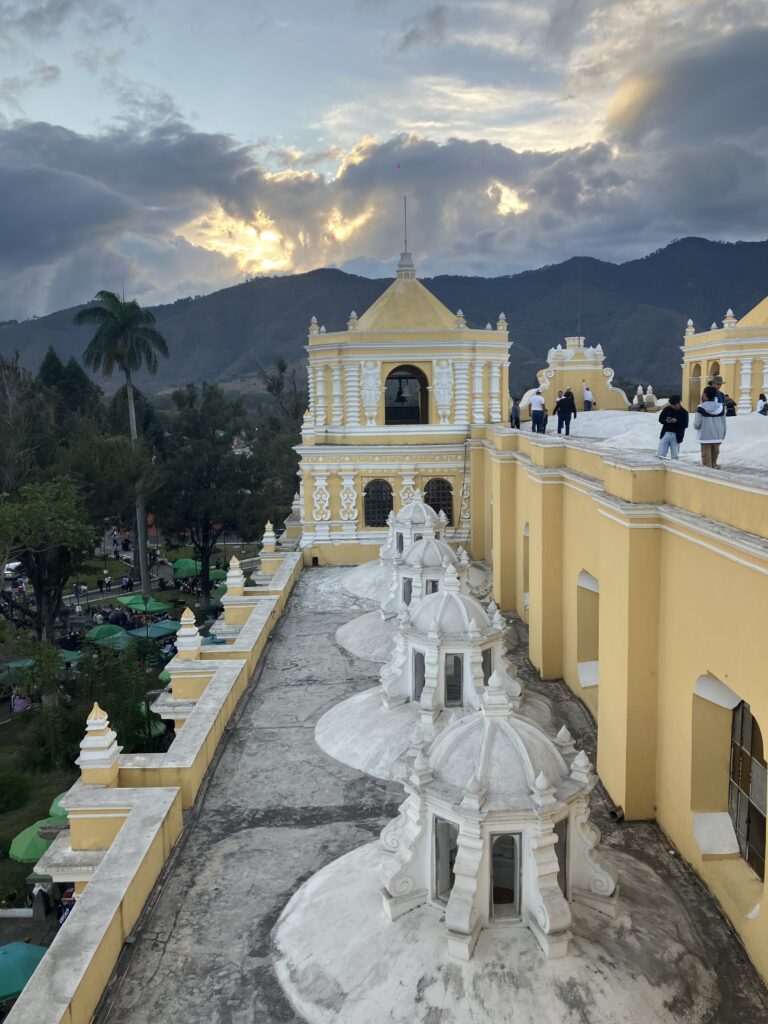
One of Antigua’s most recognizable landmarks is Iglesia de La Merced, a beautiful yellow-and-white Baroque church with elaborate decorative details across its façade.
The building is impressive during the day, but I particularly enjoyed the atmosphere around it at night.
With the streetlights illuminating the church’s decorative stonework, the entire area takes on an almost mysterious appearance.
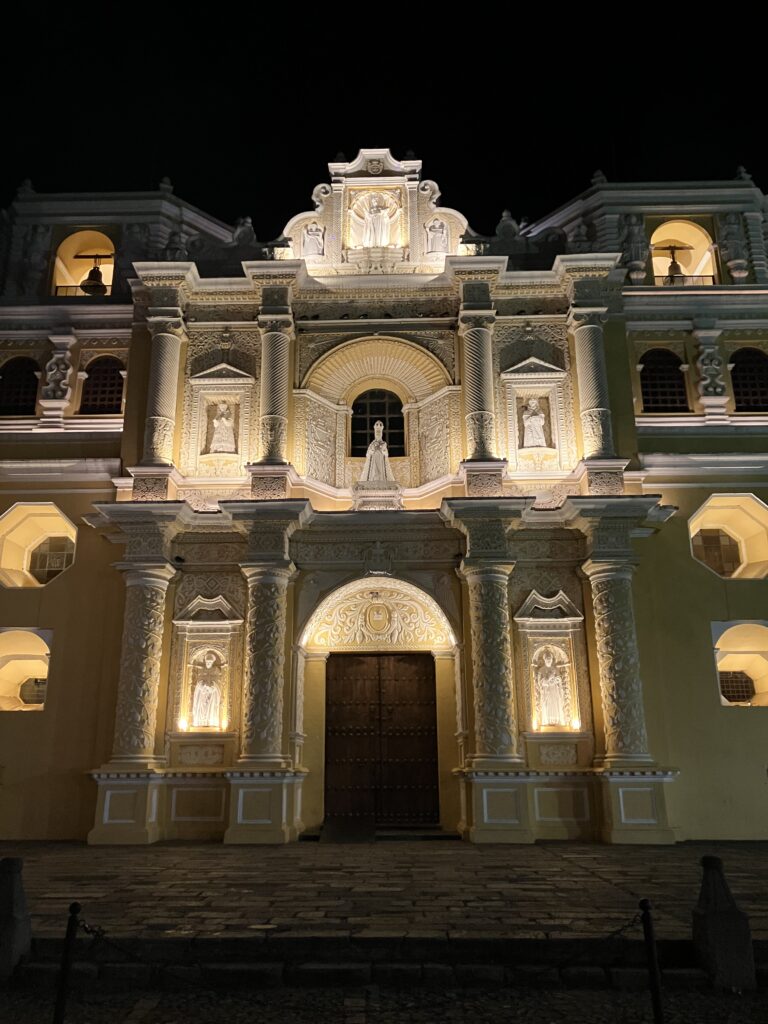
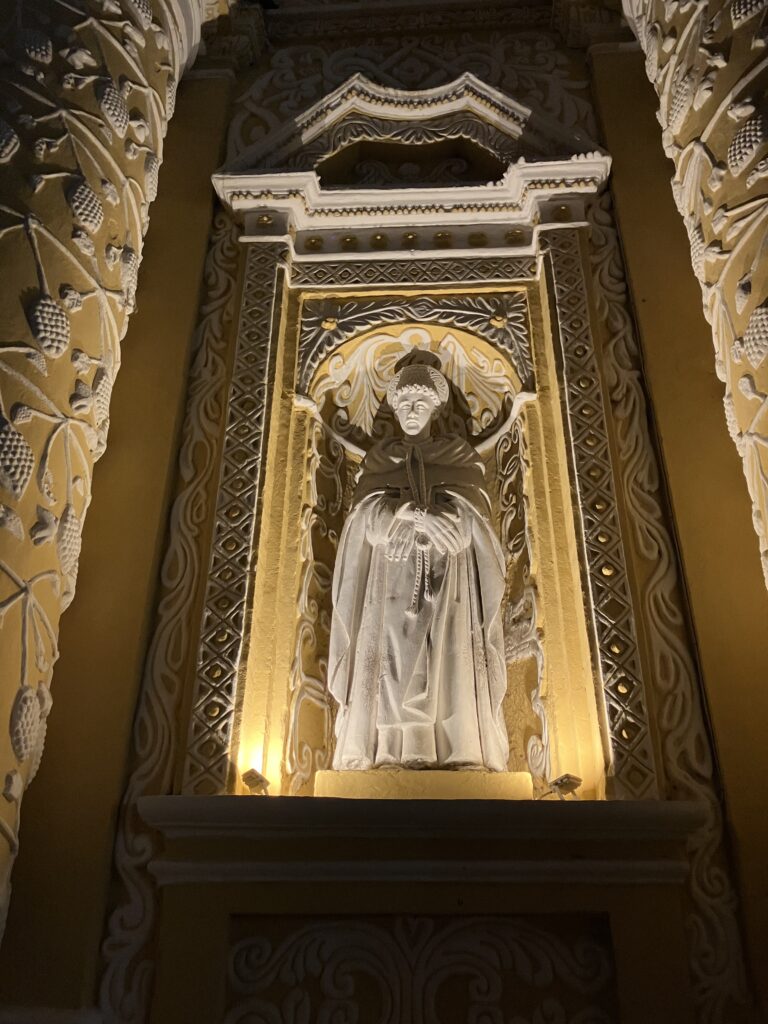
The contrast between the historic architecture and the lively handicraft vendors and street food sellers nearby makes it a fascinating place to hang out.
It’s beautiful, lively, and even a little creepy in the best possible way.
Don’t miss the rooftop of the adjoining convent.
From above, you get an excellent view of Antigua’s red-tiled rooftops, colonial streets, and Volcán de Agua rising in the distance.
Access to the church itself is generally free, while the adjoining convent and rooftop have a separate admission charge. A reported foreign-visitor rate is approximately Q35, although I’d recommend confirming the price when you arrive.
It’s one of the best places in Antigua to appreciate the town’s setting among the surrounding volcanoes.
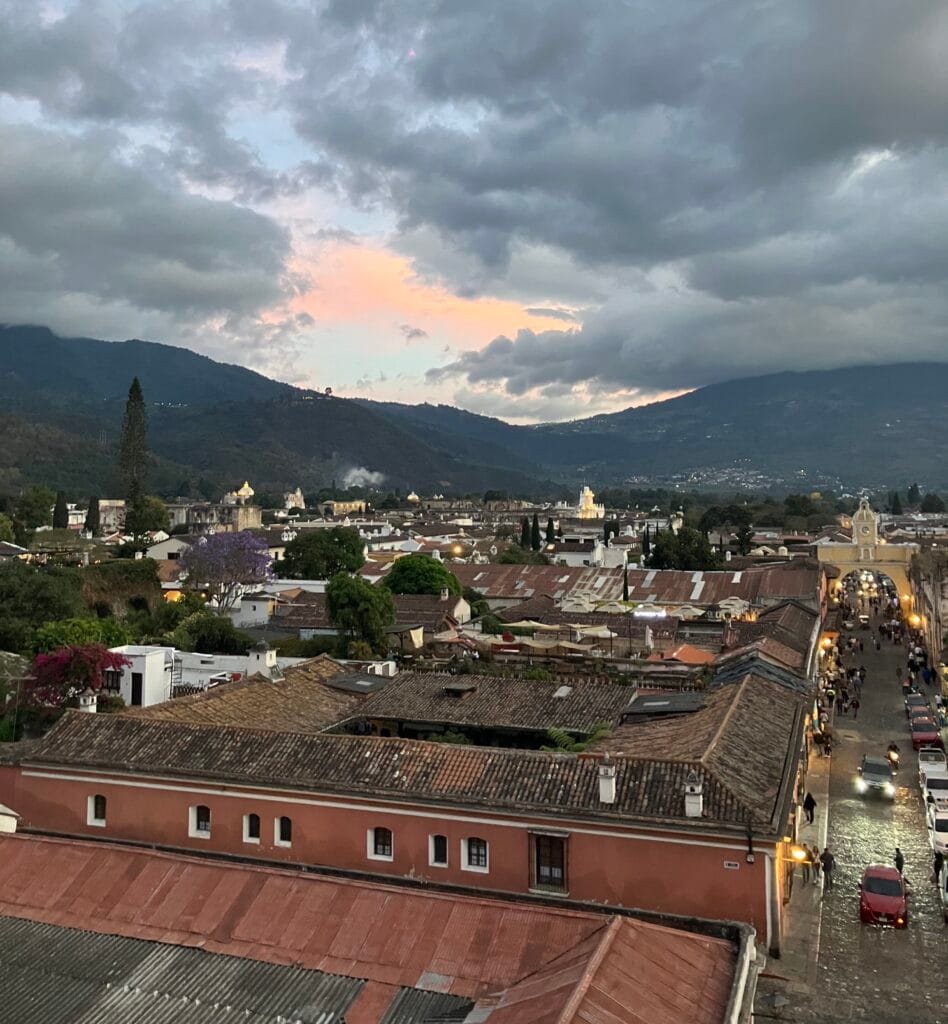
Cerro de la Cruz: The Best Panoramic View of Antigua
For an even more expansive view of Antigua, head to Cerro de la Cruz.
This viewpoint sits on a hillside overlooking the northern part of town and is accessible by a relatively short uphill walk. The route involves some stairs, but it’s a manageable little urban hike for most reasonably active travelers.
At the top, you’ll find a large cross overlooking Antigua, with the town’s colorful buildings and grid of streets spread out below.
On a clear day, Volcán de Agua dominates the background.
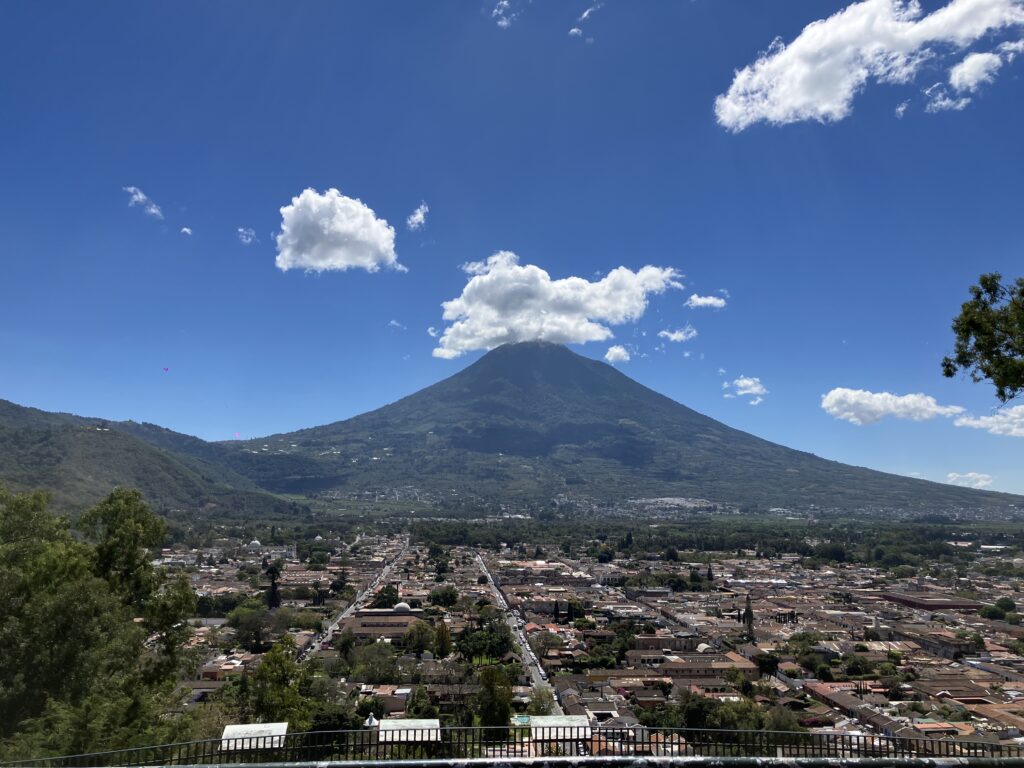
I particularly enjoyed how this viewpoint gives you a broader perspective of Antigua’s geography. From above, you can really appreciate how compact the town is and how dramatically the volcanoes frame the landscape.
Best of all, visiting Cerro de la Cruz is free. I’d recommend going during daylight hours and avoiding isolated paths after dark.
Take Photos at the Santa Catalina Arch
You can’t visit Antigua without seeing the famous Santa Catalina Arch.
This bright yellow arch stretches across one of the town’s cobblestone streets and is probably Antigua’s most recognizable photographic landmark.
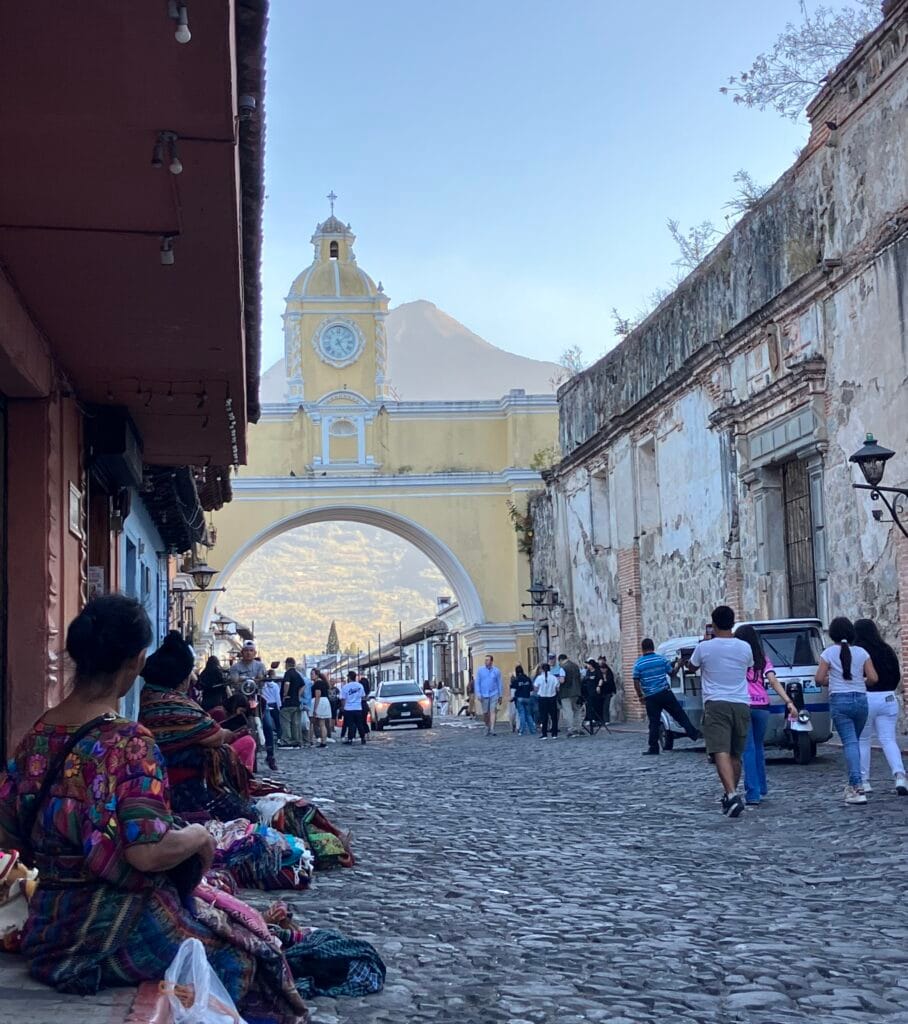
Originally constructed to connect parts of the Santa Catalina convent complex, it has become one of the defining symbols of the city.
With Volcán de Agua rising behind it, the arch creates one of the most picturesque scenes in Guatemala.
It’s a great place to take photographs, especially when the lighting is good and the street isn’t too crowded. You don’t need a tour or an entrance ticket. Just walk over and enjoy the scenery.
Explore Antigua’s Churches, Convents, and Historical Ruins
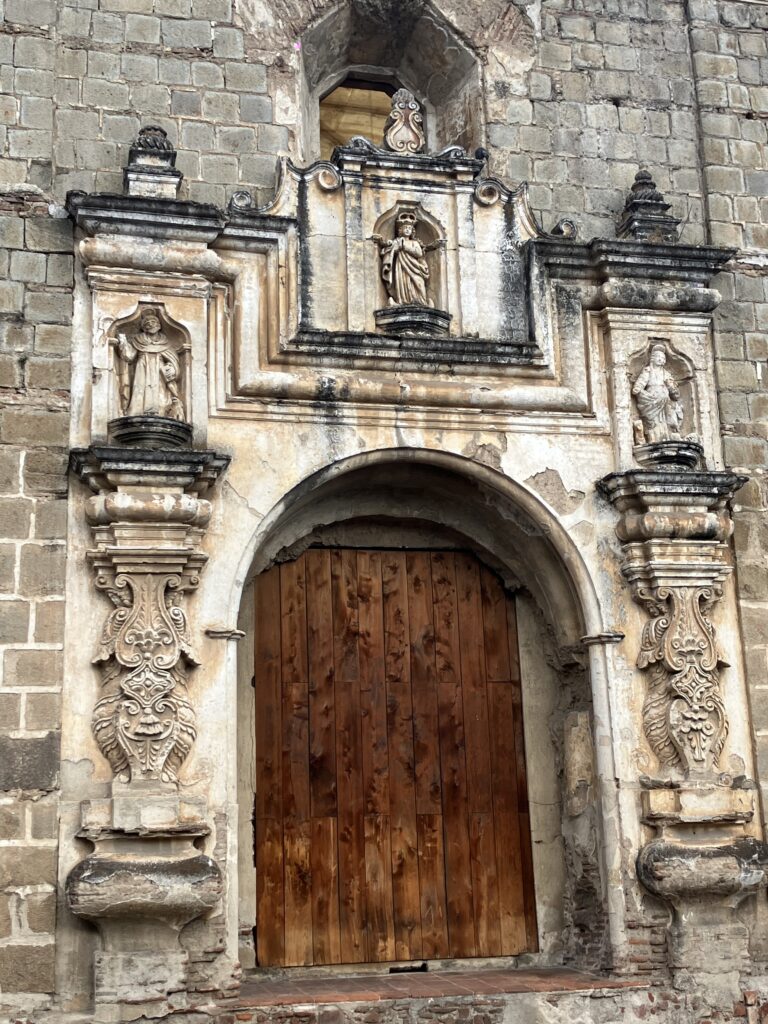
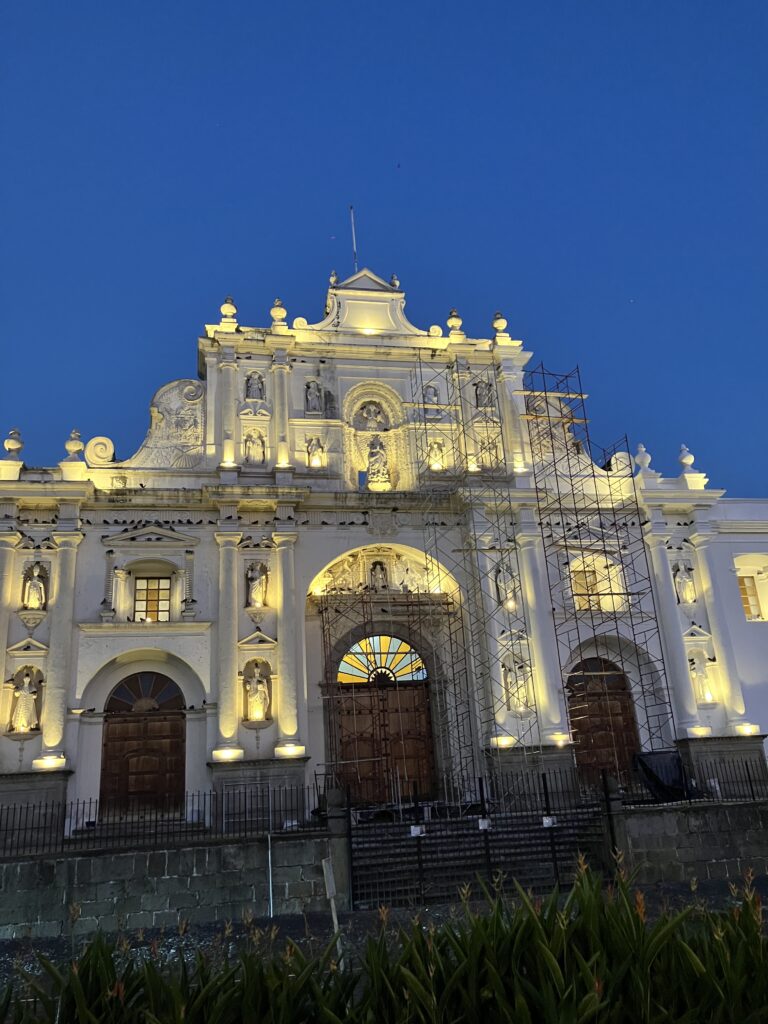
One of the most interesting things about Antigua is the sheer number of historic churches and convents scattered throughout the town.
Some remain active places of worship, while others stand as partially restored ruins, reminders of the earthquakes that shaped the city’s history.
A few places worth visiting include:
- Catedral de San José: Located directly beside Parque Central, the cathedral is one of Antigua’s most important historical landmarks. The active church and the adjoining cathedral ruins offer different experiences.
- Convento de Santa Clara: A beautiful former convent featuring impressive arches, courtyards, and architectural remains.
- Iglesia de La Merced: Worth visiting for its ornate façade, church interior, and adjoining convent.
- Iglesia de San Francisco El Grande: Another important religious landmark associated with the history of Antigua and the veneration of Hermano Pedro.
You can explore many of these sites independently, although I think taking a guided walking tour is worthwhile if you’re interested in understanding the historical context.
I joined what I believe was a free walking tour, where participants contributed a tip at the end.
If you’re traveling on a particularly tight budget, you can still enjoy much of Antigua’s architecture from the streets and visit churches that don’t charge admission. However, some of the major ruins require paid entry.
I’d recommend researching the history of the buildings beforehand if you decide to explore without a guide.
Visit the Museo Nacional de Arte de Guatemala
Another worthwhile stop is the Museo Nacional de Arte de Guatemala, also known as MUNAG, located in the historic Palacio de los Capitanes Generales.
The museum showcases Guatemalan art and cultural history, including works reflecting the country’s pre-Hispanic, colonial, and modern periods.
Admission has been offered free of charge, making it an especially appealing activity for budget travelers. Check the current admission policy and opening hours before visiting.
Free and Paid Activities in Antigua
One of the things I particularly appreciate about Antigua is that you can have an enjoyable day without spending much money. This goes a long way in making a place suitable for a longer-term stay relative to a typical travel schedule.
Many of the town’s most beautiful sights are completely free to experience, especially if you enjoy walking, photography, architecture, and people-watching.
Here’s a quick comparison of some popular attractions.
| Attraction | Approximate admission |
|---|---|
| Parque Central | Free |
| Santa Catalina Arch (street view) | Free |
| Cerro de la Cruz | Free |
| Walking the historic streets | Free |
| Iglesia de La Merced church | Generally free |
| La Merced convent rooftop | Around Q35 for foreign visitors |
| Catedral de San José (active church) | Generally free |
| Cathedral ruins | Paid admission |
| Convento de Santa Clara | Paid admission |
| Museo Nacional de Arte de Guatemala | Reportedly free |
Admission fees for the ruins can change, so confirm current prices locally before visiting.
If you’re on a very tight budget, you can spend your money on food, coffee, and accommodation while enjoying most of the town’s atmosphere for free.
Make Your Own Chocolate at ChocoMuseo
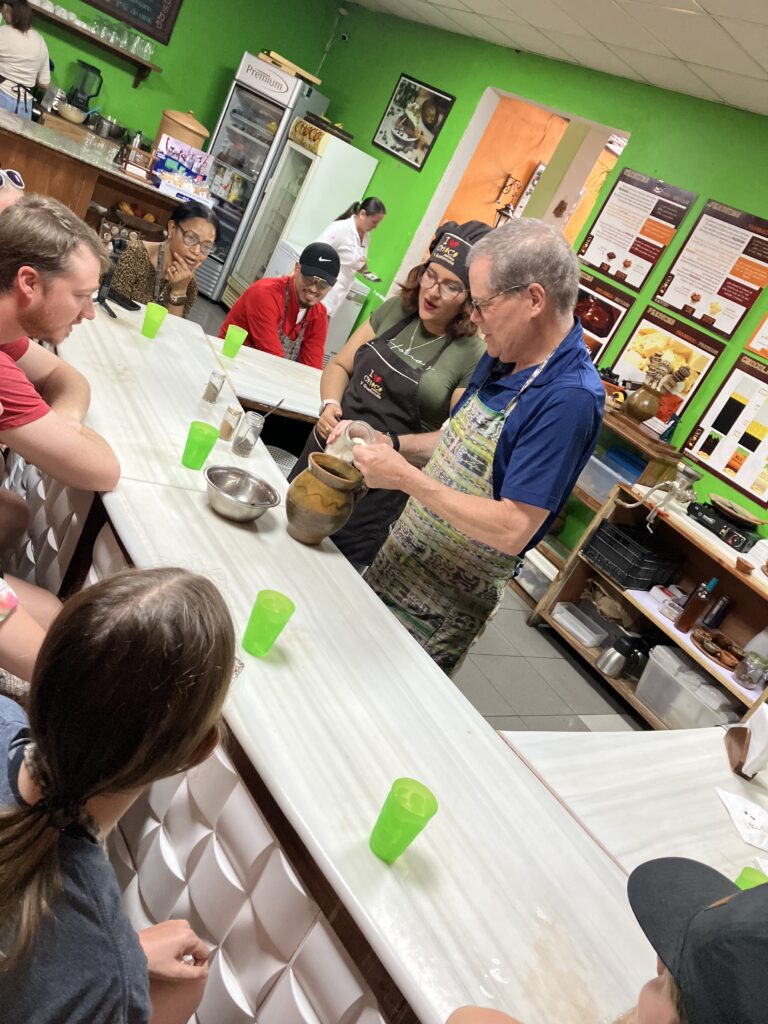
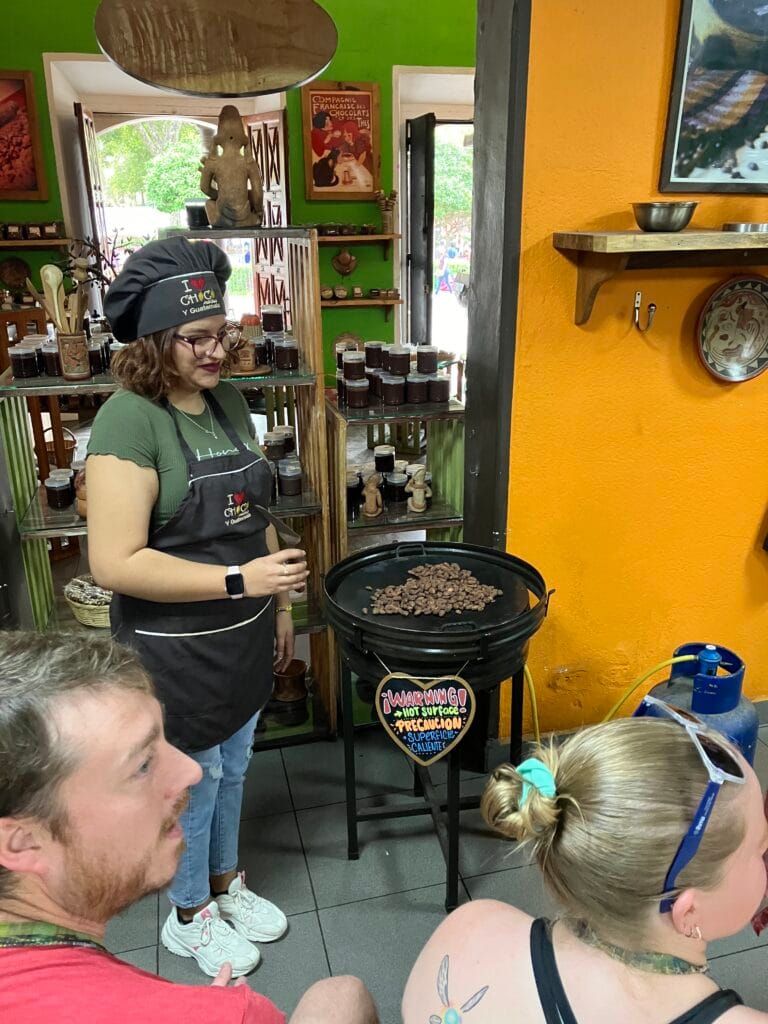
Guatemala has a fascinating relationship with cacao, which has been cultivated and consumed in Mesoamerica for thousands of years.
While in Antigua, I participated in a two-hour Bean-to-Bar chocolate-making workshop at ChocoMuseo, conveniently located near Parque Central.
It was one of my favorite organized activities.
The workshop began with the history and cultural importance of cacao before moving into the process of transforming cacao beans into chocolate.
We also prepared and tasted cacao drinks inspired by preparations associated with the Maya and the Spanish colonial period.
Then came the fun part.
Everyone in the class participated in the hands-on process, taking turns working with the cacao and learning about the steps involved in transforming it into chocolate.
We ground ingredients, mixed our chocolate, and eventually prepared our own bars.
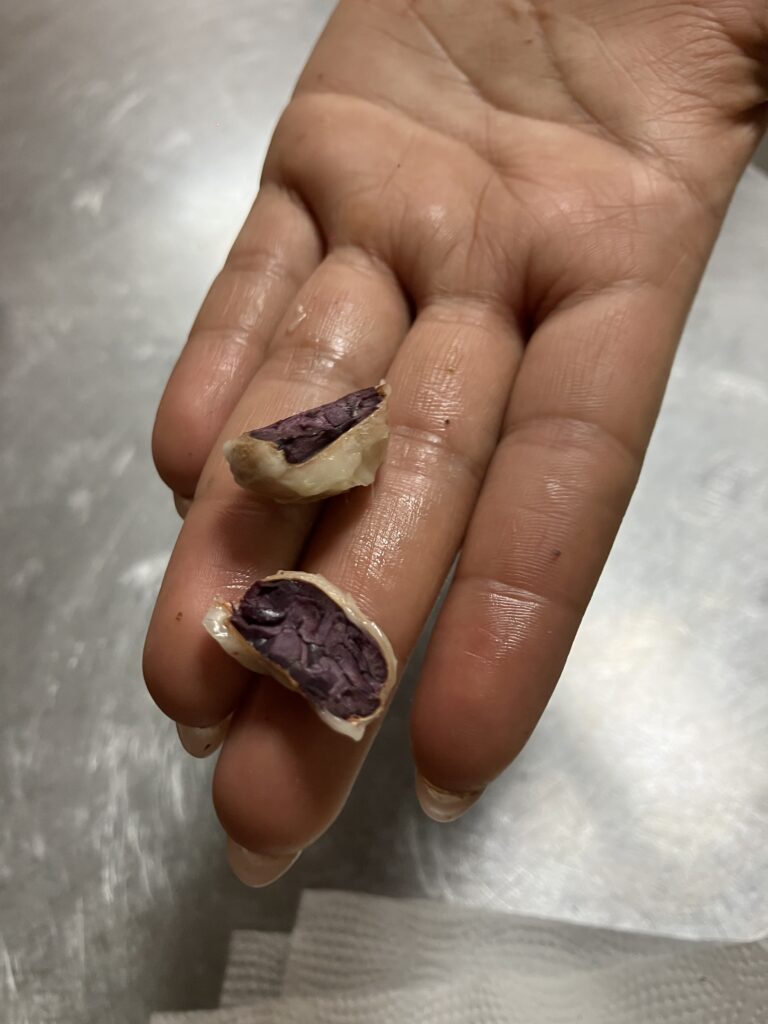
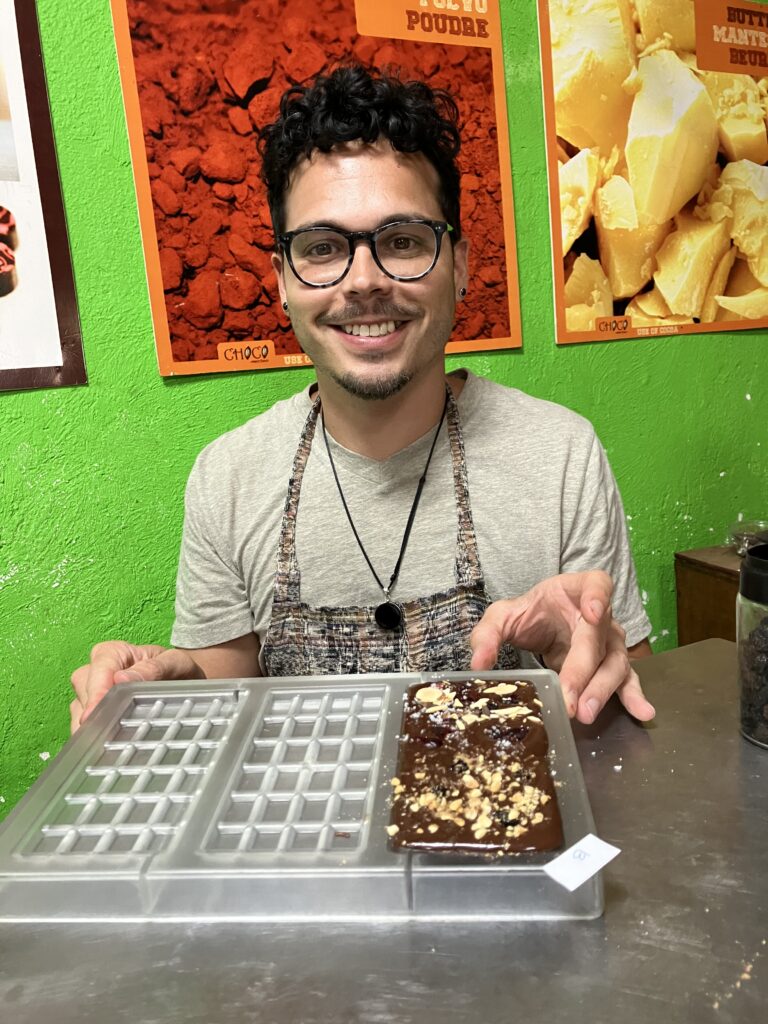
I especially liked the atmosphere. Everyone introduced themselves, participated together, and became involved in whatever stage of the process we were working on.
It was educational without feeling like a lecture.
For the finale, we were given a selection of ingredients to customize our chocolate. The finished bars were allowed to cool and harden before being wrapped and taken home.
You learn about cacao, make chocolate, eat chocolate, and leave with chocolate.
Mission accomplished!
ChocoMuseo Workshop Options
ChocoMuseo offers two different workshop experiences.
- Mini Workshop: A shorter introduction to chocolate-making, starting at approximately $20.
- Bean-to-Bar Workshop: The two-hour experience I attended, starting at approximately $30.
If you have the time, I’d recommend the longer workshop. It’s interactive, informative, and gives you a much better understanding of the entire process.
One detail worth mentioning is that your chocolate may need additional cooling time before you can collect it. The official workshop description notes that finished chocolates can be ready for pickup roughly an hour after the class.
You can also read about this experience in my article about my favorite tours around the world.
And even if you don’t take a workshop, I would absolutely recommend trying some traditional Guatemalan hot chocolate while you’re in Antigua.
I’m talking about the thick, rich, sweet kind that feels almost like a dessert.
It’s delicious!
Enjoy Guatemala’s Food, Coffee, and Café Culture
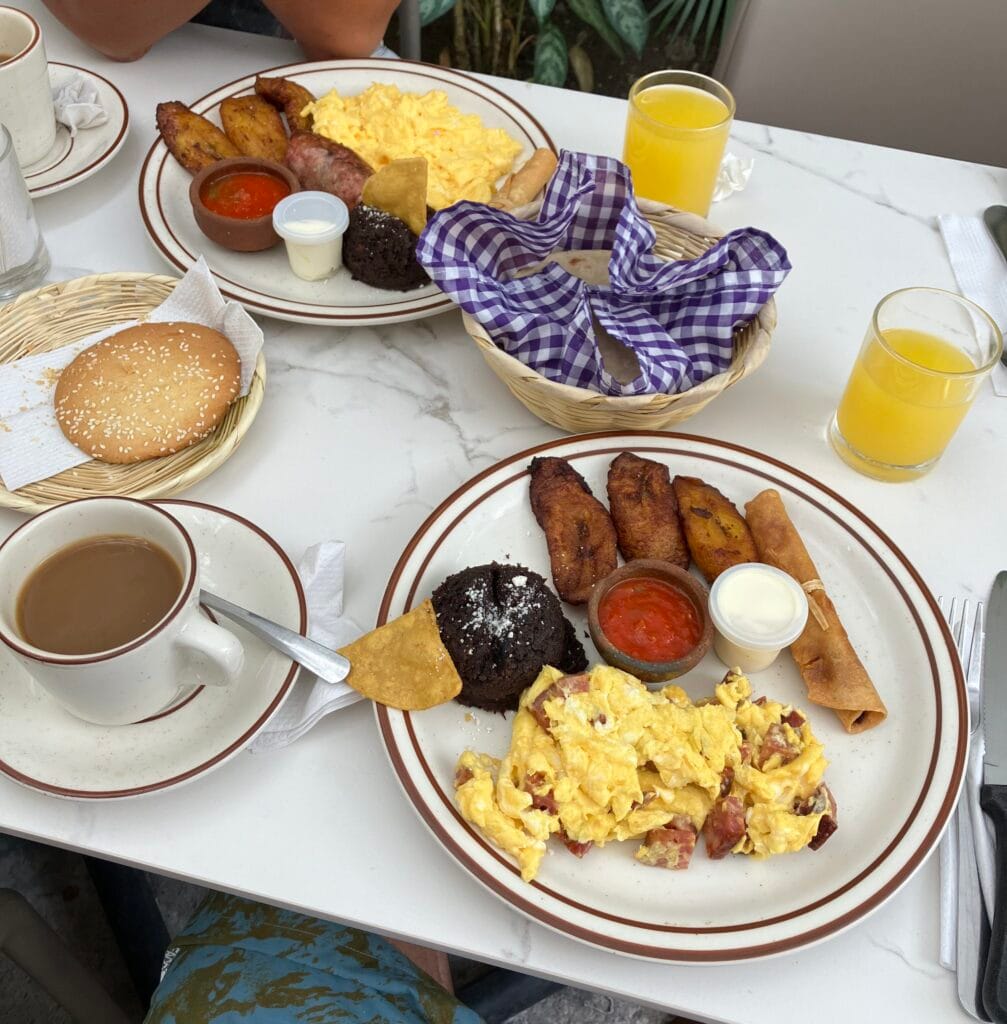
I think Guatemalan food is very overlooked by international travelers.
There are similarities to Mexican cuisine, particularly in the use of corn, beans, tortillas, and traditional sauces, although Guatemalan dishes have their own distinct flavors and culinary traditions.
One thing I particularly enjoyed was the typical Guatemalan breakfast.
A traditional breakfast often includes eggs, black beans, plantains, fresh cheese, tortillas, and coffee. It’s a hearty, satisfying way to start the day.
I had an excellent breakfast at El Viejo Café, a charming place that I’d happily recommend.
Antigua also has plenty of restaurants offering international cuisine, making it easy to find variety if you’re staying for a couple of weeks.
Refacciones y Pupusas Odilia
One of the places that represents Antigua’s more modest food scene is Refacciones y Pupusas Odilia.
It’s a small, unpretentious food spot with a tiny kitchen and a limited menu, serving affordable homemade food.
Places like this are exactly what I enjoy discovering while traveling. You don’t always need a beautiful restaurant or an elaborate menu to have a satisfying meal.
Sometimes the best experiences come from simple places serving everyday food.
Coffee Shops and Guatemalan Coffee
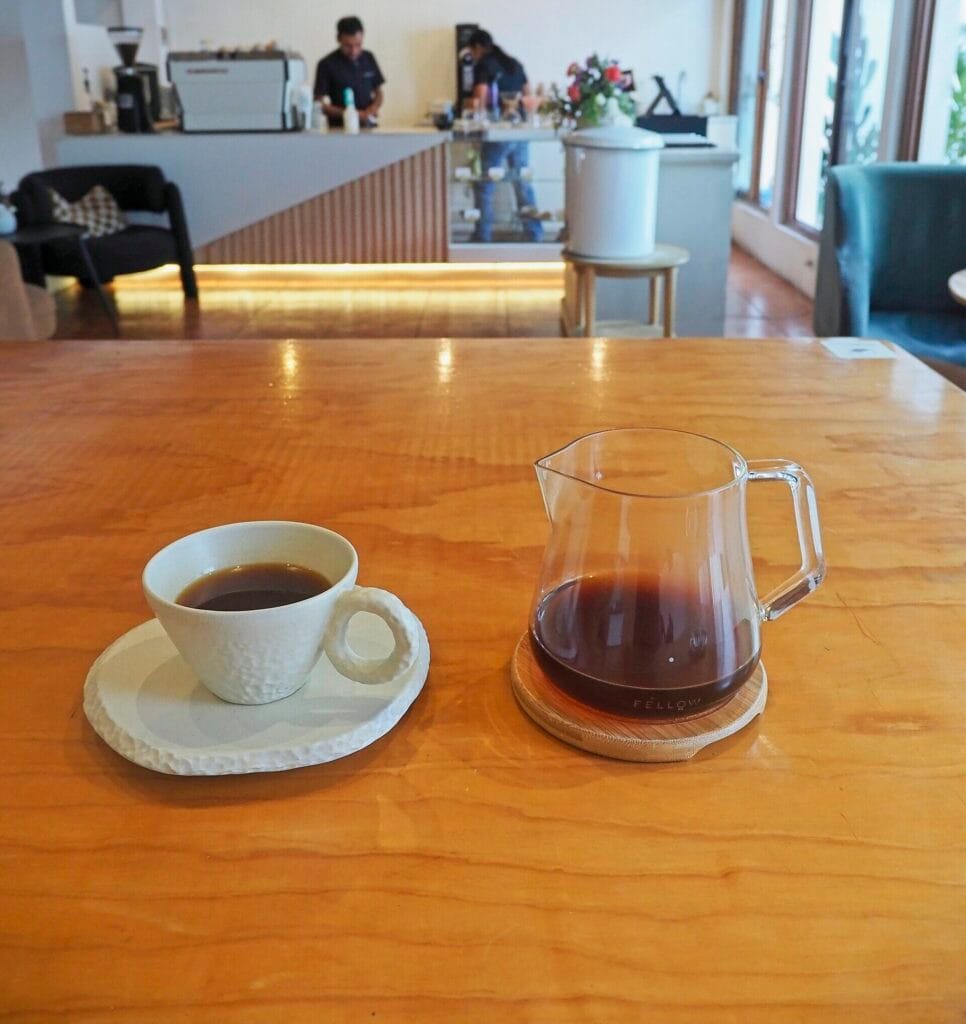
Guatemala is internationally recognized for producing excellent coffee, and Antigua is one of the country’s famous coffee-growing regions.
The volcanic soils, elevation, and growing conditions surrounding the town contribute to the region’s coffee-growing reputation.
You’ll find plenty of cafés throughout Antigua, ranging from small independent coffee shops to more polished spaces with comfortable seating and beautiful courtyards.
If you’re staying for a while, café-hopping can easily become part of your daily routine.
Many travelers also take coffee-farm tours to learn about cultivation, harvesting, processing, and roasting.
I skipped the coffee tours in Antigua because I’d already visited coffee farms in Colombia, including Finca Ocaso near Salento.
However, if you’ve never visited a coffee farm before, Antigua is an excellent place to consider doing so.
Shop for Handicrafts, Textiles, and Jade Jewelry
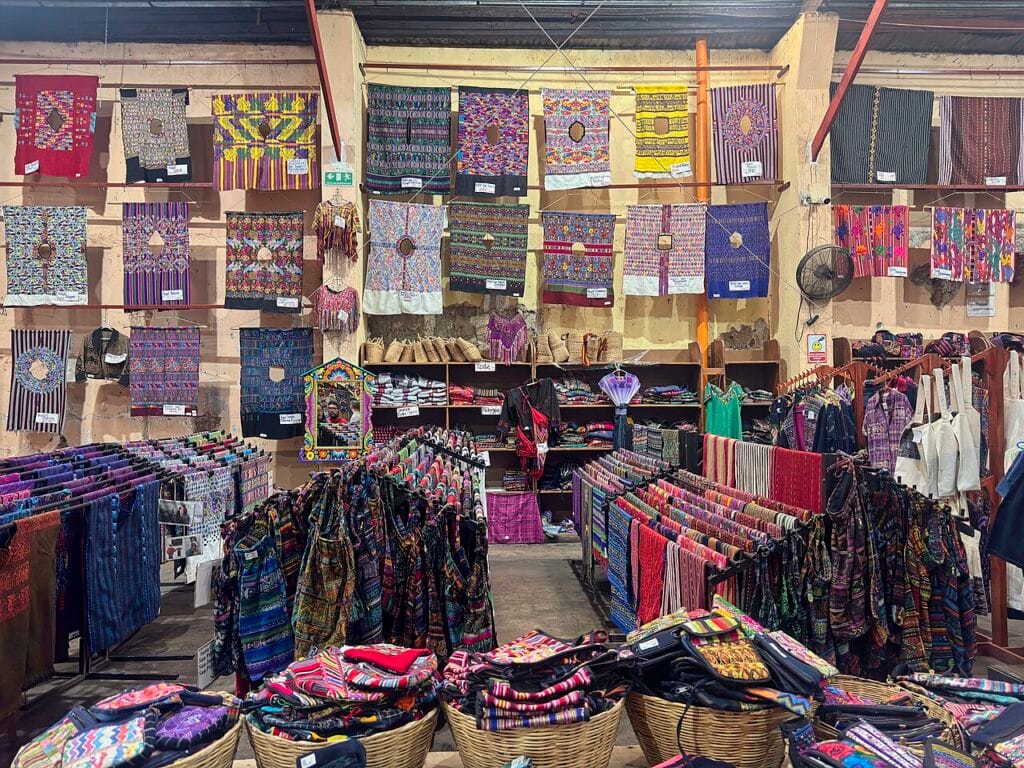
Antigua is a wonderful place to shop for souvenirs, especially if you appreciate handmade products and traditional craftsmanship.
Throughout town, you’ll find vendors and shops selling colorful textiles, woven bags, clothing, ceramics, wood carvings, jewelry, and decorative items.
One place you shouldn’t miss is Nim Po’t, a large handicraft market near the Santa Catalina Arch.
It’s packed with traditional Guatemalan products, including woven fabrics, clothing, masks, and souvenirs.
Guatemala has a rich tradition of textile production, with different Maya communities preserving distinctive weaving techniques, patterns, and designs.
Even if you’re not planning to buy anything, browsing the markets is an interesting cultural experience.
Why Is There So Much Jade Jewelry in Antigua?
Something I vividly remember about Antigua is the impressive number of jewelry shops.
Many display beautiful pieces featuring polished green stones, silver settings, and intricate designs.
The stone I remember seeing everywhere was jade, particularly Guatemalan jadeite.
Jade has a long history in ancient Maya civilization, where it was valued for ceremonial objects, ornaments, and jewelry.
Today, Antigua has several established jade workshops and jewelry stores where visitors can learn about the stone and purchase pieces ranging from inexpensive souvenirs to high-quality jewelry.
Some shops even offer demonstrations or workshops.
If you’re interested in buying jade, it’s worth visiting an established seller that can explain the material, quality, and authenticity of the piece.
Explore the Villages Around Antigua
If you’re staying in Antigua for more than a few days, consider exploring some of the smaller towns and villages in the surrounding area.
The region has a rich cultural history, with communities maintaining their own traditions, festivals, crafts, and ways of life.
Some places worth researching include San Juan del Obispo, San Antonio Aguas Calientes, Ciudad Vieja, and Santa María de Jesús.
San Antonio Aguas Calientes is particularly associated with traditional weaving, while San Juan del Obispo is known for its historical buildings and local products.
The surrounding region also includes Maya communities where Indigenous languages, particularly varieties of Kaqchikel, remain important alongside Spanish.
It’s worth remembering that these are living communities, not tourist attractions. If you visit, take an interest in their history, support local businesses, and respect residents’ privacy.
Spend an Afternoon at Hobbitenango
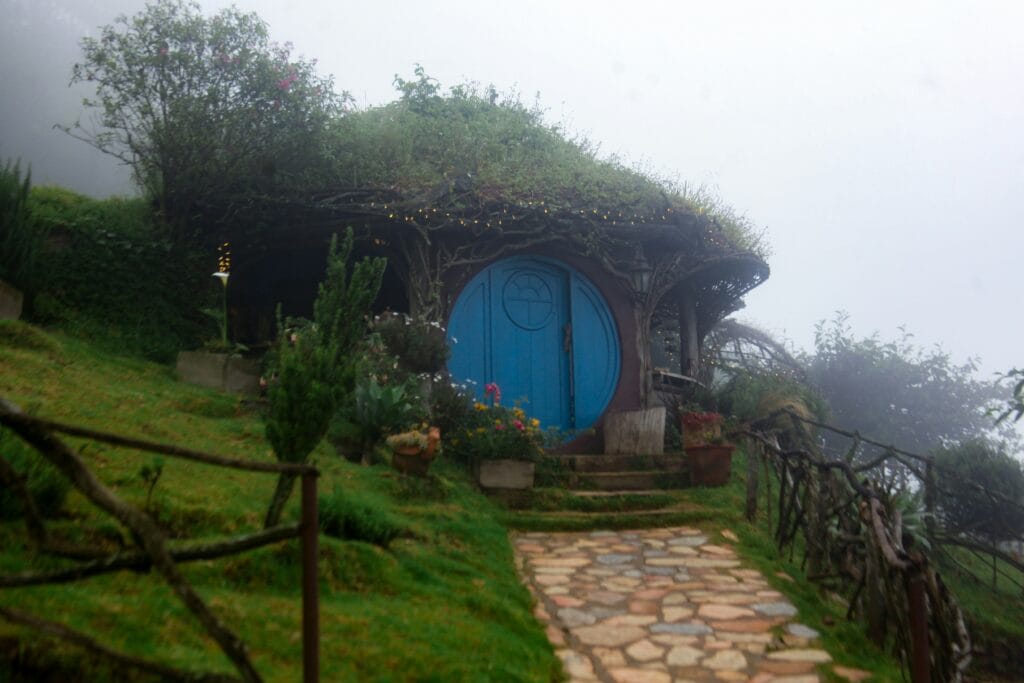
For something completely different, consider visiting Hobbitenango, a fantasy-themed attraction in the hills outside Antigua.
Inspired by the world of hobbits, the property features whimsical buildings, gardens, viewpoints, and outdoor activities.
Its elevated location offers impressive views of the surrounding mountains and volcanoes.
It’s a popular place for photographs and a fun outing if you’re looking to escape the historic center for a few hours.
I didn’t visit Hobbitenango myself because I was extremely lazy at that moment during my travels, but it’s an interesting option for travelers spending extra time in the area.
Transportation and admission are generally arranged separately or through packages, so check current prices before visiting.
Enjoy Antigua’s Bars, Nightlife, and Craft Beer
Although Antigua is a relatively small town, it has a surprisingly varied nightlife scene.
You’ll find casual bars, rooftop terraces, live music, and places where backpackers and locals gather in the evening.
One particularly interesting establishment is Café No Sé, known for its quirky atmosphere, live music, and mezcal-focused bar culture.
Antigua also has a developing craft beer scene, with local breweries and bars offering alternatives to Guatemala’s mainstream beers.
For travelers who enjoy trying locally produced beer, it’s worth exploring the town’s craft breweries and checking whether any tasting events or beer festivals coincide with your visit.
You don’t have to be partying every night to enjoy Antigua’s social atmosphere. Even a casual evening out can be a great way to meet other travelers.
Festivals and Special Events in Antigua
Antigua hosts cultural and religious celebrations throughout the year, but one stands out above the rest.
Semana Santa
Antigua is internationally famous for its Semana Santa, or Holy Week, celebrations.
During this period, the streets are decorated with elaborate carpets known as alfombras, made from colored sawdust, flowers, and other natural materials.
Religious processions move through the historic streets, accompanied by music, incense, and large crowds. I didn’t experience Semana Santa during my visit, but it’s one of the most significant cultural events in Guatemala and an interesting reason to plan a trip around a particular time of year.
For 2027, Holy Week runs from March 21 to March 28, with Good Friday falling on March 26.
Accommodation prices and crowds can increase substantially during this period, so plan ahead.
Craft Beer Events
Antigua also hosts occasional craft beer festivals, tastings, and brewery events.
These offer another opportunity to experience the town’s social scene beyond the usual tourist activities.
Unlike Semana Santa, beer festival dates can vary, so check current event announcements before planning your trip around one.
Hiking Acatenango Volcano: Why I Chose Not to Do It
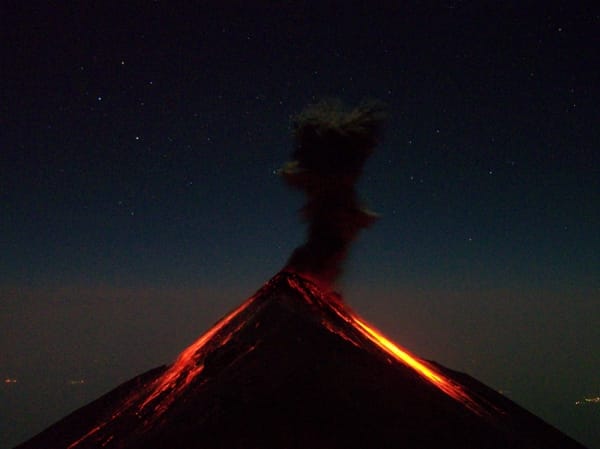
For many travelers, hiking Acatenango Volcano is the main reason to visit Antigua.
The famous overnight trek takes hikers high into the mountains, where they can camp on Acatenango and potentially witness eruptions from neighboring Volcán de Fuego.
The ascent involves several hours of steep uphill walking at high elevation, often carrying personal equipment. Temperatures can become very cold overnight, and some itineraries include additional hiking in darkness or before sunrise.
When conditions cooperate, it’s supposed to be an extraordinary experience. I can’t tell you how many mind-blowing videos I’ve seen of Fuego spewing lava. Unfortunately for me, during my time in Antigua, Fuego wasn’t visibly erupting. From what I was told, it was a pretty rare occurrence.
I decided that I wasn’t interested in putting myself through such a demanding two-day trek without a reasonable chance of witnessing the volcanic activity I’d come to see.
And I’m completely comfortable with that decision.
A Friend’s Firsthand Experience
A friend of mine completed the overnight hike and described it as the hardest hike he’d ever done.
He also mentioned that the tour company he used wasn’t as organized as he’d expected, although he wasn’t sure whether that was typical of other operators. His experience is worth sharing because it highlights just how demanding the trek can be.
The itinerary he followed involved three potential hiking stages:
- The initial ascent to base camp: The first and most demanding portion of the hike. He completed the entire ascent on foot, although he told me some travelers choose operators offering vehicle-assisted access for part of the route.
- The optional Fuego hike: An additional hike from base camp toward Volcán de Fuego, generally undertaken later on the first day when conditions and access permit.
- The sunrise hike: An optional early-morning climb toward Acatenango’s summit before returning to camp and descending the mountain.
My friend completed the initial ascent and the additional Fuego hike, but skipped the sunrise hike because he was simply too exhausted. He told me that taking a vehicle for part of the initial ascent would have made the experience significantly easier, although it would have cost considerably more.
It’s worth noting that vehicle-assisted options are not offered by every company, and the routes and arrangements vary between operators.
The optional Fuego hike is also subject to volcanic conditions and official access restrictions. Never assume it will be available just because a tour company advertises it.
What Other Travelers Say About the Hike
If you’re considering the trek, I recommend reading detailed firsthand accounts from people who’ve actually completed it.
Independent travelers who’ve documented the experience frequently mention the steep terrain, cold overnight temperatures, and physical exhaustion involved. The common theme is that you should take the physical demands seriously.
And remember, witnessing an eruption is never guaranteed. Visibility depends on weather, cloud cover, and the volcano’s activity at the time.
How Much Does the Acatenango Hike Cost?
Guided overnight hikes are available at different price levels, depending on the operator, group size, equipment, food, and sleeping arrangements.
Here are some approximate prices to help you plan:
| Tour type | Approximate price |
|---|---|
| Budget group overnight hike | $55–$90 per person |
| Standard guided overnight hike | $90–$160 per person |
| Premium or private experience | $200–$380+ per person |
| Optional Fuego hike, when permitted | Often an additional fee |
| Porter or vehicle-assisted services | Additional cost, varies by operator |
These are planning estimates rather than guaranteed rates.
For comparison, Acatenango Local Adventure advertises a shared-cabin overnight experience at approximately $100 per person, while Explore Acatenango lists a standard group trek starting around $119 and a private option starting around $259.
Before booking, find out whether the price includes transportation, park entrance fees, meals, warm clothing, sleeping bags, backpacks, and any optional hikes.
I’d also recommend asking about the size of the group, the guide-to-hiker ratio, and whether the operator has an emergency plan.
If you’re not an experienced hiker, don’t underestimate the altitude or the cold. Make sure you’re equipped with proper travel gear as well.
An Easier Alternative: Pacaya Volcano
If you want a volcano experience without committing to the demanding Acatenango overnight trek, consider a guided hike on Pacaya Volcano.
Pacaya is a different volcanic landscape and generally offers shorter hiking options.
It’s a popular day trip from Antigua, although trail access and volcanic conditions can change.
You shouldn’t expect to see flowing lava or active eruptions on any particular visit.
Where to Stay in Antigua for a Week or Longer
One of the reasons Antigua works so well for long-term backpackers is the variety of accommodation available.
Budget hostels are popular among solo travelers, particularly those looking to meet people and participate in organized activities.
If you want more privacy, there are guesthouses, private hostel rooms, small hotels, and apartments available.
For a stay of one or two weeks, I’d recommend comparing the total cost of a hostel with a private room or apartment. Sometimes paying a little more for privacy, a kitchen, and a comfortable workspace can make a longer stay much more enjoyable.
Here’s a general comparison of accommodation prices in Antigua.
| Accommodation type | Approximate nightly price |
|---|---|
| Budget hostel dorm | $10–$20 per person |
| Private hostel or guesthouse room | $20–$50 |
| Standard hotel room | $50–$100+ |
| Private Airbnb room | $35–$75 |
| Entire Airbnb apartment | $70–$120+ |
These are approximate planning ranges. Prices can vary substantially depending on the season, location, amenities, and length of stay.
For longer stays, check whether the property offers weekly or monthly discounts.
If you’re staying in a budget hostel, pay particular attention to recent reviews mentioning hot water, Wi-Fi, noise, cleanliness, and access to a kitchen.
Inconsistent hot water is mentioned in some accommodation reviews, but I wouldn’t assume it’s a problem at every budget hostel.
These details become much more important when you’re staying somewhere for two weeks rather than two nights.
Antigua for Digital Nomads and Long-Term Travelers
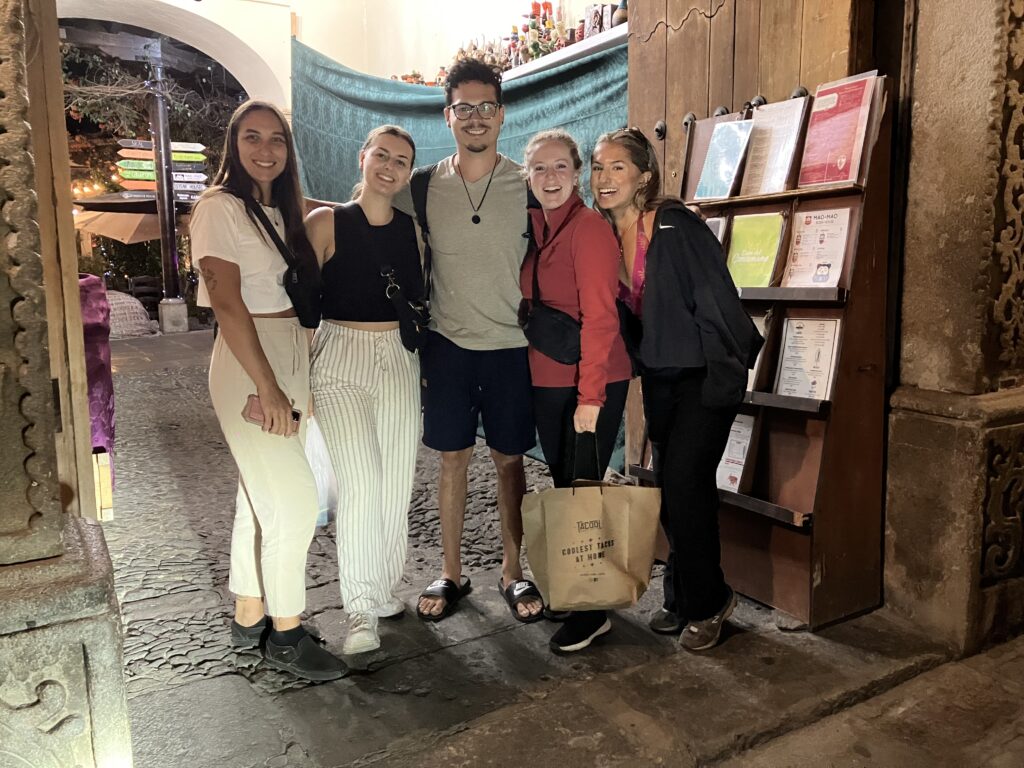
Antigua is also appealing to people who work remotely or want to spend time studying Spanish.
The town has numerous cafés, restaurants, accommodation options, and language schools, making it relatively easy to establish a daily routine.
You can spend the morning working or studying, take a break at Parque Central, enjoy a good lunch, and explore the town in the afternoon.
For remote workers, the main considerations are reliable Wi-Fi, a comfortable place to work, and accommodation away from excessive street noise.
I’d recommend testing your accommodation’s internet connection before committing to an extended stay, especially if you need to make regular video calls.
Antigua isn’t a large city, but that’s part of its appeal.
Everything feels relatively accessible, and you don’t have to spend hours traveling across town to enjoy yourself.
What’s the Weather Like in Antigua?
Antigua sits at an elevation of approximately 1,500 meters, or 4,900 feet, above sea level.
Thanks to its elevation, the town generally enjoys pleasantly warm days and cooler evenings throughout much of the year.
Guatemala has two main weather seasons:
- Dry season (November–April): Generally sunnier conditions, less rainfall, and better opportunities for clear volcano views.
- Rainy season (May–October): Greener landscapes, more frequent afternoon showers, and occasionally muddy or slippery trails.
Daytime temperatures in Antigua are often in the 70s Fahrenheit, or the low-to-mid 20s Celsius, while evenings can feel noticeably cooler.
I’d recommend bringing a light jacket or sweater, even if you’re visiting during the warmer months.
If you’re planning to hike Acatenango, remember that conditions high on the volcano are dramatically different from those in town.
Temperatures near the summit can approach or fall below freezing, so proper cold-weather clothing is essential.
Final Thoughts: Why Antigua Is Worth Staying a While
You can see many of Antigua’s main attractions in a day or two. Walk around the historic center, visit the churches, take photographs at the Santa Catalina Arch, explore Parque Central, and enjoy the views from Cerro de la Cruz.
If you’re interested in hiking Acatenango, you’ll probably want to dedicate another couple of days to the experience.
And if that’s all the time you have, that’s completely fine! But I think Antigua offers something particularly valuable to people on longer backpacking journeys.
After spending roughly two weeks there, I came away appreciating Antigua not just for its attractions, but for how comfortable and enjoyable everyday life can be. Sometimes, that’s exactly what you need when you’re traveling for months at a time.